






![Ayanna Witter-Johnson [Jordan Woods] 7](https://dnan0fzjxntrj.cloudfront.net/Pictures/274x183/4/9/4/44494_ayannawitterjohnsonjordanwoods7_224583.jpg)







All Lutherie articles – Page 44
-
 Video
VideoThe Strad Calendar 2021: Jean-Baptiste Vuillaume violin 1848-50
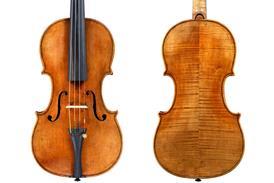
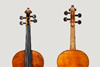
This Vuillaume is a mid-period ‘del Gesù’ copy, on which the f-holes of the ‘Ole Bull’ Guarneri have been imposed
-
 Video
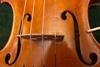
VideoThe Beauty of F Holes
As part of her ‘Students Stuck at Home’ series of videos, American luthier Anna Huthmaker explores the beauty of F holes. For more in the series, click here. Watch: The oddities of a luthier’s workshop Watch: 3 ways we can damage our instruments without even knowing it
-
 Video
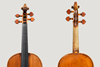
VideoThe Strad Calendar 2021: Giuseppe Guarneri ‘del Gesù’ violin 1744
Guarneri’s carving is free and energetic, the movements of the tools quick and deep
-
 Focus
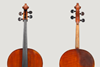
FocusThe Strad Calendar 2021; Nicolas Lupot cello 1823
The Lupot cello is a wonderful piece of controlled craftsmanship, and bears his personal signature on the back
-
 Premium ❘ Article
Soundpost: Letters to the Editor November 2020
A selection of letters The Strad receives each month from its readers around the world: November 2020 issue
-
-
 Premium ❘ Feature
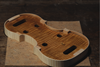
Trade Secrets: Removing the mould after gluing the linings
A simple procedure that imitates the methods of the old Cremonese makers
-

-
 Premium ❘ Feature
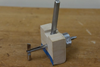
Making Matters: New angles on an old problem
David Burgess explains how he made a simple device for raising and lowering the tailpiece, to compare the differences in sound when adjusting the string angle and downforce on the bridge
-
 Video
VideoHenning Kraggerrud plays a Guarneri ‘Del Gesù’
In this music video the Norwegian violinist Henning Kraggerrud plays the Guarneri Del Gesù violin from 1744 (the last year of the luthier’s life) – the violin featured in The Strad calendar 2021. Read: Pride of Norway: The Strad calendar 2021
-
 Premium ❘ Feature
Carlo Bisiach: Dispatches from the front line
Gennady Filimonov examines the letters between Carlo Bisiach (1892–1968) and his American representative Leo D. Larsson, which provide a fascinating perspective on the violin trade in the 1930s and 40s, as well as an insight into the Italian luthier’s working methods
-
 Premium ❘ Feature
Hollywood Bow Makers: Unsung heroes of the silver screen
Lasting from the late 1920s to 1960, Hollywood’s golden age was a boom time for musicians, and those who catered for them. Raphael Gold tells the stories of some of the era’s best-regarded LA bow makers, and reveals why their work should be better known today
-
 Focus
FocusWhat is it like to play Wolfgang Amadeus Mozart’s own violin?
Christoph Koncz, principal second violinist of the Vienna Philharmonic, shares his experience
-
 Focus
FocusHow has COVID-19 affected the Italian lutherie business?
Violin makers worldwide were hit hard by the Covid-19 outbreak as the customers dried up – nowhere more so than in Italy. Peter Somerford speaks to some of the country’s makers to find out how the industry is gradually getting back on its feet
-
 Focus
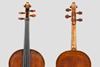
FocusThe Strad Calendar 2021: Francesco and Giovanni Grancino viola c.1665
The varnish of the Grancino is most beautiful and wonderfully well preserved
-
 Video
VideoThe Strad Calendar 2021: Francesco Rugeri cello c.1680
This poplar-backed cello is clearly very similar in form and modelling to Amati patterns
-
 Video
VideoCremonese makers launch video showcase
In response to the Covid-19 pandemic and its effect on Italian lutherie, a group of violin makers in Cremona have put together a video showcasing their working methods. The aim is to demonstrate the vibrancy and industriousness of today’s luthiers, as Antonio Stradivari wanders the streets of modern-day Cremona, viewing ...
-
 Video
Video3 ways we can damage our instruments without even knowing it
As part of her ‘Students Stuck at Home’ series of videos, American luthier Anna Huthmaker reveals three ways in which we can damage our instruments without even knowing about it. For more in the series, click here. Watch: The oddities of a luthier’s workshop
-
 Video
VideoThe Strad Calendar 2021: ‘Arditi’ Antonio Stradivari violin
This year’s calendar contains twelve masterpieces by Stradivari, Guarneri ‘del Gesù’, Rogeri, Vuillaume and many more
-
 Video
VideoVideo: Violin Makers – The Renaissance of Italian Lutherie
A 60-minute documentary featuring interviews with some of the greatest 20th-century Italian luthiers