







The cellist and composer shares how the relationship with her cello and her heritage informs her album New Roots, as well as what she hope to get out of a new residency at LSO St Luke’s
Discover more Featured Stories like this in The Strad Playing Hub
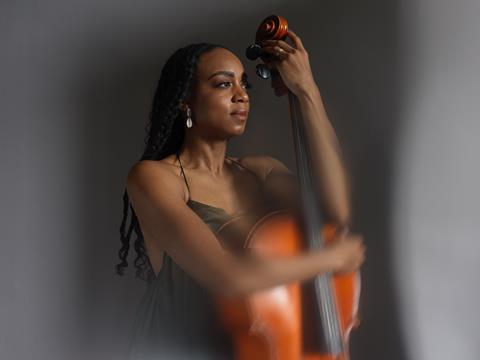
Ayanna Witter-Johnson releases her new album, New Roots, on 18 September 2026. It delves into her British-Caribbean heritage and spiritual practice, imbuing her exploratory, soul-leaning sound with the colour of jazz and groundedness of folk story-telling.
Witter-Johnson’s compositional approach is centred around her relationship with the cello – the instrument functions as rhythmic anchor and emotional compass, setting the tone for ruminations on the inheritance of Windrush-era wisdom, grief and remembrance, self-love, breaking free of victimhood and anchoring in the present.
She speaks with The Strad about the process behind her new album, as well as her upcoming residency at LSO St Luke’s.
Your cello sits at the heart of New Roots, acting as both a rhythmic foundation and an emotional guide. How has your relationship with the instrument evolved over the course of making this album, and how does it help you tell these deeply personal stories?
I now play a few different cellos, but at the heart of New Roots is Reuben, my main acoustic cello. He’s been with me since secondary school and was with me throughout lockdown, as well as on tour with Andrea Bocelli and Peter Gabriel, when many of these songs were written. So, in many ways, he’s been a constant companion through the experiences that shaped this album.
The biggest evolution in our relationship while making New Roots has been a deeper sense of trust – particularly trusting that I don’t need to demonstrate everything the cello is capable of. Instead, I can really listen to what each song needs. And sometimes, that means there’s no cello at all.
I’ve never thought of the cello as simply accompanying my voice. For me, it’s another storyteller. It carries the emotional subtext and can say things that the lyrics perhaps can’t articulate. Over the years, I’ve developed a deep understanding of how I express and ‘spell out’ harmony on the instrument. My fingers find their way in and out of familiar and unfamiliar shapes, and through that exploration I’ve discovered a real economy in my playing – allowing the strings to resonate and creating sound worlds that support and compliment my voice rather than compete with it.
I’ve never thought of the cello as simply accompanying my voice. For me, it’s another storyteller
Many of these songs came from having the time and space to contemplate experiences I was going through, and how they connected to my sense of belonging in the world. I was thinking a lot about space, and that found its way into the music. I’m often working with the bare bones of an arrangement, allowing silence to become an important part of the storytelling – the silence between notes, between phrases, before an entrance.
I think that’s been one of the unexpected gifts of making this album: learning to trust that the essence of what the cello and my voice can bring is enough. There’s no need to fill every space.
New Roots explores your British-Caribbean heritage, spirituality, and the legacy of Windrush-era wisdom. What were some of the key experiences, memories, or conversations that shaped the album’s themes, and what do you hope listeners take away from it?
During lockdown, I ‘bubbled up’ with my maternal grandparents, and at the same time also found myself spending more time in solitude than ever before. That combination of closeness and stillness gave me the space to reflect on where I’d come from, whose voices had shaped me, and which parts of my identity I had inherited without ever really stopping to examine.
Growing up as a second-generation British Jamaican, there were values, stories and ways of being that were simply woven into everyday life. My grandparents’ generation carried an extraordinary resilience, faith and generosity, often without ever speaking about it directly. As I’ve grown older, I’ve become increasingly interested in those quieter inheritances – the wisdom passed down through everyday conversations, shared meals, music, humour and community, as much as through history itself.
The album also explores spirituality, but not necessarily as a sense of certainty. For me, it’s more about practice: learning to listen to my intuition, becoming comfortable with stillness, and trusting that periods of uncertainty can also be deeply creative. I think there’s something powerful in allowing yourself to sit with the unknown rather than always needing to have the answers.
Ultimately, I hope New Roots encourages listeners to become curious about their own roots, whatever they may be. For me, understanding where we’ve come from isn’t about being defined by our history; it’s about having a deeper sense of ourselves. The more deeply we understand where we’ve come from, the more freely we can choose where we’re going.
Having composed and arranged for major organisations such as the London Symphony Orchestra and BLiM’s Classically Black, you’re now embarking on a residency at the London Symphony Orchestra’s home – LSO St Luke’s. How does this residency connect with your own artistic journey, and what excites you most about bringing your work into this orchestral setting?
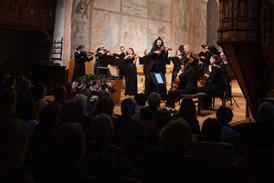
This residency feels particularly special because it’s a true full-circle moment for me. Many years ago, I wrote my first major piece for the London Symphony Orchestra as part of the LSO Discovery Panufnik Composers’ Scheme. It was performed, recorded and workshopped in Jerwood Hall at LSO St Luke’s.
Since then, I’ve had several performances there, been part of the LSO Soundhub scheme, composed for and performed in experimental concerts, and even recorded a live album there with the LSO Percussion Ensemble. So to now have a three-year residency in that same space feels incredibly meaningful.
Whether I’m writing a song, composing for orchestra or improvising on stage, I’m really asking the same question: How can music help us feel more deeply connected to ourselves and to one another? The residency feels like a natural extension of that journey because it gives me the freedom to explore that question without feeling confined by genre. To have the space and time to programme whatever my imagination leads me to is a rare kind of artistic freedom, and a gift that I’m really excited to explore.
What excites me most is the opportunity to create experiences rather than simply concerts. I’m interested in bringing together music, poetry, conversation and storytelling, and inviting audiences into the creative process rather than presenting finished work from a distance. As someone who has spent much of my career moving between classical, jazz, reggae and soul traditions, I’ve often found that the most exciting artistic moments happen at those intersections.
New Roots - First Light will be performed at LSO St Lukes on 16 September 2026. New Roots is released on 18 September with pre-orders available now. Watch the video for You Can Have Everything here:
Read: My tech set-up: cellist Ayanna Witter-Johnson
Read: ‘The cello is wild and can do all these different things’ - Ayanna Witter-Johnson
Discover more Featured Stories like this in The Strad Playing Hub












No comments yet