



All Featured Stories articles – Page 68
-
 Focus
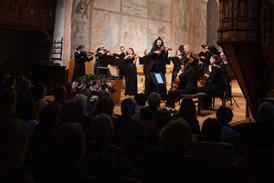
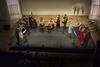
Focus‘You are forced to listen when there is no conductor’
Jacqueline Vanasse examines how performing without a conductor encourages individual players to listen and take responsibility, in this extract from the March 2022 issue
-
 Focus
FocusWhy can't players get vibrato right?
Vibrating need not compromise purity of tone if it's done tastefully, says Tully Potter, who takes to task those who overplay, misplay or completely disown it. From October 2009
-
 Blogs
Blogs‘The interweaving of violoncello and orchestra are indeed wholly ravishing!’: Schumann’s Cello Concerto
Conductor Peter Manning presents the history and analysis of Robert Schumann’s Cello Concerto, composed in only two weeks and never performed publicly in the composer’s lifetime
-
 Focus
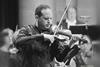
FocusViolinist Lihay Bendayan: Fourth finger vibrato
In this extract from the March 2022 issue, violinist Lihay Bendayan provides tips on how to improve a weak fourth finger vibrato
-
 Blogs
Blogs‘It doesn’t have to be popular. It just has to be’: Gwendolyn Masin on honesty and art
Classical music doesn’t need to succumb to levels of mediocrity in order to be ‘popular’ or ‘relevant’. Instead, audiences should be open-minded enough to enjoy the simplicity of great music’s existence, argues violinist Gwendolyn Masin
-
 Focus
Focus‘The most perfect music ever written’: Violinist Leonidas Kavakos on recording Bach’s Solo Sonatas and Partitas
’Bach’s music is a reflection of life, and life is not always serious – there is also humour and dancing, and uplifting moods to counter the darker ones.’
-
 Blogs
BlogsHow I write for strings: Composer Dani Howard
Composer Dani Howard shares how her roots as a cellist inform her latest compositions for strings
-
 Premium ❘ Article
‘Concerto performers especially seem guilty of the “speed trend”’: Letters to the Editor March 2022
A selection of letters The Strad receives each month from its readers around the world: March 2022 issue
-
 Premium ❘ Feature
Coleridge-Taylor violin and chamber music: From fame to footnote
Despite his prolific output, the works of British composer Samuel Coleridge-Taylor have been performed relatively infrequently in the century following his death. Tatjana Goldberg explores his chamber and violin music, particularly the Violin Concerto, and his fruitful artistic partnership with pioneering US violinist Maud Powell
-
 Premium ❘ Feature
Leonidas Kavakos: Deep thinker
For Leonidas Kavakos, recording Bach’s Solo Sonatas and Partitas has been the culmination of a 30‑year artistic journey and, as the violinist tells Charlotte Smith, the works have a pertinent message for our troubled times
-
 Premium ❘ Feature
Conductorless orchestras: The leading edge
For those ensembles willing to take the plunge, performing without a conductor can lead to a greater sense of collaboration, fulfilment and, ultimately, responsibility. Jacqueline Vanasse hears from some of the string players involved in such groups
-
 Premium ❘ Feature
Session Report: Landscape of shadows
Cellist Laura van der Heijden talks to Tom Stewart about the subtle, often other-worldly atmosphere inhabited by Czech and Hungarian music in her new recording with pianist Jâms Coleman
-
 Premium ❘ Feature
From the Archive: March 1892
Carl Fuchs pays tribute to his friend and fellow cellist Carl Davidoff (1838–89), including a reminiscence of how he acquired his famed Stradivari cello
-
 Premium ❘ Focus
Opinion: It takes three
As the Sitkovetsky Trio celebrates its 15th anniversary this year, lead violinist Alexander Sitkovetsky looks back at the lessons he and his colleagues have learnt
-
 Focus
FocusOpinion: Live for the moment
Classical musicians and audiences can learn from stand-up comedy shows, where there’s a naturalness and immediacy of interaction between performers and the crowd, writes Rita Fernandes
-
 Focus
Focus10 tips for learning and teaching sightreading
Advice from The Strad’s archive on how to improve sightreading and reminders of its crucial place in any good musician’s skillset
-
 Blogs
Blogs’There is little to no room for error’: Sightreading in a recording session orchestra
Associate concertmaster of the Sofia Philharmonic Orchestra and session orchestra violinist Alexandra Gorski explains the high level of sightreading required from session musicians, as well as principles she employs to nail those one-take wonders
-
 Focus
FocusSol Gabetta: Life Lessons
The Argentinian cellist explains why staying true to oneself and constantly evolving make for a fruitful career
-
 Focus
Focus‘The repertoire is about transformation, change or loss’: United Strings of Europe
Artistic director of United Strings of Europe Julian Azkoul shares the motivation behind the arrangments featured on the ensemble’s latest album Renewal
-
 Focus
Focus‘The viola timbre is so like a human voice’: Konstantin Boyarsky on Bruch’s Romance
The principal viola of the Royal Opera House discusses the connection between opera and Max Bruch’s Romance for Viola and Orchestra