






At the 2025 Concours de Genève, which marked the viola’s return to the competition after two decades, Rita Fernandes discovered the unique artistic personalities of the new generation
Discover more Featured Stories like this in The Strad Playing Hub.
Read more premium content for subscribers here
All year round, Geneva’s Mont Blanc Bridge is lined with flags. The Swiss and Genevan ones are ever present, while a third design is displayed depending on which prominent event happens to be taking place in the city. During the crisp autumn cold of November 2025, that third flag flying against the city’s iconic mountain background was that of the Concours de Genève. This year’s edition of the competition, which took place from 6 to 12 November, was certainly deserving of such prominence: it marked the return of the viola after 20 years.
The year 2025 was representative of just how significantly the international viola competition scene has exploded over the past two decades. In the same year, major competitions took place across several continents, from Japan to the UK and Germany.
‘We didn’t realise just how many others were happening this year!’ Tabea Zimmermann – chair of the jury and winner of the 1982 Concours de Genève – told me. Zimmermann had herself been on a similarly long hiatus from competition juries; and now that she was back, her approach was anything but half-hearted: her artistic curiosity and sincerity permeated every part of this year’s edition.
‘I wanted to make room for each artistic personality to shine through,’ she told me. This resulted in giving semi-final competitors a completely free choice of programme for their solo recital, which many contestants told me was their favourite round. They also had the chance to present a personal ‘artistic project’ and perform with renowned musicians in the chamber music round. What resulted was a thrillingly broad range of repertoire, approaches and individual characters.
Brian Isaacs, 25, from the US, kicked off the semi-final solo recitals on 6 November at the Geneva Conservatoire with an arrangement of Grieg’s Violin Sonata no.3. A sensitive player, he was particularly attuned to the work’s more tender moments. And throughout Grażyna Bacewicz’s Quattro capricci (arranged from the original for solo violin) he created a natural thread using a range of timbres and characters from the mystical to the malicious.
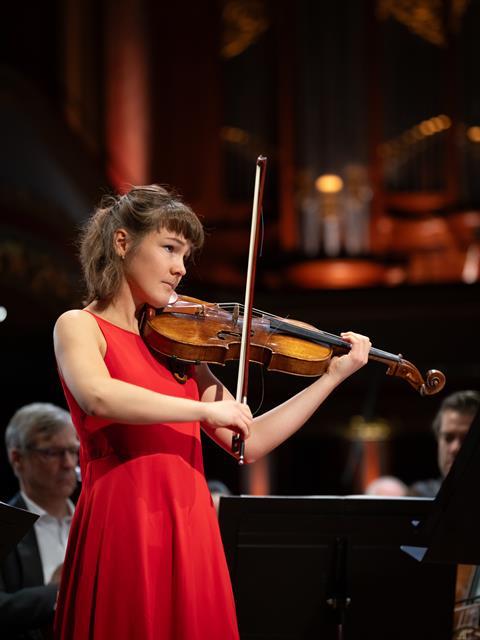
Genevan Sarah Strohm, 20, began with an arrangement of Bach’s Chaconne (from Violin Partita no.2). From the first declamatory chord, she established strength and resonance. Her nimble, intuitive right-arm technique, aided by the use of a Baroque bow, created intricate contours in the music.
The Suite op.8 for viola and piano by Russian composer Varvara Gaigerova (1903–44) was a welcome discovery in the recital given by 23-year-old Ayaka Taniguchi from Japan, who later told me that the free choice of repertoire allowed her to ‘make an artistic statement’. Taniguchi showcased her character-filled playing, creating sombre musical worlds that flowed into light-filled moments.
And finally, 21-year-old Emad Zolfaghari from Canada presented his programme as a ‘menu’, with works representing an entrée, main and dessert. A movement from Viola Spaces by Garth Knox revealed Zolfaghari’s natural humour, while in the dramatic moments of Vieuxtemps’s Viola Sonata in B flat major, his grounded contact point made for a powerfully consistent and projected sound.
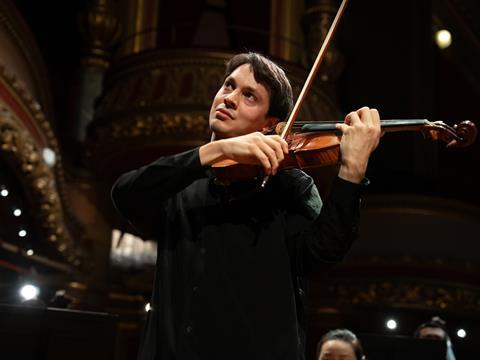
What struck me after listening to all eight solo recitals was the vast range of tonal qualities among the players – a reflection of the beautiful diversity of their violas. It helped to highlight each performer’s distinctive musical personality, which was echoed in the artistic projects they presented over the following days. The competitors gave a short presentation of a project idea of their choice before being interviewed about it.
Concepts ranged from Hindemith-inspired children’s concerts to interdisciplinary projects based on chess strategy. And interestingly, though the ideas varied widely, in one way or another they all hoped to push the boundaries of the industry’s status quo.
In the chamber round, contestants performed the first three movements of Mozart’s K563 Divertimento for string trio alongside guest violinists Corina Belcea and Lena Neudauer, and cellists Christian Poltéra and Lionel Cottet, as well as Berio’s Naturale for viola, percussion and tape.
In the Mozart, the interpretations ranged from contestants asserting their musical personalities to those blending into the interpretation of the esteemed players beside them. And in the Berio, Strohm’s performance was the undeniable highlight. Based on traditional Sicilian song, the work’s viola part is in dialogue with field recordings of a Sicilian singer. Strohm delivered it in a way that sounded like a genuine conversation rather than disjointed and unrelated phrases. Competition president Matteo Inaudi later told me it was like hearing the ‘sounds of Sicily’.
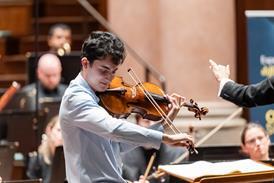
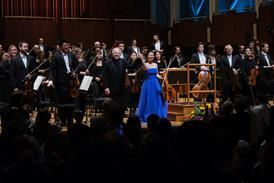
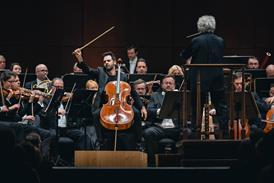
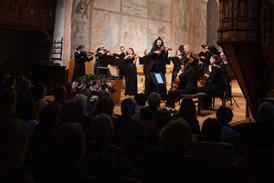
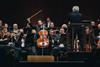
Strohm, Taniguchi and Isaacs made it through to the 12 November finals, which took place at the city’s Victoria Hall. Accompanied by the Orchestre de la Suisse Romande, all played Léo Albisetti’s concerto Nouvel Élan (a winner of the competition’s 2024 composition edition) as well as a concerto chosen from a list of four. Taniguchi’s Albisetti was perhaps the most nuanced of the three, with its repetitive opening phrases differentiated in a compelling way.
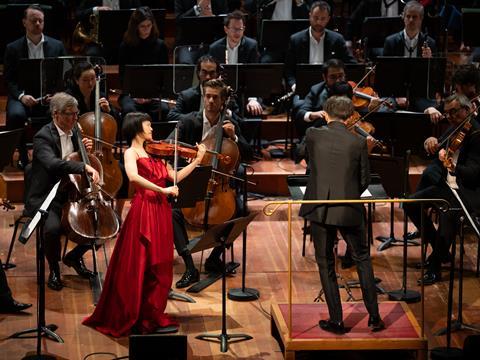
In her performance of Bartók’s Viola Concerto, Strohm was once again uniquely intuitive. Her tone switched easily from lyrical to edgy as required. A memorable moment came at the beginning of the second movement, where from a silent hall the orchestra emerged with a warm carpet of sound, over which Strohm played the melancholic melody with touching simplicity.
Taniguchi created space to speak clearly at the beginning of her Bartók Viola Concerto. Throughout, she matched the orchestra’s colours effortlessly. Her virtuosic ending, filled with manic semiquavers and trills jumping wildly across the fingerboard, was gripping right to the last note. In both Bartók renditions, the orchestra’s visible commitment helped create truly three-dimensional performances.
Isaacs concluded with Hindemith’s Der Schwanendreher, assuming the role of storyteller with ease and interacting with the reduced orchestra as chamber musician rather than soloist. He took full advantage of what he described to me as ‘the work’s huge interpretative potential’, bringing humour and nuanced shades with conviction.
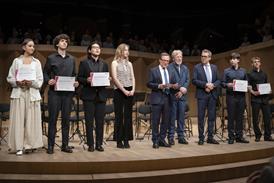
Isaacs and hometown hero Strohm ultimately won joint first prize, with Strohm also taking home the audience prize and almost all other special prizes. Taniguchi received second prize; no third prize was awarded.
At the post-concert reception, Zimmermann asked me for my opinions of the overall competition’s performances. After I told her, she replied: ‘Wow, I thought something completely different!’ Before I could cover my face in embarrassment, she continued: ‘No, but I love that! It’s so fascinating to hear everyone’s thoughts, because they’re all as important as each other.’
As she spoke, I could see the laureates talking and laughing together across the room, as if they hadn’t just been competing for a CHF20,000 top prize. Zimmermann’s sincere acceptance of others’ opinions had clearly influenced much more than the competition’s structure.
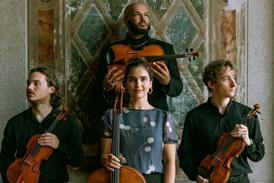
Read: Postcard from Switzerland: Concours de Genève String Quartet edition
Read: Postcard from Munich: Hindemith International Viola Competition
Discover more Featured Stories like this in The Strad Playing Hub.
Read more premium content for subscribers here








No comments yet