


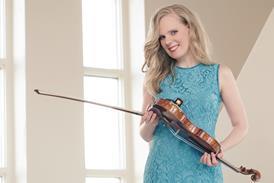










Violinist and educator Maggie Watson explores why performance feels so different from the practice room, revealing how perception, the nervous system and psychological skills shape what really happens under pressure, and how musicians can train for the stage as deliberately as they train their technique

Read more Featured Stories like this in The Strad Playing Hub
It’s a scenario familiar to most musicians. After countless hours of practice, a piece feels secure. The notes flow under the fingers, the phrasing feels expressive and everything seems under control. Yet, in performance, something shifts. Bow shakes appear on sustained notes, the left hand feels less dependable, shifts suddenly feel exposed and the overall result no longer reflects your abilities.
As performers, we are judged almost entirely on these moments. No one hears the hours of disciplined practice; everyone hears the performance itself. When a performance falls short of our expectations, frustration, embarrassment and self-doubt often follow. We berate ourselves for not practising enough or criticise ourselves for being ‘too’ nervous. Over time, these negative experiences can accumulate: a difficult performance lingers in the memory, casting a shadow over the next one, no matter how well we’ve prepared.
The problem is rarely a lack of musical ability. Practice alone doesn’t prepare us for the psychological demands of performance. Practice and performance are distinct, and even highly skilled musicians can remain mentally unprepared for the stage.
Practice and performance are distinct, and even highly skilled musicians can remain mentally unprepared for the stage
Practice and performance: two different worlds
Practice and performance take place under very different conditions. When we practise, we are usually in a familiar environment with the freedom to correct mistakes and repeat passages. In contrast, a performance is public and exposed. Once a note is played, it cannot be taken back, and that simple fact changes how the nervous system responds.
When a situation feels threatening, the brain activates a stress response. The amygdala signals danger, adrenaline is released and the body reacts: increased heart rate, shallow breathing, reduced fine motor control and difficulty focusing. Anxious thoughts can flood the mind. At the heart of it is perceived threat: the fear of judgment or failure.
The difficulty is that musicians are rarely taught how to prepare for this reality, or how to work with their nervous system in performance. As a result, many players practise diligently, yet arrive on stage without tools for managing the demands of the moment.
Perception changes physiology
Interestingly, players in amateur orchestras may often display visible ease and enjoyment in a performance despite imperfect technique, while highly trained conservatoire graduates can appear tense and self-critical. Why is this?
Two perceptions matter: how we see ourselves, and our audience. Highly trained musicians develop sensitivity to tiny discrepancies in pitch, colour and articulation. While this is crucial for artistic growth, it means there is always something ‘off’ to notice. If our internal narrative is critical, nerves amplify that voice.
Our perception of the audience also shapes how we feel. Consider two scenarios:
You walk on stage believing the hall is full of judges listening for every mistake.
You walk on stage sensing the audience is warm, receptive and willing you to do well.
The audience may look identical, but your interpretation of them creates very different physiological states, and therefore very different performances.
During my own studies at the Royal Academy of Music, I remember a public masterclass with a renowned violinist where nerves set in almost instantly, causing bow shakes, small mistakes and a general sense of slipping into survival mode. Around the same time, I gave a small recital in Devon with identical technical demands and felt completely at ease. The difference was not preparation; it was perception.
Acknowledging nerves
One common reaction to nerves is trying to eliminate them. Telling ourselves to ‘just calm down’ rarely works. The body interprets anxiety as another problem to solve and we feel nervous about our nerves.
Psychologists such as Kelly McGonigal have argued that the way we interpret physiological arousal significantly shapes its impact. When we label a racing heart as danger, the body prepares for threat. However, if we interpret the same sensation as readiness or excitement, then the physiological response becomes more functional. Adrenaline can actually benefit performances by sharpening focus, heightening alertness and enhancing projection.
Here are some techniques to try before performing:
Breathing: Lengthening the out breath signals safety to the nervous system. Sit quietly with your eyes closed and focus on inhaling for four counts, exhaling for six, then four in and eight out, repeating for a few minutes.
Body scan: Guided five-minute body scans or meditations (found on YouTube or Spotify) can calm and reset your mind and body. This can halt the excessive internal monitoring that nerves create, which can disrupt automated motor skills that are otherwise reliable.
Reframing: Remind yourself that nerves are a sign the performance matters. Accepting this energy as useful rather than threatening can turn anxiety into focus and presence on stage.
Remind yourself that nerves are a sign the performance matters
The power of the alter ego
You’re standing up to play in front of a hall full of respected musicians. You’re experiencing damp hands, uneven breathing and spiralling thoughts. What should you do? One answer comes from pop music: step into an alter ego. Several high-profile performers do exactly that before they walk on stage. Beyoncé created ‘Sasha Fierce,’ David Bowie became Ziggy Stardust and Stefani Germanotta steps on stage as Lady Gaga.
Alter egos allow us to psychologically distance ourselves from our fear. Psychologist Ethan Kross shows that third-person self-talk reduces rumination and improves performance under stress. Even subtle shifts help: different clothes, posture or even the thought: ‘This is my performing self now.’ This can help us to access qualities that exist within us but are often blocked by self-doubt.
The ‘Batman effect’
Interesting research by Michael R. Cunningham found that children pretending to be heroic characters like Batman persisted longer and managed frustration better than children acting as themselves. Adopting an alternative persona can create distance from the task, reduce fear of failure and activate traits like courage, persistence and resilience. For musicians, stepping into a ‘performance self’ could add a layer of greater resilience, and shift your attention from fear to action.
Learning from elite sport
Elite athletes have long understood that physical training alone is insufficient. Michael Phelps, the most decorated Olympian, worked with his coach Bob Bowman on detailed mental rehearsal, visualising every aspect of his races, including things going wrong, such as his goggles filling with water. At the 2008 Beijing Olympics, that actually happened in the 200m butterfly final. Phelps couldn’t see clearly, yet he still won gold. Having already swum the race hundreds of times in his head, the unfamiliar situation was already familiar to his nervous system.
Tennis star Novak Djokovic similarly visualises high-pressure match moments, considering mental rehearsal as essential as physical conditioning.
A tradition of inner practice
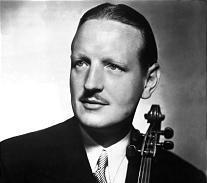
Pianists Artur Schnabel and Glenn Gould practised extensively away from the instrument, focusing on mental clarity and inner hearing. Violinist Yehudi Menuhin emphasised imagination, mental calm and inner hearing as foundations of expressive playing. Knowing how self-critical musicians can be, he spoke about the dangers of over-effort and the subtle ways striving too hard can interfere with the natural musical flow. He argued that the quality of attention brought to a performance matters just as much as the hours devoted to practice.
Performance skills
Conservatoires produce musicians of extraordinary musical abilities. Yet the skill of performing under pressure is often left to chance. Performance is not simply the result of practice; it’s a separate entity, and a discipline in its own right. Acknowledging nerves without panic, shaping perceptions of audience and self and using mental rehearsal can transform our experience of performing. It allows us to step onto the stage and let the music speak.
Ultimately, that is why we practise in the first place.
Maggie Watson is a violinist and music educator, and an alumna of the Royal Academy of Music. She has a particular interest in performance anxiety and the psychological skills musicians need to perform under pressure, drawing on conservatoire experience, research and practical performance psychology.
Read: How do string players deal with cold temperatures?
Read: Performance practice: the missing step in every musician’s practice routine
Read more Featured Stories like this in The Strad Playing Hub















2 Readers' comments