
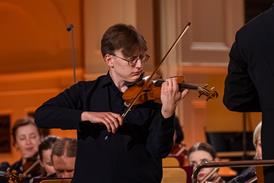


Maiani da Silva shares insights on her new album featuring six commissions inspired by intriguing aspects of human nature, highlighting the violin’s versatility as a solo instrument
Read more Featured Stories like this in The Strad Playing Hub
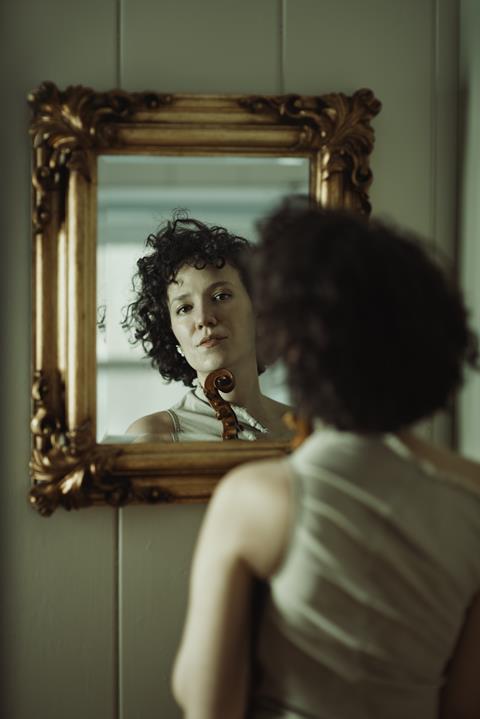
On 17 April, violinist Maiani da Silva will release Brouhaha: Shaped by Fire, a world premiere recordings of six new works for solo violin, voice, and electronic sounds, on the Sono Luminus label.
The works are commissioned and performed by violinist Da Silva, who is a member of the four-time Grammy-winning sextet Eighth Blackbird and lecturer on contemporary performance practice in Yale’s Department of Music.
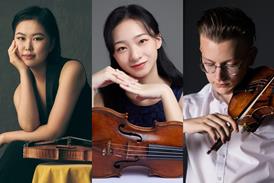
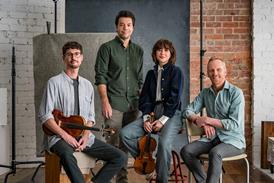
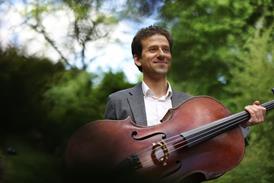
The album explores anthropological themes through music, with compositions by Ian Gottlieb, Zachary Good, Fjóla Evans, Viet Cuong, Jascha Narveson and Kelley Polar. Da Silva asked the six stylistically distinct composers to write works for solo violin based on what intrigues them about human nature.
Additionally, Da Silva and the composers have collaborated with world-renowned scientists to gain insights into their chosen theme, resulting in an imaginative interdisciplinary reflection on what it means to be human.
Da Silva speaks to The Strad about the new album.
You asked each composer to write from what intrigues them about human nature. What kinds of themes emerged, and how did working with scientists deepen or challenge the artistic direction of the project?
A wide range of themes emerged: fire and our relationship to it, how it’s shaped our landscapes; tools and our capacity to create and manipulate the world around us; our connection to flowering plants and ceremony; migration (whether driven by survival or curiosity); our sense of time/time that shapes evolution; and, human connection and belonging.
I envisioned Brouhaha as a kind of symposium but with the spirit of a playground. The composers and I talked with Yale anthropologists Jessica Thompson and Catherine Panter-Brick, but we also read, exchanged papers and articles, and followed threads of curiosity wherever they led. That process both deepened and challenged the work. The goal was never to arrive at clean answers, but to start with a small question and let it expand, often into something much bigger than we expected. Again and again, we found ourselves asking: are these traits we think of as uniquely human actually unique at all?
For example, for Traveller, composer Viet Cuong explored migration inspired by his parents’ experience as refugees. His conversations with Panter-Brick about human resilience opened up the work in a profound way – it became not just about displacement, but also about survival, adaptation, and the strength of communities in crisis. Our curiosity also led us to learn about other animals who endure, adapt, and care for one another in the face of upheaval, particularly since we Homo sapiens constantly displace all other life on Earth to accommodate our needs.
The goal was never to arrive at clean answers, but to start with a small question and let it expand
In Bloom, composer Fjóla Evans looked at our relationship with flowers (specifically their ceremonial use) and was drawn to research on a Neanderthal burial site called Shanidar Cave in the Kurdistan region of Northern Iraq. There’s a long-standing theory about pollen found there suggesting ritual offerings, but more recent evidence complicates that story. And that’s where it got interesting: the science didn’t ‘ruin’ the idea; it made it more nuanced. Maybe the story isn’t as tidy as we’d like, but that doesn’t mean Neanderthals didn’t grieve, or care for their dead. Grief and community don’t belong only to Homo sapiens.
That’s one of the central tensions in communicating science: we laypeople often want clean, definitive answers, but reality is much more complex. Science resists neat narratives. Part of this project was learning to sit with that ‘to-be-determined’ space, and to accept that ambiguity can be a feature, not a bug.
A Little Time by Jascha Narveson is another example. It leans more neurological and philosophical than anthropological, but it felt essential to include. It reflects on how difficult it is for us to truly comprehend deep time and human evolution, and invites a more meditative perspective, recognising that evolution is ongoing, not something fixed in the past.
Spearheading an artistic project is similar to what happens in science or medicine: you set out to find one thing, and discover something else along the way. You can’t force creativity and inspiration into a predetermined shape. Letting go of that control is what keeps a project alive, collaborative, and genuinely surprising.
This album blends solo violin, voice, and electronics in individual ways. How did you navigate the balance between these elements so that each piece still feels unified within the larger concept of the album?
Projects involving commissions are always a bit of a shot in the dark, in the best way. It requires a great deal of planning, communication, trust, and, honestly, luck. I very intentionally selected composers with distinct stylistic voices. If you’re making a project about human origins, nature, and our relationship to other living things, it should feel sonically colourful. I wasn’t interested in homogeneity; I wanted contrast, surprise, and a real sense of variety.
The challenge came later, in shaping the whole. After recording, I spent a lot of time just living with the pieces, figuring out pacing and flow. The through-line isn’t a single narrative voice, it’s multiplicity. It’s okay that there are many ‘characters’, or scenarios. In fact, that is the point. The diversity becomes the unifying force.
In practice that meant I had to leave room for the unpredictability of inspiration. You can commission someone because of a specific quality you admire, and then they go in a completely different direction, and you have to make the decision to either be open to that or not. In one case, a composer known for electronic music wrote something entirely acoustic. And luckily, it worked!
I leaned into the novelty of differing elements, colours, and soundscapes of each work, and focused the unity of the album through the emotional pacing and order of the pieces more than anything. Shaping the experience in the aggregate is what I aimed for.
As a performer steeped in contemporary practice, what did this interdisciplinary collaboration teach you about the violin’s expressive possibilities – and about humanity more broadly?
As a contemporary musician, this kind of exploration feels very natural. There’s always this pull toward the new, toward understanding something in a fresh way, toward asking questions that don’t have easy answers, for their own sake. This process brings me a great deal of joy. Working across disciplines amplifies that. Musicians and artists tend to explore the emotional and experiential side of being human, while scientists approach humanity through research and analysis. Both, however, have to employ very creative approaches to their work. And, when those perspectives meet, something really rich happens.
It’s a bit like teaching: if you can only explain something one way, your understanding and thus impact is sorely limited. But if you can approach it from many different angles, it opens up, not just for others, but for yourself. Interdisciplinary work does exactly that. It keeps you from getting stuck in your own corner.
For the instrument, this interdisciplinary collaboration really expanded my, and the composers’, sense of what the violin can do. Across the album, there are extended techniques such as bowed left-hand pizz, disco-glisses, layered recordings, and interactions with electronics and my own vocalisations that create entirely new textures, giving the listener fresh landscapes to explore.
It’s a reminder that the instrument and we musicians can accomplish so much more than we sometimes expect. Additionally, commissioning composers who don’t play your instrument is also a very fun challenge. Their ideas are not limited by the supposed limitations of the instrument; such is the case for works by Zachary Good and Viet Cuong. This helps expand our notion of possibility as string players.
Think about how impossible and awkward Brahms’ violin concerto was first considered, and how now it’s the standard for serious classical violinists everywhere. Thanks to Brahms, a pianist, we are better violinists!
Brouhaha is my attempt to step outside of a single lens, and in doing so, arrive at something that feels a little closer to the full picture of what it means to be human. This is an ever moving goal post, it’s true. But this project reinforced something bigger for me: this idea that we are deeply connected – to each other, to other species, and to our environment.
Maiani da Silva performs Shaped by Fire by Ian Gottlieb for Brouhaha:Shaped by Fire in the video below:






No comments yet