





Grammy‑winning musician Andy Leftwich reflects on the violin and mandolin that have defined his career, and how playing the two instruments inform each other
Read more Featured Stories like this in The Strad Playing Hub
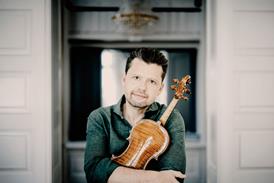
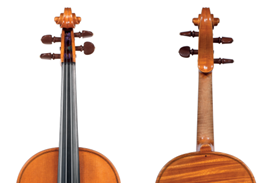
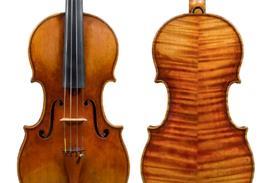
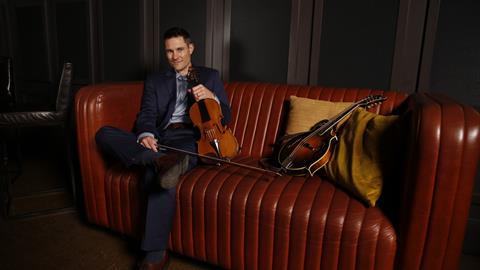
I have several violins that I use, but my main violin is a Maggini copy built by Charles Jean Baptiste Collin-Mezin in Paris France in 1879. It has a deep and smooth tone that works great for bluegrass and country music. I bought it from Fred Carpenter at the Violin Shop in Nashville, TN in 2006. I love the response that it has, which is great for bluegrass music with the fast paced songs that we play.
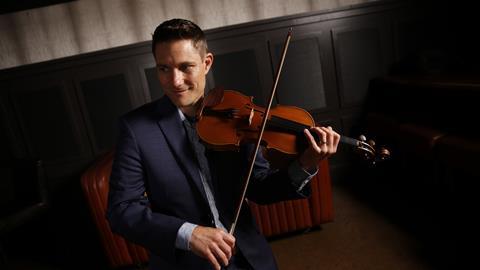
When I first saw it, Fred had just received the violin so it wasn’t set up with any strings, bridge, or tail piece attached. It was simply the body of the instrument. I tapped on it a few times with my knuckles and new immediately that it had some great sounds in it. I asked Fred to set it up for me and not to tell anyone about it. I wanted to be the first to take it out on a weekend run and it was perfect! I’ve loved it every since and have had the privilege of playing it on multiple Grammy award-winning projects through out the years.
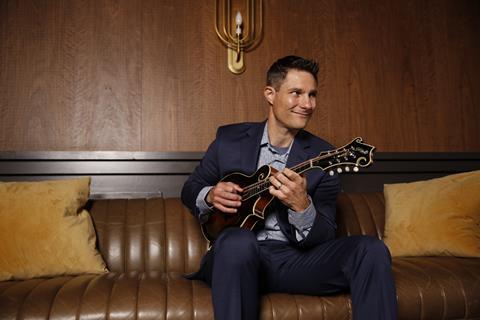
The mandolin I use was built by the Australian luthier Steve Gilchrist in 1999. My old boss, Ricky Skaggs, purchased the mandolin from Steve and has used it on many projects. Most famous was the Bill Monroe composition, ’Get Up John’ from the Live at Charleston Music Hall programme we did in 2002. I’ve always loved the instrument and was thrilled to buy it from Ricky in 2017.
It is built with a tone bar bracing which gives it a nice projection with the traditional bluegrass sound. I’m honoured that Ricky and I have been the only owners of this wonderful axe since it’s birth. I have simply nicknamed it ‘John’.
I started playing the violin at age six, then picked up the mandolin at age twelve. I was excited to learn that the left hand was the same scale as the violin so I just applied what I had already learnt from playing the violin to the mandolin. My biggest challenge was simply learning how to use a pick and developing a technique for the right hand.
Even though the violin and mandolin share the same tuning and scale, they play very differently. You can be a bit more expressive with the violin, but there are some wonderful opportunities to express the left hand in such a way that gives the mandolin a beautiful, sustained sound that you cannot get with a violin.
You have the option for more open strings on the mandolin that makes the fingering play a bit differently that you would on a violin. I use my 4th finger almost always on a violin, where I might slide and use my 3rd finger for the same note on the mandolin.
The other wonderful thing about the mandolin is that it is a rhythmic instrument. You can certainly play some cool rhythmic things on a violin, but the mandolin is much more versatile with chord voicing and rhythmic feels. I personally have found it more challenging to try and mimic mandolin licks on the violin than to mimic violin licks on the mandolin, but all players are different.
I approach playing the mandolin as I would playing the violin. However, I don’t ever approach playing the violin as I would playing the mandolin. I’ve always been a violin player first.
Andy Leftwich’s album ACED is out on 17 April on Mountain Home Music.
Photos courtesy Nate Shuppert.
Read: Jeremy Garrett: Off-grid bluegrass and the storms within
Watch: Bluegrass x classical: Invoke performs ‘Burlywood’
Read more Featured Stories like this in The Strad Playing Hub











No comments yet