
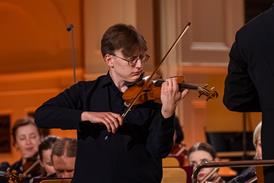
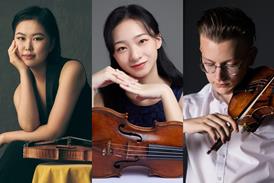
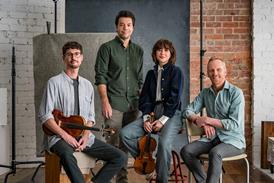
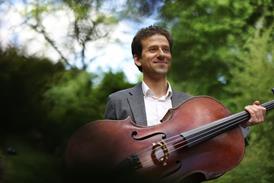




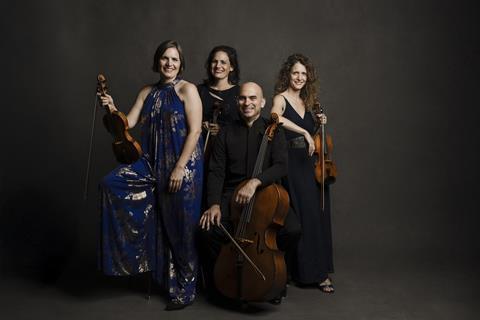
Liz Freivogel, violist of the Jupiter Quartet, speaks about the power of collaboration between composers and performers, illustrated in the ensemble’s new album featuring works by Michi Wiancko, Stephen Andrew Taylor and Kati Agócs
Read more Featured Stories like this in The Strad Playing Hub
On 17 April, the Jupiter Quartet releases its latest album Undreamed Shores on Orchid Classics. It features world-premiere recordings of new string quartets written for the ensemble: Michi Wiancko (To Unpathed Waters, Undreamed Shores), Stephen Andrew Taylor (Chaconne/Labyrinth), and Kati Agócs (Imprimatur, String Quartet No. 2), who are also longtime friends of the group. The three works each explore themes that include climate crisis, the pandemic, memory and re-imagination.
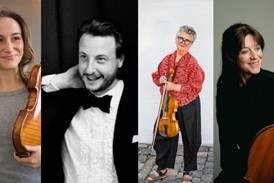
The recording is the Jupiter Quartet’s ninth studio album, and its final album with violinist Nelson Lee, who departed from the group’s lineup in September 2025. He was succeeded by violinist Mélanie Clapiès, who joined the line-up of violinist Meg Freivogel, violist Liz Freivogel and cellist Daniel McDonough.
Liz Freivogel spoke with The Strad on collaborating with three different composers for the album, the dynamic of change within the quartet, as well as the challenges of recording and performing these new works.
Undreamed Shores brings together three world‑premiere commissions created over the past decade. What does this album reveal about the quartet’s long‑term relationships with these composers and your commitment to new music?
We feel strongly as a quartet that we need to study, support, and perform the works of composers of all time periods. There is so much to learn and express from every era of composition. This extends to the present day and we make a concerted effort to regularly commission new works from living composers.
It is a special bonus when we already have a long-term friendship with the composer. Michi Wiancko is a friend from student days at the Cleveland Institute of Music, and a longtime colleague in the East Coast Chamber Orchestra.
Steve Taylor lives around the corner from us in Urbana, Illinois, where we all teach at the University of Illinois together. We run into him regularly walking around the neighborhood, and our kids take art lessons from his wife, Hua Nian, who kindly provided the artwork for this album.
We didn’t know Kati Agócs before she wrote us the beautiful Imprimatur, but enjoyed bonding with her in Aspen during our mini-residency there together, and have crossed paths many times since.
We definitely value the personal relationship that forms between us and the composers who create these amazing worlds for us to explore, and it is such a treat to be able to actually pick up the phone (or in Steve’s case, walk down the street!) and ask them any questions we might have.
We plan to continue participating in commissioning works as regularly as we possibly can. There are several in the planning stages, including a bassoon quintet from composer Arlene Sierra, spearheaded by our UIUC colleague Ben Roidl-Ward and performed alongside him at the Krannert Center for the Performing Arts in the autumn.
We will also help premiere a new piano quintet alongside Australian pianist Bernadette Harvey under the auspices of the Arizona Friends of Chamber Music, and are working on a commission for a new piece for voice and quartet with Nathan Gunn.
On our wishlist is a commission for a companion piece to George Crumb’s Black Angels quartet, if anyone feels like funding that!
Both Michi Wiancko and Stephen Andrew Taylor respond to global crises in their pieces. How did you balance the emotional weight of themes like ecological grief and the pandemic with the sense of hope you describe in the album?
When we first talked to Michi about the commission for her piece, we told her we would like to use climate change and environmental crisis as a theme. She agreed, but was adamant that she wanted there to be a hopeful message within the grief.
It is easy to give in to despair when you contemplate the ecological disaster that is unfolding around us every day, but despair also breeds inaction. We hope that playing this music, that is so powerful and by turns both disturbing and uplifting, can help people find strength to push forward with what often feels like a futile attempt to turn away from the destructive path we are on.
This piece is particularly popular among the younger generations, who are generally more attuned to the urgent nature of the environmental crisis. They often come up to tell us how powerful and engaging they find the piece afterwards. It has also provided some of the most tangible connections with audiences that we have felt for any piece, and has worked well as a companion to larger discussions on what responsibility humans have for the world around us.
We performed it as part of a collaborative project with the brilliant botanist and author Robin Wall Kimmerer last year in Urbana, and the emotional response from the audience was overwhelming. I think people are desperate to connect with messages of hope in such a dark time.
Steve’s composition also provides a hopeful ending, or at least a sense of relief from struggle. He vividly captures the sudden descent into the disturbance and chaos of the Covid-19 pandemic, and then brings us back out the other side to a more peaceful conclusion, though it is one deeply tinged with sadness and loss. Anyone who lived through those years can surely relate to this journey.
We hope that playing this music can help people find strength to push forward with what often feels like a futile attempt to turn away from the destructive path we are on
Could you describe one of the most technically challenging aspects featured on the album?
Steve Taylor’s Chaconne/Labyrinth is by far the hardest of the three pieces on the album, although they all have their challenges! He likes to use a musical language that includes microtones (where notes are lowered or raised by small degrees from the pitches we are used to hearing in the Western classical tradition).
This required a great deal of training of our ears to find the exact pitches he wanted, but also new physical techniques to pinpoint exactly the harmonies he wanted. We do a fair amount of bending of pitches as part of regular quartet tuning (for example, lowering the third of a major chord), but this was something much more extreme and exact.
We were lucky to have Steve around so that we could play for him and find out where we were failing at the microtones! He was very kind about helping us. He also incorporates very difficult metres, including one of his favorites, 13/16 (13 semiquavers in the bar!), and the metres are constantly changing, sometimes almost every bar.
On top of all of this, he writes very conversationally for the four voices, which is wonderful, but means that we are constantly trading off the themes between us, imitating each other, sometimes at breakneck speed, and this creates a lot of challenges.
Finally, he uses many extended techniques, and quickly shifts between arco, pizzicato, col legno, glissando, ponticello, etc. It is one of the hardest pieces we have ever played!
This album marks the end of an era with violinist Nelson Lee’s departure. How does this recording convey the quartet’s evolution up to this point, and how is it shaping the transition into your chapter with Mélanie Clapiès?
There is certainly a bittersweet quality to releasing this recording now, after we have already said goodbye to Nelson and welcomed Mélanie into the quartet. We feel so fortunate to have shared such a long and profound relationship with Nelson, and these pieces are just some of the amazing benefits that have come from that collaboration.
We are also immensely excited to be exploring new ground with Mélanie, rethinking the ways we have played more familiar pieces and also talking about what we want our new commissions and programs to look like in the future.
It has been a year of great change and sadness, but also wonderful excitement for what the future holds for our quartet. Mélanie is a deeply inspiring musician and we are so lucky that she chose to join us on our quartet journey.
You’ve performed these works before recording them. How did that deep performance history influence the interpretations captured on the album, and what new discoveries emerged in the studio?
Our interpretations of all the works changed greatly over time, particularly as we had a chance to work with the composers and try to fulfill the vision they had for their piece. In Imprimatur, we gradually learnt to take a more vocal approach to the music, really considering Kati’s deep understanding of the voice (she trained as a vocalist as well as a composer).
Sometimes we needed to stop thinking so much from a stringed instrument point of view, almost ignoring the instruments and bows we were holding, and instead listening for the overall quality of the textures. She creates such a lush and beautiful texture, full of eddying rhythms and magical colours, and it really helped for us to step back and listen from the outside for the overall effect, patiently letting the piece to unfold at its natural pace.
With Michi’s piece, I think we drew some of the same conclusions. We needed to erase the impression of ‘working hard’ to make the piece happen, and instead tap into the epic scope of the message she was sending.
For example, the first movement is filled with quick unison waves of notes. When we first played these together, we were sweating over matching up every single little separate note perfectly. When we stopped thinking of these as individual notes and instead focused on a bigger picture, creating an overall impression of waves of water, the piece started to hit its groove.
To Unpathed Waters, Undreamed Shores is filled with brilliant effects (I particularly like the squirmy imitation of the microbial soil underneath Central Park), and over time we learnt how to really embrace these effects.
As musicians, we spend so much time training to make a beautiful sound, and it can be hard to then to go in the other direction and force yourself to make an intentionally ugly noise, like the slow, rumbly scratch heard in the wildfire of the fourth movement Invisible Eviction. But embracing these effects only halfway can be worse than ignoring them completely!
Michi is serious about expanding the range of sounds the instrument can make, and we respect this approach and need to honour it.
Finally, with Steve’s piece, which could freeze us up with its sheer difficulty, we just had to learn it so thoroughly that we could stop thinking technically and focus on making music.
In live performance, it was easy to reach a state of panic if we weren’t careful to focus on the bigger picture! Recording Chaconne/Labyrinth was actually easier than performing it live because we knew we didn’t need to be technically perfect all the way through (which was an impossible goal anyway), that we would have many chances to perfect things.
Oddly, it was harder to record the Wiancko and the Agocs, both of these really benefitted from feeding off the energy of a live audience.










No comments yet