




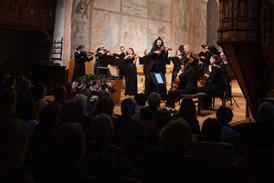



Violinist Shannon Lee revisits the lessons, humour and lasting influence of her late teacher Jan Mark Sloman, whose posthumous book Notes to a Violinist captures a lifetime of pedagogical insight and belief in young musicians
Read more Featured Stories like this in The Strad Playing Hub
Notes to a Violinist, the posthumous book by violinist and pedagogue Jan Mark Sloman (1949–2022), was released on 10 April 2026, marking what would have been Sloman’s 77th birthday.
Featuring an introduction by violinist and conductor Jaime Laredo, the publication fulfills a project Sloman spoke about for years and reflects a lifetime devoted to teaching, artistry, and the development of young musicians at the highest level.
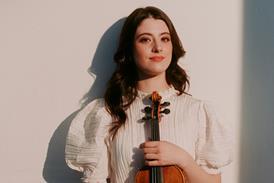
Sloman’s former student, Shannon Lee, reflects on her experiences from Sloman’s teaching methods and influence throughout her formative years.
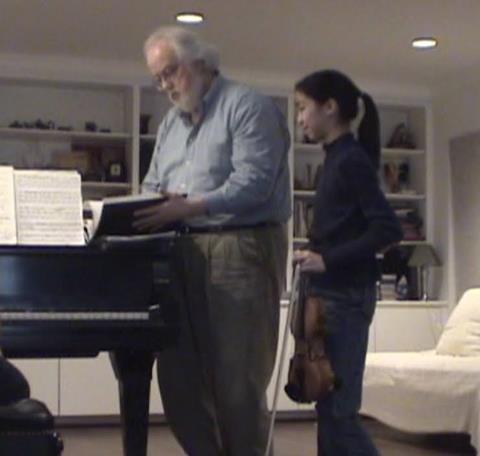
My most formative memories of Sloman come from the nine years that I spent studying with him in Dallas, Texas, before I went to college. I can vividly recall his ‘back house’ teaching studio. One wall was lined with four, slightly intimidating, painted wooden masks – each one larger and with more imaginative animalistic features than the last.
The adjacent wall was covered almost entirely by a mirror, with two paper flyers taped up high in the right-hand corner: one featuring a quote from Michelangelo – ’I saw the angel in the marble and carved until I set him free’ – and the other listing upcoming dates of the monthly studio recitals, which took place in the ’front house’.
In other words, each month we had the chance to perform for a sizable audience in the Slomans’ living room and hang out at the potluck reception afterwards in their kitchen, where we students could catch up with each other, hear nice compliments from the various people in attendance, and receive some (often constructive) feedback from Sloman in between.
Lessons usually started late. Sloman had a habit of running overtime, so when I arrived, I would have to quickly pass by the student currently in the middle of their lesson and go first to the small warm-up room in the back. A heavy metal mute was provided so that one could practise without terribly disturbing the lesson, since there was not much soundproofing. But if there was a quiet moment in the lesson outside, whatever I was doing (or not doing) could still be heard, and Sloman could easily be moved to yell out something conspicuously about PRACTISING SLOWLY!
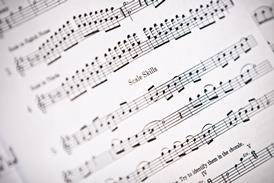
Etudes were always a must, as one might fathom from his emphasis on the ’Abbreviated Condensed Etude Sequence’ in his book. He even had me (and several others) go through the Gaviniès 24 Studies book twice!
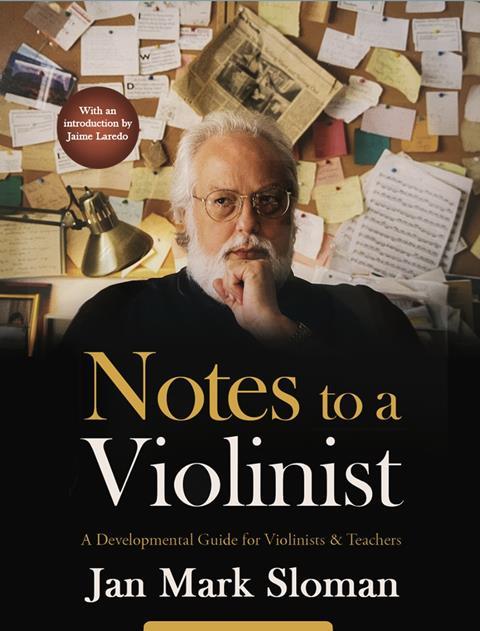
One etude, Fiorillo No. 28, somehow became a sort of long-standing competition for speed AND clarity. He’d say that he would give you a dollar if you could break the record. All the previous records set by various students and their dates of achievement were written and posted up on the bulletin board – somewhere in the background of the photo featured on the front cover of Notes to a Violinist.
Other funny moments extended to his chamber music programme, The Institute For Strings (TIFS), which had students playing not only in string quartets but also all together in a large ensemble. TIFS always featured the famous conductor ’You’re-On You’re-Own’. Sloman was very pleased with this joke.
One of the most important ways Sloman influenced my playing was with his emphasis on ’big sound’ – that is, not just loud, but big. This was something that, as far as I could tell, he brought to the forefront for all of his students.
In my lessons, he pointed out many parameters that contributed to a big sound: using natural arm weight as opposed to pressure, allowing flexible motion of right hand fingers, playing ‘in the string,’ thinking of filling the room; looking at the space between the bridge and fingerboard as if it were a big highway with many ‘lanes’ (a common sight in Texas), and paying attention to which lane your bow was in at the moment. The ‘sounding point’ was usually somewhere in a relatively fast lane, but not the fastest one. If the bow wasn’t straight, you weren’t really staying in your lane.
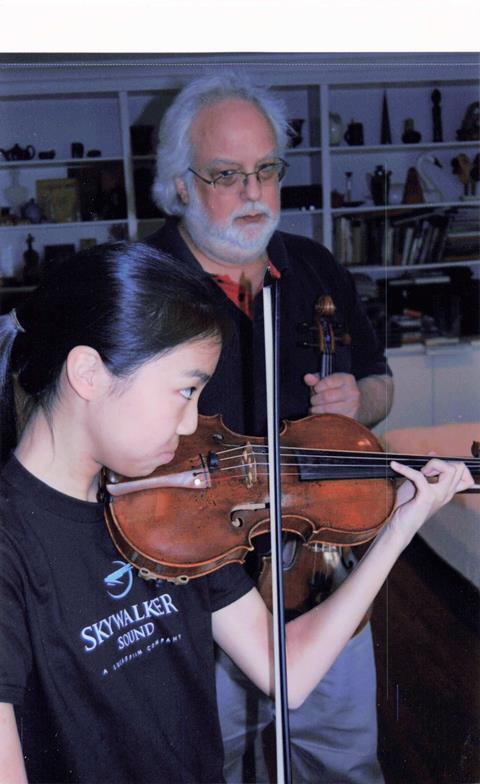
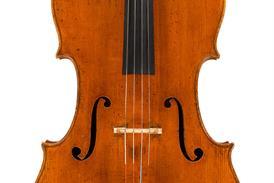
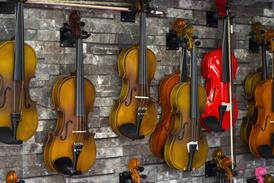
He also loved the world of violins and violin-making, and introduced me to some amazing violin/bow makers and instruments early on. This gave me a more acute sense of how significantly the choice of an instrument could impact my sound and motivation to continue playing.
When all of these parameters lined up favourably, it was a very good start, but the finishing touch came from some good old encouragement. Sloman was great at that. It was (and still is) a thrill for me to be able to produce such a sound from a fiddle, something that seemed to really fly beyond what I thought was originally possible. This is what I think of when he refers to the ‘resident resonance’ of an instrument in the text.
It has been so wonderful to see the outpouring of support for my teacher’s book, Notes to a Violinist, which was released on Friday 10 April. People have already received their first copies, and I was especially happy to learn from another former student that he could really hear Sloman’s voice in this book!
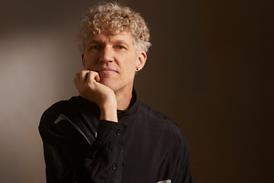
In the book’s video trailer, Sloman’s son Jacob (who is also a writer/director/photographer) describes how the seriousness of his father’s craft came through in the cover portrait, despite all his joking around during the photoshoot. Reading Notes to a Violinist, I find myself thinking back on the interplay of focused dedication and witty humour that ran through my studies with Sloman over many years.
As a young teenager, I was aware on some level that my involvement with the violin was more than casual – Sloman recommended practising three to four hours per day, and by the seventh grade, I was warned about potentially being summoned to truancy court for missing too many days of school because of having to travel for concerts.
But at the same time, the day-to-day activities of rehearsals, lessons and events were filled with so many insightful and funny observations, fascinating stories, and great pieces to learn that I was simply taken in by the music and excited to see where this adventure could go. The combination of this active environment with Sloman’s care, ambition, and genuine enthusiasm for the world of violin playing made being a part of Sloman’s studio very special.
Sloman’s book reminds me of that earnest belief that he had in his students, of the sharpness of his understanding in developing young violinists, and of all the people around the world who respected him as a musician, teacher, and human being. What’s remarkable is that I am still discovering new things about my teacher through this book. It made so much sense to read in Jaime Laredo’s introduction that Jan Sloman already had a big sound as a little kid!
Find out more about Notes to a Violinist here.
Photos courtesy Shannon Lee.
Read: Yehudi Menuhin 110th anniversary: music with friends
Read more Featured Stories like this in The Strad Playing Hub











No comments yet