




All Features articles – Page 16
-
 Premium ❘ Feature
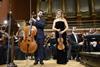
‘We enjoy playing softly together’ - Session Report: Pablo Ferrández and Anne-Sophie Mutter
Cellist Pablo Ferrández talks to Peter Quantrill his latest recording with violinist Anne-Sophie Mutter
-
 Premium ❘ Feature
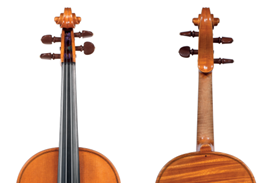
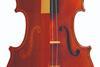
CT-Scanning the ‘Messiah’ Stradivari violin
In 2016 the ‘Messiah’ Stradivari was the subject of an extensive CT scanning project. Francesco Piasentini and Gregg Alf examine the resulting data, discovering repair work in the neck, and attempt to determine how it had originally been set
-
 Premium ❘ Feature
Blue Sky Teaching: Using creative approaches to refine students’ technique
In our June 2019 issue, Judith Kogan spoke with three string teachers, all based in North America and whose unique ideas are achieving significant results
-
 Premium ❘ Feature
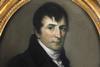
Violinist and composer Felix Yaniewicz – father of the first Edinburgh Festival
David Kettle discovers the history of the 18th-century Polish–Lithuanian violinist, composer and entrepreneur Felix Yaniewicz
-
 Premium ❘ Feature
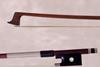
‘The great artistry of history’s most important bow maker’ - François Xavier Tourte
Paul Childs compares and contrasts two very late violin bows by François Xavier Tourte
-
 Premium ❘ Feature
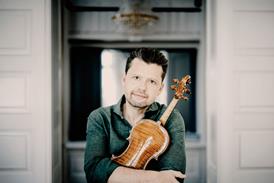
Pavel Šporcl: The man with the blue violin
Czech violinist Pavel Šporcl speaks to Amanda Holloway about his varied career and his unusual violin
-
 Premium ❘ Feature
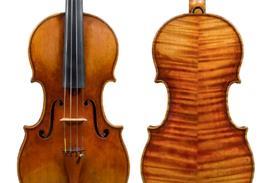
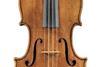
Antonio Stradivari ‘Harrison’ violin 1693: The start of something big
Andrew Dipper shows how the 1693 ‘Harrison’ violin signifies the start of a critical phase in the master luthier’s career
-
 Premium ❘ Feature
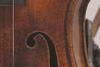
1734 Stradivari violin ‘Willemotte’: Late… but worth the wait
Made when Antonio Stradivari was 90 years old, the 1734 ‘Willemotte’ bears all his hallmarks including a deep, complex tone quality
-
 Premium ❘ Feature
‘I want to write music where the sensibilities of the player are encouraged’ - Caroline Shaw
The youngest ever winner of the Pulitzer Prize, Caroline Shaw talks to Toby Deller about her eclectic influences and finding inspiration in the most unlikely places
-
 Premium ❘ Feature
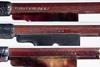
François Nicolas Voirin: The style and substance of a pivotal bow maker
Matt Wehling on Voirin’s artistic and technical advances, which were implemented by most all French makers and paved the way for makers such as Lamy, Sartory and E.A. Ouchard
-
 Premium ❘ Feature
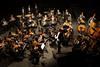
Black community orchestras in the US: Hidden histories
During America’s 20th-century social inequalities, African American musicians set up their own community orchestras, Eliesha Nelson traces their history and legacy
-
 Premium ❘ Feature
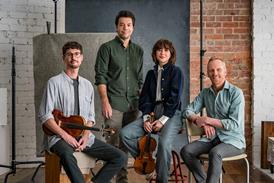
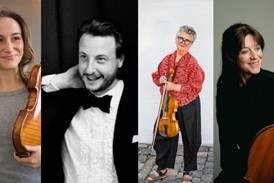
Session Report: the Chiaroscuro Quartet on Mozart’s ‘Prussian’ Quartets
The members of the Chiaroscuro Quartet on combining detailed preparation while retaining a sense of spontaneity when recording Mozart’s ‘Prussian’ Quartets
-
 Premium ❘ Feature
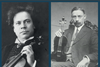
‘The scent of fraud hangs about him’ - The Brothers Abell: Secrets and Lies
Follow the lives of two brothers embroiled scandals, lies and violins
-
 Premium ❘ Feature
‘Go where there is no path and leave a trail’ - Emerson Quartet: We journey together
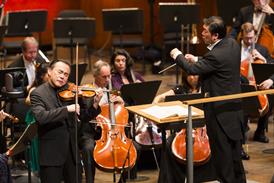
As the Emerson Quartet embarks on its final tour, the members talk to Bruce Hodges about their instruments, their future and their past as one of the great string quartets
-
 Premium ❘ Feature
Finding your own sound: Standing out from the crowd
In a world that seems to value homogeneous perfection, how do you develop an individual voice on your instrument?
-
 Premium ❘ Feature
Session Report: Recording Florence Price’s Second Violin Concerto
Violinist Rachel Barton Pine and conductor Jonathon Heyward speak to Harry White about recording Florence Price’s lost-and-found late work, the Second Violin Concerto
-
 Premium ❘ Feature
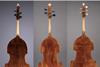
The Viennese double bass: The long pattern
In the 18th and 19th centuries, double basses made in Vienna had distinctive shapes and characteristics that gave them tremendous sound quality.
-
 Premium ❘ Feature
Scottish fiddle dance music: Invitation to the dance
The influence of fiddle dance music that emerged in 18th century Scotland still echoes through the reels and strathspeys of today.
-
 Premium ❘ Feature
Rick Stotijn: Stepping into the spotlight
Double bassist Rick Stotijn is a musical pioneer, playing in every style and context from solo, chamber and orchestral music to rock and metal.
-
 Premium ❘ Feature
’Your performance should radiate the colour of real fresh grass. Go to nature and look’ - Yuri Kramarov: A legacy regained
Russian violist and pedagogue Yuri Kramarov was one of the most important Soviet-era musicians. Misha Galaganov explores his life, career and teaching methods