

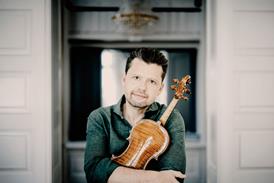







The British violinist on developing your own voice and putting things in perspective

Discover more Featured Stories like this in The Strad Playing Hub.
Read more premium content for subscribers here
Felix Andrievsky, my teacher at the Royal College of Music, was able to communicate the music’s character so clearly and evocatively. But when I would try to imitate him, he would shake his head and say: ‘That’s not you.’ He urged me to internalise the music and make it my own. This was a distinction that was unusual to hear from other teachers and it’s something I’ve carried into my own teaching. It’s hard to know as a young player how things will turn out, so I encourage students to find projects that help them develop a unique voice.
When I studied with Dorothy DeLay at the Juilliard School, she would often ask, ‘What are you going to do on those days when you don’t feel inspired?’ I think it was a nice way of her saying I needed more patience! I became more systematic in my practice and set small goals and strategies for when I was on stage. We can never have total control of how we feel in that moment, so we need to train for that.
The Chilingirian Quartet was also a formative influence at the Royal College. I was very ambitious in terms of solo playing, so when the players would intensively coach a phrase in chamber music I hadn’t really thought about, I’d think, ‘How hard can it be? It’s just a phrase in a Mozart quartet.’ But they would make me think about how I placed the bow, handed off a phrase, reacted to the sounds around me, and so on.

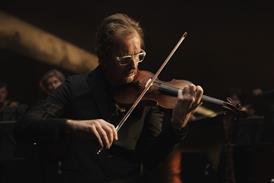
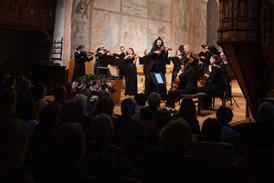
Joining the Takács Quartet when I was only 24 was a baptism of fire in many ways. One thing I didn’t realise until then was that the job entailed much more than lots of time in a practice room – there’s a whole social element to it too. You become part of a network of quartet friends and supporters, and it’s now one of my favourite things about this line of work. It helps to see yourself as part of a bigger picture. The spirit of debate is also extremely important in a quartet, and it’s something that my mother, an amateur violinist, really encouraged. It served me well later on.
This profession has a lot of highs but also a lot of lows. Looking back, I would tell myself to try to keep things more in perspective and more on an even keel. I think it also helps to be influenced by other art forms. When I lived in London, I remember going to the National Theatre quite often, and I’m also inspired by the craft and courage of stand-up comedy. Anything where you are watching someone form a connection with an audience is immensely helpful.
Our profession can encourage self-absorption but it’s also a great opportunity to meet others with different backgrounds and life experiences, and learn from them. The best thing that comes out of music is a sense of teamwork. It’s not so much about yourself.
INTERVIEW BY RITA FERNANDES
Read: Sentimental Work: Edward Dusinberre on Beethoven’s String Quartet no.8
Read: Session Report: the Takács Quartet on re-recording Schubert
Discover more Featured Stories like this in The Strad Playing Hub.
Read more premium content for subscribers here










No comments yet