




All Features articles – Page 18
-
 Premium ❘ Feature
G.B Guadagnini’s 1773 ‘Cozio’ viola: The only constant is change
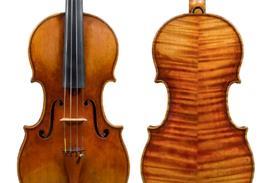
The commercial relationship between G.B. Guadagnini and Count Cozio di Salabue allowed the luthier greater freedom to experiment. Alberto Giordano and Barthelemy Garnier examine a 1773 viola to show how the 62-year-old maker continued to adopt new methods and ways of working in this period
-
 Premium ❘ Feature
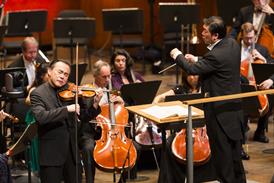
Serbian string playing: Free spirits
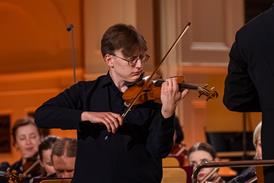
The Serbian school of string playing, characterised by its startling originality, developed out of the Balkan nation’s chequered history and unique place in Europe in the 20th century, finds Jacqueline Vanasse
-
 Premium ❘ Feature
Session Report: Looking to the future
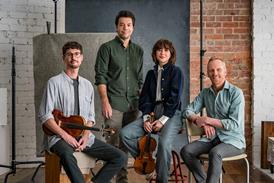
Tim Homfray speaks to members of the Navarra Quartet, which celebrates its 20th anniversary this year and recently welcomed two new players, about recording chamber works by Edward Gregson
-
 Premium ❘ Feature
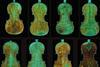
Fluorescence: Reflected glories
Viewing instruments in different kinds of light has become standard in documentation and assessment. Leonhard Rank explains how, in addition to ultraviolet light, researchers can now use infrared, and even parts of the visible spectrum, to reveal even more secrets
-
 Premium ❘ Feature
Adult beginner cello: Never too late to learn
When Billy Tobenkin decided to learn the cello from scratch at 25, he ignited a lifelong passion. He shares what turned out to be a bumpy but ultimately deeply fulfilling journey
-
 Premium ❘ Feature
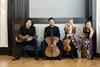
Pavel Haas Quartet at 20: Coming home
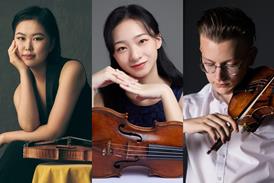
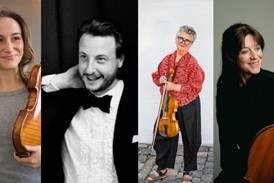
The energetic and eloquent musicians of the Pavel Haas Quartet are celebrating 20 years of music making with a new recording of Brahms quintets joined by some old friends, as they tell Tom Stewart
-
 Premium ❘ Feature
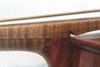
Baroque Set-up: In a Land without Rules
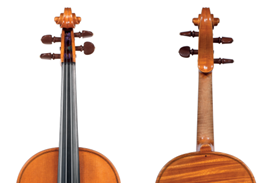
With the growth in popularity of historically informed performance, more players are requesting Baroque-style instruments – but the process of converting an instrument is fraught with uncertainty. Sarah Peck presents an overview of the Baroque set-up process, and corrects some common misconceptions along the way
-
 Premium ❘ Feature
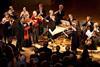
Historically informed performance: Baroque revolution
Historically informed performance requires no secret code, argues Baroque violin professor Walter S. Reiter. The information is out there for the taking, and modern music colleges need to get ahead of the game
-
 Premium ❘ Feature
Session Report: A royal consort
Richard Boothby of Fretwork speaks to Robin Stowell about the ensemble’s recording of fantasias for viol consort by Thomas Lupo, the Italian who made a name for himself at Queen Elizabeth I’s court
-
 Premium ❘ Feature
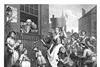
Pietro Castrucci: Resurrecting a Baroque maverick
When Gerald Elias unearthed music by the little-known London-based 18th‑century composer and virtuoso violinist Pietro Castrucci, he discovered a unique and independent musical voice
-
 Premium ❘ Feature
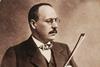
August Rau: The old-fashioned way
At a time when bow making in Germany was leaning towards industrialisation, August Rau kept up the tradition of independent craftsmanship. Gennady Filimonov tells the story of his long career and examines several examples of his work
-
 Premium ❘ Feature
Paul Makanowitzky: From prodigy to pedagogue
Swedish-born violinist Paul Makanowitzky ultimately helped create the American school of violin playing. David Hays explores his life and multifaceted career
-
 Premium ❘ Feature
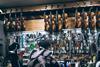
Violin making in Seoul: Gangnam style
Over the past decade, a wide community of violin and bow makers has grown up in the Seocho district of Seoul. Luthier Hagit Gili Gluska speaks to colleagues young and old, both local and from overseas, who have made this area their home
-
 Premium ❘ Feature
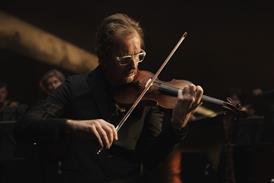
Viktoria Mullova: Her infinite variety
Violinist Viktoria Mullova talks to Toby Deller about her eclectic musical collaborations, mastering the art of improvisation, experimenting with technique, and her new Schubert recording with pianist Alasdair Beatson
-
 Premium ❘ Feature
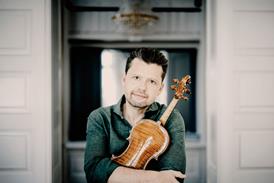
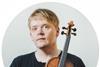
Pekka Kuusisto, a green violinist
Elegy for the Forest, Pekka Kuusisto’s short film made in collaboration with Greenpeace, aims to build awareness of deforestation. He speaks to Peter Quantrill about combining art and activism
-
 Premium ❘ Feature
Jacob Stainer’s birth: A question of dates
For centuries, historians have tried to settle on a definitive birthdate for Tyrolean luthier Jacob Stainer. Heinz Noflatscher explains how we now have an upper limit for his birth year – and why researchers were foxed by the elegant handwriting of the master
-
 Premium ❘ Feature
Casey Driessen: Music in other lands
In 2019, American five-string fiddler Casey Driessen and his family took off around the world for nine months for his music-sharing project Otherlands: A Global Music Exploration. In a tantalising snapshot of his journey, often into the musical unknown, he recalls meeting and playing with some of the great regional ...
-
 Premium ❘ Feature
Johannes Moser: Surrounded by sound
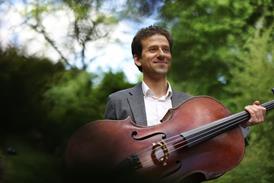
The German–Canadian cellist Johannes Moser embraces experimentation. He talks to Peter Quantrill about channelling his inner Jimi Hendrix and exploring the sound of the electric cello which, alongside the conventional cello, features in his latest recordings for Platoon
-
 Premium ❘ Feature
Session Report: A meeting at the crossroads
For violinist Rachel Podger and pianist Christopher Glynn, recording Beethoven’s violin sonatas, which occupy the stormy transitional period between Classicism and Romanticism, brought together their disparate musical specialisms, as they tell Harry White
-
 Premium ❘ Feature
Schroetter and Roth: Two of a kind
With the demand for mass-produced German instruments skyrocketing in the 1920s, enterprising makers sent family members to America to represent them. Clifford Hall explores the careers and legacies of Andrew Schroetter and Heinrich Roth