









A historical figure proves artistically uneven
The Strad Issue: February 2026
Description: A historical figure proves artistically uneven
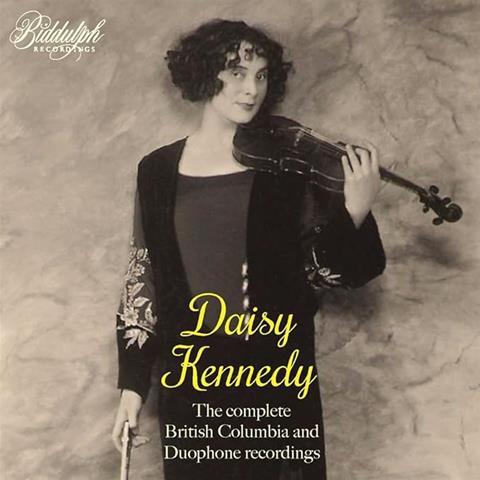
Musicians: Daisy Kennedy (violin) orchestra/Hamilton Harty (piano)
Works: Music by D’Ambrosio, Bach, Barns, Beethoven, Brahms, Brandl, Cramer, Drdla, Grieg, Hubay, Kosloff, Krakauer, Kreisler, Milandre, Mistowski, Rosenbloom, Schubert, Schumann, Saint-Saëns, Scott, Zarzycki, Zimbalist and Zsolt
Catalogue number: BIDDULPH 85063-2 (2 CDS)
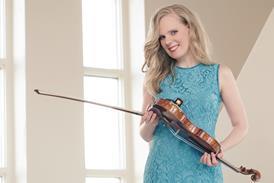
By no stretch of the imagination could Daisy Kennedy (1893–1981) be described as a great violinist. This tall, good-looking, red-haired woman apparently exuded a good deal of Irish–Australian charm and was a ‘character’, but little of her personality finds its way on to her records.
She has a puzzling way of reversing violinistic norms. From a fiddler good enough to be asked to make records, you expect a fine legato, but hers is often miserable, with a tendency to wander ever-so-slightly off the note. But when technical hurdles loom, her Ševčík training kicks in and she tosses off the most intricate passages, sounding more and more effortless, the higher she goes. She has a lovely trill, which she can vary, and double-stops are mostly excellent.
She began recording for Columbia in September 1916 and I wonder if she was more nonplussed than most by the difficulties of acoustic recording. Of two pieces backed by Harty with a little orchestra, Beethoven’s G major Romance is rather droopy but perks up a bit in the faster section. Saint-Saëns’s Introduction and Rondo capriccioso also begins in depressed mood but as the tempo increases and the length of the notes decreases, she makes quite a decent showing.
Harty joins Kennedy in three abridged sonatas and two Brahms movements, the ’FAE’ Scherzo, where she sounds a little overawed, and the Adagio of op.108, where she musters some fervour. Schumann’s A minor is beyond her but Grieg’s F major and G major sonatas, two cut movements from each, inspire a more cheerful response.
The 17 acoustic Columbia short pieces are a mixed bag, musically and performance-wise, but include one gem, Nándor Zsolt’s Dragonflies, which exploits her skill in trilling and is a miracle of lightness. From 1926 come six sides recorded acoustically for Duophone, plus an unpublished two-sided version of Hubay’s Plevna Nota. The Cramer–Burmester Waltz is quite charming, the Brahms–Joachim D minor Hungarian Dance shows some personality and Scott’s Danse negre communicates a degree of feeling.
Almost better than the records is a 1969 BBC interview, which gives us the real Kennedy. The transfers from the 78rpm discs have been well done.
TULLY POTTER
Read: Women of the World
Read: Musical groundbreakers: Ševčík’s female pupils
Read: ‘We’re making an active choice to write women out of music history’











No comments yet