







![Ayanna Witter-Johnson [Jordan Woods] 7](https://dnan0fzjxntrj.cloudfront.net/Pictures/274x183/4/9/4/44494_ayannawitterjohnsonjordanwoods7_224583.jpg)


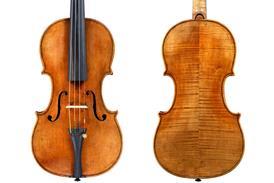






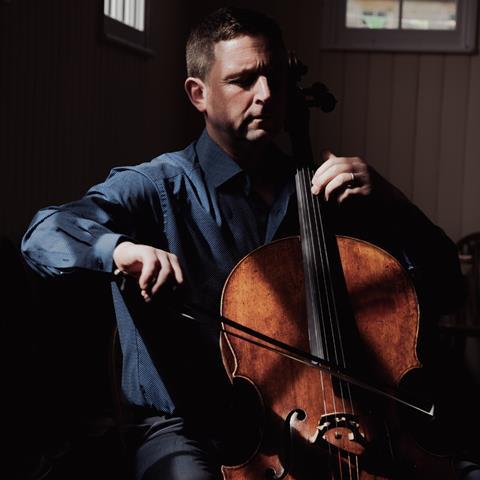
Jamie Walton, the current custodian of the Amati cello, reflects on its sound and projection
Discover more lutherie articles here
This is an excerpt from The Strad February 2026 feature, ’Seven, they are seven: Nicolò Amati cello 1642’. Read the full article here
One overarching characteristic of this magnificent Amati is a remarkable acoustic coherence across the entire register. This cello displays an unusual uniformity from the C string through to the A, producing a tonal range that remains structurally stable in all dynamics. This evenness – rare in any instrument – first led me to describe its sound as ‘cosmic’: it projects not simply with volume but with depth, breadth and a harmonic richness that retains focus whether played pianissimo or fortissimo.
The lower register is particularly distinctive. Both the C and G strings exhibit a powerful, almost cavernous resonance that combines density with refinement, producing a throaty, propulsive quality that demands careful control when shaping lines that rise out of the bass. Played sotto voce, however, the core of the sound reveals a hushed yet reverberant, glowing tone that seems to originate from deep within the instrument itself. Once one learns to trust this natural response, the register becomes extraordinarily self-sustaining; minimal bow input creates a surprisingly complete sonic field. (The low E on the C string, I’ve discovered to great amusement, can make the walls vibrate!)
The low E on the C string can make the walls vibrate
This immediacy of response is evident across all four strings and striking in the sensitivity of its middle and upper registers, especially in soft dynamics. At pianissimo, for example, the A and D strings speak with tremendous lyricism, maintaining both the quality and complexity of sound. This permits extremely low bow pressure when required, without any loss of articulation. In practical terms, it removes an entire layer of technical ‘management’: the cello reacts so efficiently that one can focus solely on the music itself rather than compensatory technique. During a recent recording of the Bach Suites, this singing characteristic was invaluable; passages that on other instruments required a level of coaxing simply unfolded naturally, a gift particularly in evidence during Suites nos.4, 5 and 6, where the complex polyphony benefited from effortless projection with the lightest of bow strokes.
So in Bach’s remarkable polyphonic writing – especially within the Allemande and Sarabande of Suite no.6 (a personal favourite) – the Amati’s dual-voiced quality comes into its own. The bass-line can really function as an independent acoustic entity, sustaining resonance that supports rather than obscures the upper voices. Chordal textures speak with great efficiency, each note retaining its own clearly identifiable spectral ‘fingerprint’, which has in turn completely reshaped my approach to Bach (something of a revelation).
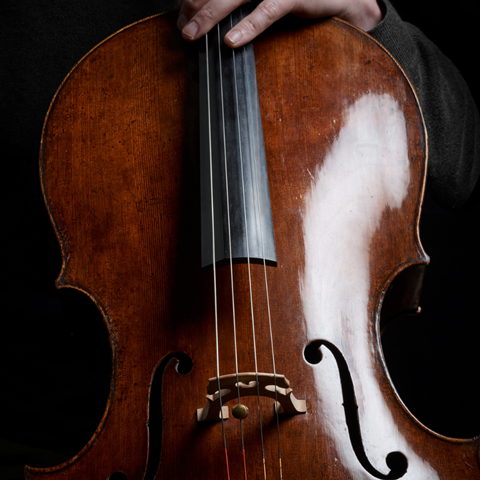
The tonal palette is broad yet logically organised: a warm, chocolatey dense lower-middle range; a sweet, stable and golden upper register; an earthy, powerful bass; and a D string with remarkable focus that never sounds muted or transitional. Each register does have its own distinct character, yet they all integrate harmoniously with one another. To maximise these qualities, I currently use Spirocore tungsten-wound C and G strings (medium tension for the Bach), which bring out clarity and stability without exaggerating the bass. For the upper strings, Larsen Magnacore A and D provide an ideal balance of response, focus of pitch and colour flexibility, allowing this register to bloom.
My heartfelt appreciation of this incredible cello has been enhanced by formative years developing on a range of wonderful instruments, an experience for which I am eternally grateful: a G.B. Guadagnini that nurtured tonal beauty; a Guarneri ‘filius Andreae’ renowned for its muscularity and projection; and a beautiful Matteo Gofriller that encouraged elegance and colouristic variety. Every cello provided distinct insights into one’s ever developing sound world, musical character and stylistic potential. These invaluable journeys have, ultimately, made it abundantly clear that the Amati is exceptional not least for the sheer quality of its natural sound – alongside some jaw-dropping, flawless craftsmanship (the scroll is a wonder to behold) – but also for its capacity. The dynamic ceiling is high, yet it can thrive at the quietest levels with remarkable richness, radiating a distinctive ‘golden aura’.
I seem to have found my true voice through this instrument. It allows for unlimited expressivity – an experience as humbling as it is moving. The responsiveness reveals and encourages nuance, and its infinite potential ensures continual discovery and development. In other words, it demands (and rewards) ongoing refinement – a relationship which, like the best sort, is challenging, revelatory, harmonious – and inexhaustible!
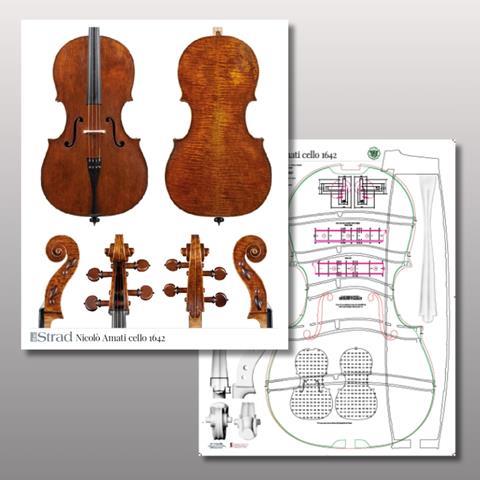
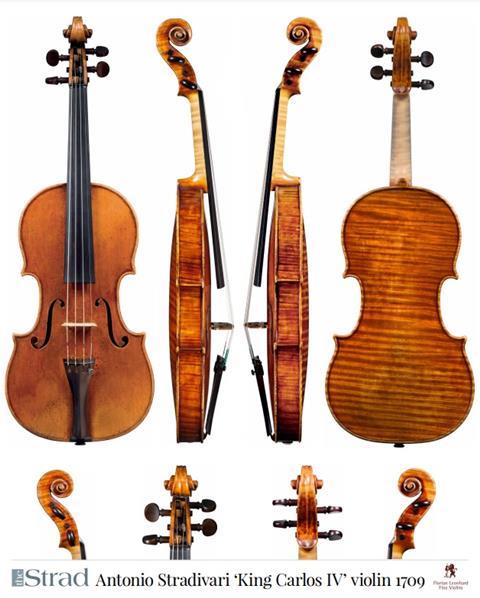
Purchase The Strad poster
Subscribers to The Strad receive a folded copy of the Amati cello poster. To order a rolled copy from The Strad Shop, please visit www.thestradshop.com












No comments yet