




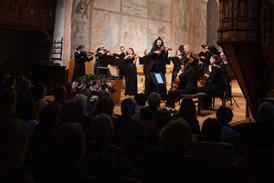



Janet Banks visits London’s Barbican Hall on 16 April 2026 for the performance of Korngold, Imogen Holst and Shostakovich
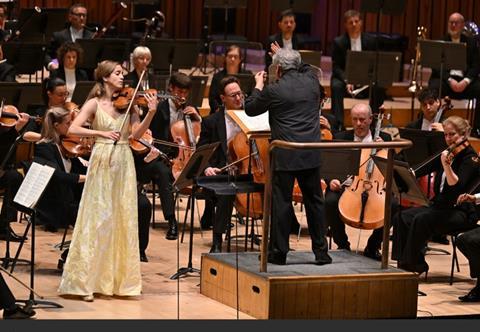
Korngold’s Violin Concerto may date from 1945, but, with its huge orchestra and rich Romanticism, it belongs to the world of Richard Strauss and Mahler.
Vilde Frang, playing with graceful lyricism, made the rising 4ths and 5ths of its opening motif sound both mysterious and intensely felt. She lent a brittle edge to the cadenza’s spiky double stops, and her semiquaver ending over quick orchestral fizzes of sound sparkled with light.
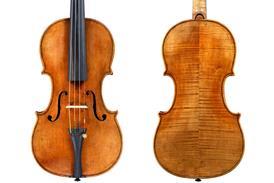
Frang cherished the theme of the Romanza as if it were the most precious thing in the world. Its many super-high passages had the delicacy of strands of silk, but she also relished the richness of the lower strings of her 1734 Guarneri ‘del Gesù’. Dressed in white-gold brocade, her tall figure had a rather unearthly look as she played, eyes sometimes closed, as if in a dream. She did not obviously try to rise above the volume of the orchestra, instead, playing non-vibrato and almost sul tasto, challenging her fellow players to play even more quietly.
The Allegro assai, with Frang’s incisive plucking, spread pizzicato chords, playful ricocheting and virtuosic spiccato cross-string semiquavers, felt like a particularly wild hoedown. After everything slowed to a false ending, leaving the Norwegian violinist poised in her highest range as if balanced on a pinhead, back she came even more fast and furious.
Imogen Holst’s impressionistic student work Perséphone was enthusiastically greeted by the capacity audience at the start of the concert, and Pappano’s blistering, at times almost overwhelming Shostakovich Fifth blazed out after the interval.
JANET BANKS
Watch: After hours at Guildhall Art Gallery: Vilde Frang and Lawrence Power perform ‘Capricci’
Read: Vilde Frang on the mentors who steered her from talented teen to fully-fledged artist
The Strad Recommends: Vilde Frang: Elgar






No comments yet