





Janet Banks hears the performance of Mendelssohn and Bach at London’s Wigmore Hall 14 November 2025
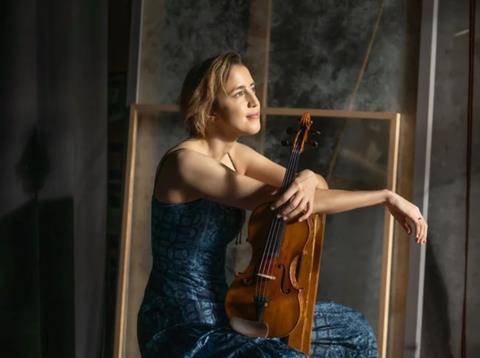
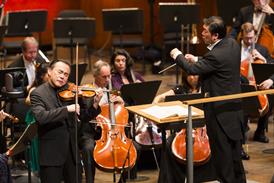
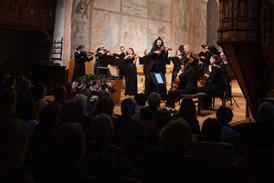
The Wigmore Hall stage is seldom as busy as it was with the 15-strong Basel Chamber Orchestra, upper strings standing, plus harpsichord and soloist.
Mendelssohn’s early string symphonies are something of a rarity too. no.3 in E minor, a brilliant exercise in counterpoint, was saved from dryness by being taken at a lively pace, with an ethereal lightness to the Andante’s quieter dynamics and a nice throwaway ending.
Vilde Frang performed two Bach violin concertos, one unexpected, the second everyone’s favourite. The Concerto in A major, arranged from Bach’s Harpsichord Concerto BWV1055, majors on the soloist’s lower register, making it challenging to permeate the ensemble. Frang’s soulful, expressive playing, keeping vibrato minimal, laid the Larghetto’s emotion bare, though the punctuating string accompaniment was occasionally too heavy. She played the outer movements with a natural ease, stylish and dancing.
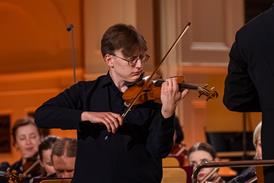
The much-loved Bach Double Concerto inspired a new energy in the chamber orchestra and by the finale, after a few ensemble issues in the concert’s first half, the whole band was suddenly playing excitingly as one. Frang and the orchestra’s director Baptiste Lopez dovetailed their lines beautifully, taking the slow movement to depths of yearning.
Mendelssohn’s String Symphony no.9 in C major positively sparkled. Moving the cellos and bass to centre stage highlighted its original textures and there was more of a chamber music feel, with a lot of eye contact and rubato. The violin quartet at the start of the Andante was played with real finesse and the più stretto ending brought the concert to a thrilling conclusion.
JANET BANKS
Read: Vilde Frang on the mentors who steered her from talented teen to fully-fledged artist
Watch: Interview with Vilde Frang
The Strad Recommends: Vilde Frang: Elgar








No comments yet