





![Ayanna Witter-Johnson [Jordan Woods] 7](https://dnan0fzjxntrj.cloudfront.net/Pictures/274x183/4/9/4/44494_ayannawitterjohnsonjordanwoods7_224583.jpg)





Expressive poise marks out a much-revisited cycle
The Strad Issue: August 2026
Description: Expressive poise marks out a much-revisited cycle
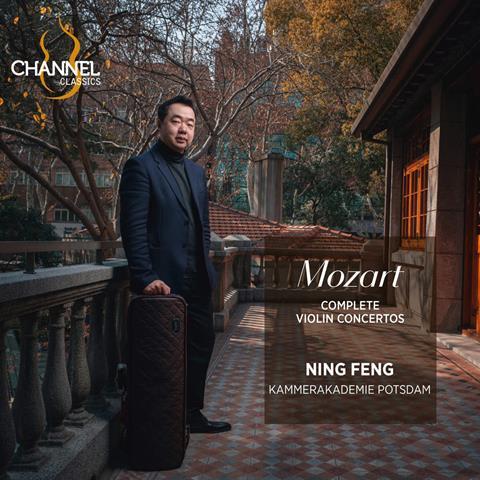
Musicians: Ning Feng (violin) Potsdam Kammerakademie/Suyeon Kang, Susanne von Gutzeit
Works: Mozart: Violin Concertos nos.1–5; Rondos K269 and K373; Adagio K261
Catalogue number: CHANNEL CLASSICS CCS48126 (2 CDs)
Ning Feng’s assured, accurate and convincing performances are well attuned to Classical decorum and stylistic propriety. Adopting largely mainstream tempos, he negotiates solo episodes such as those encountered in the First Violin Concerto’s outer movements with feather-light articulation and responds naturally and flexibly to the phrase and line. Commendable, too, is his poised and cultivated playing of the central slow movements, especially those of the Third, Fourth and Fifth concertos. Vibrato is omnipresent as a tonal colouring; but movements such as the Adagio of no.1 might have benefited from some additional extempore ornamentation. Instead, Feng saves his creativity for various decorated cadences and lead-ins and his own cadenzas. The latter, though based on relevant thematic material, tend to be overlong for the sensibility of the period and the colourful alla Turca episode in the Fifth Concerto’s finale seems mundane when compared with some of its competitors.
Feng completes this package with persuasive accounts of Mozart’s three single-movement pieces for violin and orchestra. His precision in K261’s high-register passages and his expressive reading of K373’s central episode are especially to be savoured.
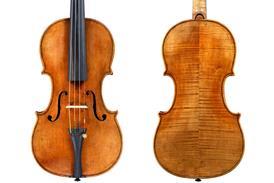
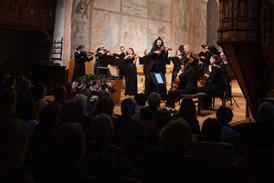
Captured in two groups of sessions (October 2024 and 2025) and involving two directors, these recordings have a bright, luminous quality with Feng’s violin (a sweet, pure-toned Nicolò Amati from 1665 for concertos nos.1, 2 and 5, and a fuller-sounding Francesco Rugeri from 1694 for the other works) keenly in focus, yet not too close. Exchanges between soloist and orchestra have uncommon rapport throughout and the excellent contributions from the pairs of horns and oboes are pleasingly balanced against the modestly sized string forces.
ROBIN STOWELL
The Strad Recommends: Ning Feng: Brahms, Goldmark
Read: Violinist Ning Feng: Truth and substance
Read: Session Report: Violinist Ning Feng on recording the Goldmark and Brahms violin concertos









No comments yet