






Violinist Hector Scott shares what a summer in rural Vermont taught him about performance, perfectionism and why musicians sometimes need to escape the institutions that trained them
Read more Featured Stories like this in The Strad Playing Hub
Every musician knows the feeling of becoming figuratively secluded. Not just physically trapped, though conservatoires are full of sealed practice rooms, fluorescent corridors and windowless rehearsal spaces, but also psychologically enclosed. The effect can be a narrowing of curiosity, thought and one’s sense of possibility. Technique becomes performative and musical intent becomes inflexible and disconnected from the performer.
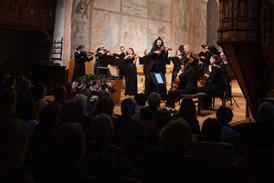
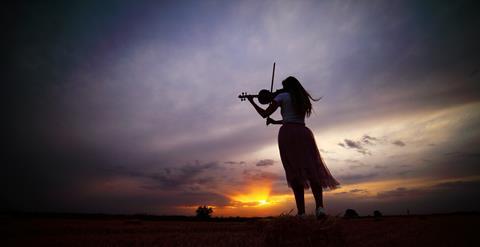
I often think back to my summers at Yellow Barn in Putney, Vermont, where for five weeks each year this sense of enclosure dissolved. We played chamber music in a converted barn surrounded by open fields, lakes, rivers, and woodlands with concerts unfolding in warm evening light while listeners sat close enough to hear breathing and the friction of bow hair against a string. Meals stretched into conversations about literature, dance, philosophy, politics, composers we admired and composers we did not yet understand. The pace of life slowed just enough for attention to deepen. What mattered most, however, was not any individual concert, masterclass or lesson but rather, how the physical spaciousness of the landscape encouraged an internal spaciousness.
To leave behind the compressed atmosphere of institutional learning and suddenly enter open air felt almost physiological. The body loosened before the mind did and I well remember the sensation of walking outside after long rehearsal sessions indoors. Sky replaced the ceiling, trees replaced the walls, and silence replaced administrative urgency. The shift was transformative precisely because it was so elemental. It resembled the moment athletes describe when they emerge with tense anticipation from the confinement of the changing room onto the freedom of the pitch where their motion and instinct take over.
Musicians rarely acknowledge how profoundly environment shapes artistic thought. We discuss interpretation, historical performance practice, competitions, repertoire choices and career trajectories but we seldom ask what kind of spaces produce imaginative people. A conservatoire can train discipline and craft with astonishing efficiency while simultaneously narrowing a student’s creative field of vision. Institutions are excellent at teaching musicians how to function within institutions.
Summer festivals operate differently. At their best, they become temporary alternative worlds or experimental laboratories in which the hierarchy of normal musical life softens. Learning happens obliquely with ideas being absorbed through conversation, through proximity, through walking beside colleagues after rehearsals, and through hearing fragments of unfamiliar music drifting across a field at dusk.
Institutions are excellent at teaching musicians how to function within institutions. Summer festivals operate differently
In such environments, creativity ceases to feel compartmentalised so that a chamber rehearsal might lead to a discussion about commissioning a composer, and a conversation after breakfast might evolve into a collaboration with a dancer or filmmaker months later. Listening itself changes through these experiences and consequently, curiosity broadens. One begins to remember that music is not an isolated discipline but part of a larger cultural ecology.
This widening of perspective can be difficult to achieve inside highly evaluative educational systems as contemporary classical training remains deeply shaped by assessment culture. Students learn quickly that every activity carries implicit criteria such as rhythmic precision, intonation, stylistic consistency, technical control, ensemble coordination. These foundational aspects matter, of course. Technique is not the enemy of artistry. However, when assessment becomes the dominant framework through which music is experienced, something subtler begins to disappear.
The educational imagination contracts around the idea that there is a correct answer, and this mentality produces musicians who are technically equipped yet psychologically fragile. Many performers live in a permanent state of anticipatory self-correction, constantly scanning for error before their expression has even fully emerged. One mistake in performance can trigger a disproportionate panic, a sudden cognitive seizure in which memory collapses and the inner critic takes command. The nervous system interprets imperfection as danger.
What fascinated me at Yellow Barn was the extent to which this mechanism weakened in a more relaxed artistic environment. There was time to notice one’s own reactions, time to fail privately, time to recover, and time simply to think. Without the constant pressure of formal evaluation, music-making gradually shifted away from self-monitoring and towards communication. I began to understand that performance itself could be framed differently.
Many classically trained musicians unconsciously experience concerts as examinations with the audience becoming a panel of judges waiting to detect inadequacy. The performer stands isolated at the centre of a highly ritualised transaction in which value is determined by flawlessness. Yet this framing is historically and emotionally absurd because people do not gather for live music in order to witness perfection, rather, they gather to feel connected to something larger than themselves.
At some point during those summers, my understanding of performance quietly inverted with the focus moving away from me and towards the audience. Playing stopped feeling like self-preservation and began to resemble hospitality. A concert became less an act of proving and more an act of hosting. The performer’s role was not to demonstrate superiority but to create a space in which listeners felt welcomed into a shared emotional experience. This is not a sentimental distinction; it changes the entire psychology of performance.
Perfectionism isolates because it centres consciousness upon the self and hospitality decentralises the ego. The performer ceases to ask, ’Was I good enough?’ and instead asks, ’Did we experience something together?’ In that shift, the audience, performer and performance space begin functioning as part of a single, supportive organism. The irony is that audiences often recognise this instinctively while institutions struggle to teach it. The most transformative artistic experiences frequently emerge from qualities that resist quantification such as generosity, presence, risk, intimacy, spontaneity and vulnerability.
In a previous role as associate head of strings at a UK conservatoire, I often encountered performances of Astor Piazzolla that satisfied the assessment rubric while entirely missing the cultural and emotional world from which the music emerged. The interpretations were technically polished and accompanied by the correct dynamic contrasts, rhythmic accuracy and ensemble coordination. Yet, they often lacked a sense of the tango’s dramatic instability, sensuality or danger. The box was ticked while the deeper understanding was absent.
The same distinction between technical correctness and artistic understanding often appears in performances of Bach, although in a different form. In German performance-practice tradition, Manierenbogen (‘ornamental’ or ’expressive slur’) is more than simply a bowing instruction as it also indicates an expressive gesture or way of shaping the notes. If players reduce the slurs to mere technical bowings, they miss their expressive function.
For Bach, music was not thought of primarily as a sequence of notes, but as a form of eloquent speech and the educated musician was expected to know classical rhetoric or the art of persuasive speaking. Thinking in these linguistic terms offers the understanding of how the music speaks and the bow then becomes analogous to the breath and inflection of a speaker.
What unites the Piazzolla and Bach examples is that the essential knowledge in each case exists precisely where assessment systems struggle to look. Technical execution can be measured; cultural imagination, rhetorical sensitivity and embodied understanding cannot. Educational systems tend to isolate musical parameters into assessable units detached from lived experience, training students to solve problems designed for consistency rather than meaning.
Yet artistic life rarely operates through single correct answers. Like the most important decisions we make such as whom we love, where we live, which risks we take, art emerges from ambiguity, contradiction and experience. Institutions are often effective at compartmentalising knowledge but less successful at fostering its integration. Interdisciplinary initiatives can expand the number of disciplines in conversation without necessarily helping students understand the deeper patterns that connect them. The result is an education that excels at analysing parts while struggling to illuminate the whole.
Consequently, there can be a strange narrowing of intellectual life within some music departments. Disciplines become siloed and students absorb the assumption that serious knowledge exists only within approved frameworks established by teachers and inherited traditions. Perspectives from outside the institution from literature, philosophy, jazz, folk traditions, theatre, dance, psychology or popular culture are treated as secondary or irrelevant. However, artistic growth frequently occurs precisely through contamination, through crossing boundaries, through allowing ideas from elsewhere to disturb the internal logic of one’s training.
A summer festival can catalyse this because it interrupts routine identity. Removed from familiar structures, musicians begin relating to themselves differently and notice how much of professional life is maintained through repetition. Rehearsing and performing in the same rooms, schedules, expectations, hierarchies, anxieties. Change the environment and the self becomes unexpectedly fluid.
Perhaps this is why periods of retreat or artistic exile recur throughout cultural history as artists have long sought forests, monasteries, islands, countryside residencies, temporary communes. Not to escape work but to encounter it differently. Solitude and openness alter perception, and nature often recalibrates our attention. For musicians especially, whose labour is so intimately tied to the body and nervous system, such recalibration can feel almost medicinal.
I do not mean this romantically because nature does not magically solve artistic problems. Rural retreats can become performative fantasies of authenticity as easily as urban conservatoires can become machines of conformity. However, there is something undeniably clarifying about stepping outside environments governed entirely by productivity and judgement.
At Yellow Barn, I gradually realised that many of the ’mistakes’ I feared in performance were projections rather than realities and that the audience did not experience the catastrophic internal narrative unfolding inside my head. Much of what performers call failure exists only within memory and anticipation, in the stories we construct about what should have happened instead of what actually occurred. Music unfolds in the present tense. Perfectionism lives elsewhere.
This awareness changed not only how I performed but how I listened to myself with the result that the relentless internal commentary softened. Playing became less about controlling outcomes and more about participating attentively in unfolding experience. There is freedom in recognising that the world is not constantly evaluating us with the severity we imagine as it is often simply reflecting our own state back to us. To return fully to oneself before judgement, before comparison, before institutional conditioning, may be one of the most difficult tasks in artistic life.
Yet it is also where genuine expression begins and it might be that this is the deeper purpose of changing spaces. Not escape for its own sake, but perspective. To step outside inherited systems long enough to remember why music mattered before it became professionalised, assessed and monetised. To rediscover play, curiosity and shared presence is perhaps why certain summers remain lodged in memory long after specific performances fade. For a brief period, music ceased feeling like a problem to solve and became instead a way of being alive alongside other people.
Read: Artists as athletes: why musicians should look after their bodies like sportspeople
Read more Featured Stories like this in The Strad Playing Hub


![Ayanna Witter-Johnson [Jordan Woods] 7](https://dnan0fzjxntrj.cloudfront.net/Pictures/100x67/4/9/4/44494_ayannawitterjohnsonjordanwoods7_224583.jpg)






No comments yet