



Edward Bhesania attends London’s Wigmore Hall on 7 July 2026 for the recital of Britten, Pärt, John Adams, Hindemith and Bach

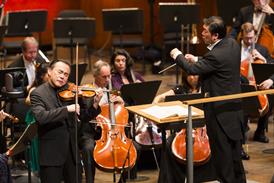
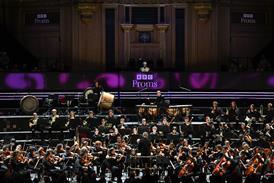
Across Britten Sinfonia’s four pieces from the past 50 years, two – Pärt’s Cantus in memoriam Benjamin Britten and Britten’s own Lachrymae – looked backwards in a spirit of melancholy. Cantus had more tonal bite and articulation than we often hear, and its bell tolled mysteriously unseen from the rear balcony. Minimalism of a more frenetic kind came with John Adams’s Shaker Loops, a classic 1970s score. The vitality of the buzzing first movement, ‘Shaking and Trembling’, contrasted with the brighter radiance of the final one, though the two conjoined middle movements didn’t always coalesce into a unified whole.
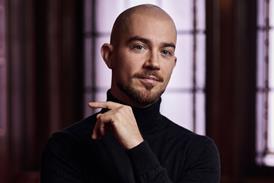
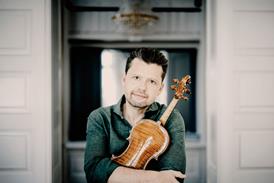
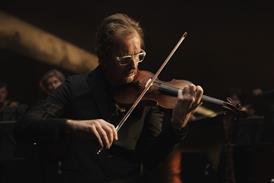
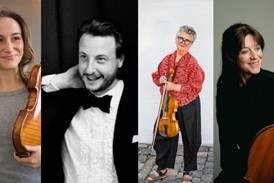
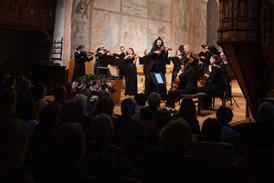
Thomas Larcher and Timothy Ridout (above) presided over the second half as conductor and violist. In Britten’s Lachrymae the variations on a Dowland song glinted with myriad colours, Ridout and the players reaching deep into the piece’s haunting dimension, revealing it as the ‘intimate masterwork’ that Larcher had described in his spoken introduction. And then we delved deeper into the interior with Larcher’s Still, in his new arrangement for viola and strings (but retaining the piano). It’s a gripping, psychologically unsettling work and Ridout revealed its every emotional contour and met its every technical demand.
The two encores could hardly have been more different: the ultra-frenetic fourth movement of Hindemith’s Sonata for solo viola op. 25 no.1, despatched with burning zeal, and the Sarabande from Bach’s Suite no.3 for solo cello, pouring balm and exuding poetry.
EDWARD BHESANIA
Read: Life Lessons: Timothy Ridout
Watch: a video performance from Timothy Ridout’s new album, Alto Appassionato
Read: New string professors at London’s Royal Academy of Music






No comments yet