


Emilie Callesen Doulcet brings together four professors from her French Connection Academy to discuss the enduring question of whether fine instruments are worth the hype, and when in a young player’s career a fine instrument becomes essential
Discover more Featured Stories like this in The Strad Playing Hub
I believe that it is important that the world invests in fine instruments and lends them out to young talents who want a professional career. Visionary investors can make a huge difference in the life of a musician, and in this era increasingly dominated by technological advancement, we need the new philanthropists, patrons and institutions of today to take up instruments as stable, tangible investments.
But to justify such huge investments, we must ask ourselves, exactly how much does a fine instrument improve someone’s playing, if at all? Are Stradivari and Guadagnini just names or do their instruments genuinely help players express themselves more fully? Below are insights from French Connection Academy 2026 professors about these questions. They speak about their relationship with the fine instruments as well as how young players can benefit from acquiring their own.
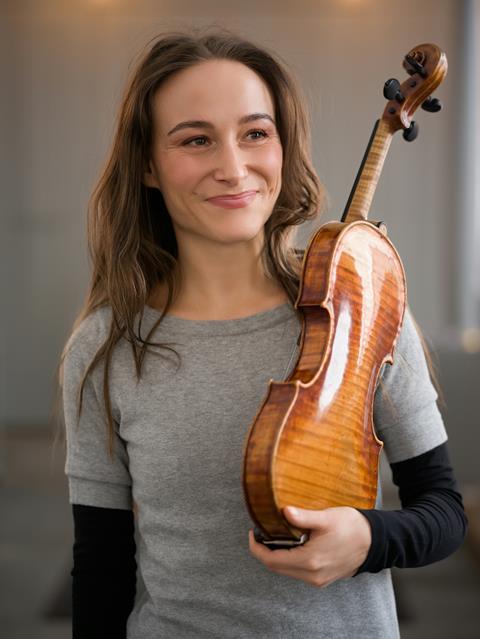
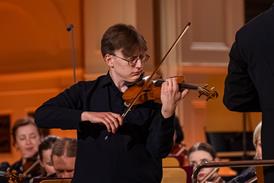
ANNA AGAFIA
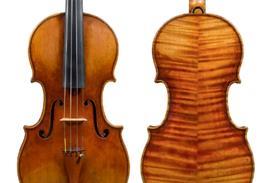
Plays the 1732 ‘Sphinx’ Guarneri ‘Del Gesù’
How would you describe your relationship to your instrument?
I’d say we have a wonderfully symbiotic relationship! I’ve played this instrument for four years now, and I feel like it has gradually shaped my playing, just as I have gradually developed its sound and colors. I keep finding more nuances I hadn’t reached before, so it’s an eternal exploration I really enjoy.
When did you realise you needed a better instrument in your artistic development?
I don’t think there has ever been a moment when I myself thought I ‘needed’ something better. The initiatives have always come from teachers and colleagues, for which I’m also extremely grateful!
How did this high-quality instrument help your artistic development? What can you do with it that you can’t with a less advanced instrument?
What I think a ‘Del Gesù’ provides is freedom of expression. One’s musical ideas get across more easily as it is quite sensitive to subtle colour nuances. It also has depth and volume practically no other instrument can give, which is extremely helpful when performing with orchestra.
When is the most critical moment for a young musician to have an excellent instrument?
In my opinion it is important to learn how to thrive with whichever instrument is given to you. Every instrument has something to teach us, and I believe a true musician can make any instrument sound magical. It was what I admired most in my old violin teacher’s playing – he had the most beautiful sound and an incredible array of colors, and his instrument was by a rather unknown luthier in Ukraine.
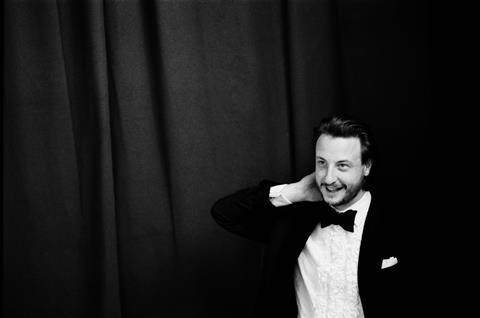
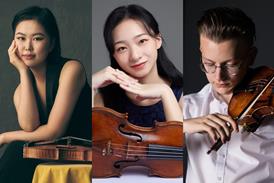
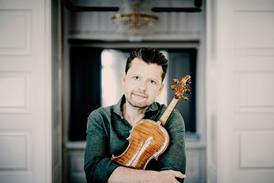
NIKLAS WALENTIN
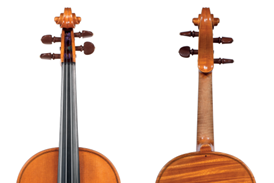
Plays a 1837 Joannes F. Pressenda violin
How would you describe your relationship to your instrument?
It is like a life partner. A better version of myself. When I don’t have the words, my violin leads me. This I believe is the essence of music itself.
When did you realise you needed a better instrument in your artistic development?
At a time when I was about to begin my international career. I was fortunate enough to have the right people around me that helped to find an instrument capable of the necessary soloistic qualities such as a powerful sound and clear tone. What is needed to make career is to have something unique to offer the audience, and the instrument plays a major role in communicating clearly to the audience what that is.
How did getting this high-quality instrument help your artistic development?
I believe the most important thing for an instrumentalist is to find an instrument with which you ’click’. Being a great tool is not enough. It must make you question, search, aspire, doubt and think! This is what my violin does to me, and I think this is what can make an instrument truly great. The instrument should make you want to make music all the time.
Is a fine instrument essential for a young player’s development?
I highly doubt any instrumentalist is truly guaranteed to benefit from playing one. Exactly what an excellent instrument is is highly subjective and changes as an instrumentalist grows. For a very young player, a good solid and stable instrument is perhaps enough. But for someone on the brink of starting a major career, they need something more refined.
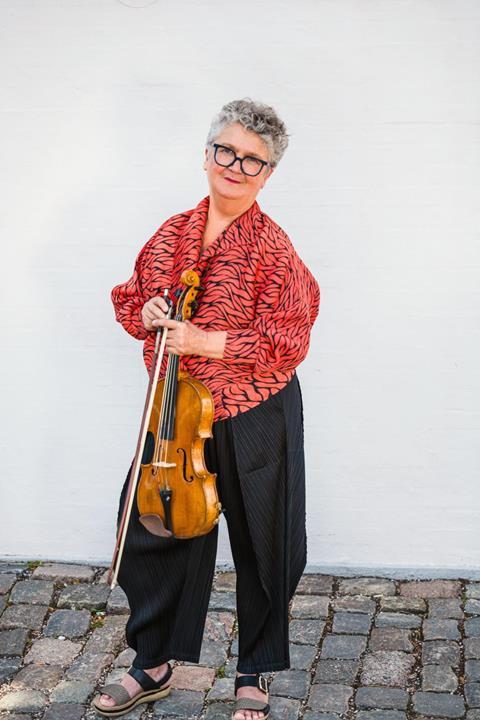
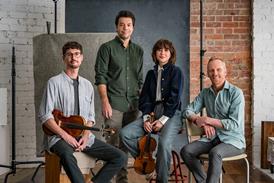
FRANÇOISE GNÉRI
Plays a 19th-century Joseph Charotte viola and a 1836 Raffaele and Antonio Gagliano viola
When did you realise you needed a better instrument in your artistic development?
When I realised that a smaller instrument would suit me better, I also became aware that it was hard to find. I prioritised the search for timbre and definition and I found it.
How did getting this high-quality instrument help your artistic development?
Thanks to this instrument I was able to evolve my search for colour but also virtuosity.
When is the most critical moment for a young musician to have an excellent instrument?
The best time for a young person is when they already have a clear idea of the sound they desire. And I would also say that one must already have a well-established right-arm technique.
How do you find blending in chamber music with each person having a different level of instrument?
Adaptation within a group is mostly about the right arm. In fact I believe the right arm is more important than the instrument. It is the artist who makes it sound. When everyone in a group has a beautiful instrument, and each musician is an accomplished artist, then no doubt there is more roundness, colour and power. But we need to put the important of the instrument into perspective.
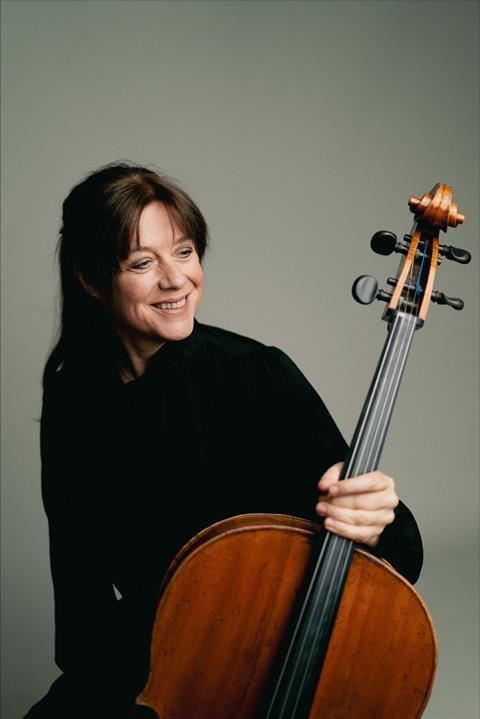
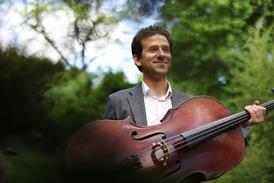
BJØRG LEWIS
Plays a 1748 cello by Gennaro Gagliano
How would you describe your relationship to your instrument?
I feel extremely lucky to have such a ‘partner in crime’ – a true extension of myself, with a voice that I identify with. This cello has a very clear and open core sound, a strong bass, and a full range of colours, when I search for them.
When is the most critical moment for a young musician to have an excellent instrument?
That brings me to the question of how an instrument becomes your voice, but also how your voice speaks through your instrument. We have to have a wish to produce a certain quality of sound for an instrument to actually sound good.
A fine cello can sound truly bad, and equally, as much as cheaper instrument can sound wonderful in the right hands. It depends on the musician playing it. I remember someone telling me that they used to say Peter Schidlof, the violist of the Amadeus Quartet, could make a mailbox sound wonderful. His sound was his sound.
I think all instruments teach us a lot, and for a young player, the goal has to be to develop musicianship and imagination. When your imagination outgrows the instrument, you will know.
Luckily, there are many very good contemporary luthiers, and it is possible to find and own a wonderful instrument without bankrupting your entire life.











No comments yet