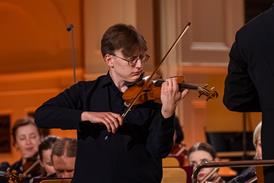







Learning Brahms’s Viola Sonata no.2 in E flat major was a revelation for the British violist – with the help of 17 different recordings from his teacher

Discover more Featured Stories like this in The Strad Playing Hub.
Read more premium content for subscribers here
There’s something very special and magical about Brahms’s Second Viola Sonata. I think I get something new out of it every time, without it needing to be wildly different. It’s a piece that has room for so much subtlety and beauty; it’s got so much depth to it, even though it’s not as densely written as some other works by Brahms. Every note really counts, and I’m never bored by it. I was teaching it just the other day and I still felt the same magic as when I first heard it.
I was 14 when I was introduced to it, while I was studying at the Royal Academy of Music’s junior department. I can remember being struck by its beauty and feeling an immediate affinity with the key of E flat major. In the two outer movements, the interaction between the viola and piano creates a beautiful landscape in my mind, gently flowing with a flavour of autumn.
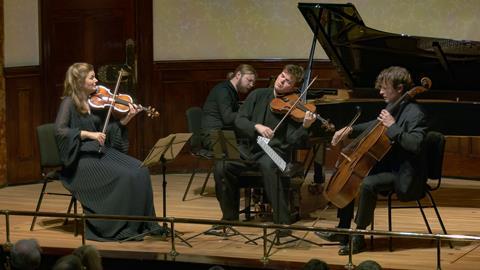
Brahms’s late sonatas aren’t incredibly virtuosic pieces but there were definitely parts I struggled with. For instance, the grazioso section of the third movement has a dialogue of semiquavers between the viola and the piano. It’s not incredibly fast but it was a challenge to play it elegantly; in fact I still need to be careful when playing it now. My teacher was Jonathan Barritt, who was very generous to me: he loved collecting CDs and gave me 17 recordings to listen to! I made my way through all of them, from William Primrose right up to Lawrence Power, and it really left an impression on me. It felt like being given a palette from which I could decide what I did and didn’t like, which also helped me find my own musical voice.
It’s interesting because many teachers will insist that you don’t listen to recordings before you’ve learnt the piece – but I think listening is an integral part of being a musician and it’s still an attitude I have today. Maybe I won’t listen to recordings when in the final stages of preparing something, but at the beginning I find it very useful.
I can’t say I remember all 17 recordings all these years later, but one that really stood out for me was Bruno Giuranna’s performance of the second movement. For a while I was obsessed by this movement, in the stormy key of E flat minor which I was unfamiliar with at the time. It’s marked appassionato and it really is a passionate piece of writing. It makes the most of the viola’s sonority, beginning with a rising 6th, followed by broad spread chords, and then a middle section that evokes a completely different sound world which could be either subdued or shining brightly. Then there are some low pedal notes in the piano part, but suddenly the viola bursts back in and Brahms extends the phrase by just one bar, so it overlaps with the piano entry. It’s such a small detail but it really gives a remarkable effect.
To anyone practising the sonata, I’d remind them that it’s not a solo viola piece with piano accompaniment: it’s a real duo and until you practise it with piano, you won’t know how to phrase it, decide on your fingerings or what colours you want to make. Sometimes it’s you accompanying the piano, as with the arpeggios in the third movement’s coda. I think making sense of the music comes first, and then, in a way, the technical side follows.
INTERVIEW BY CHRISTIAN LLOYD











No comments yet