
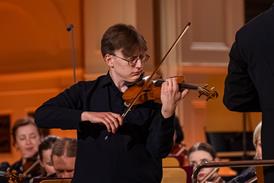
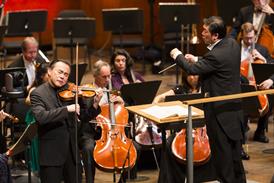
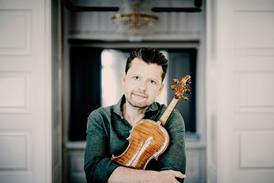
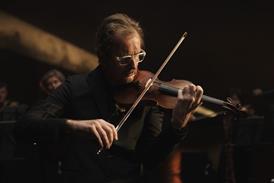




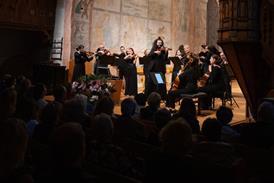




Violinist Olwen Miles recounts her experience as part of the joint Royal Academy of Music and Juilliard School orchestra project, which saw students perform at both the Lincoln Center and Royal Albert Hall this summer alongside Esa-Pekka Salonen and Vilde Frang
Discover more Featured Stories like this in The Strad Playing Hub
When I was asked, at the beginning of 2026, to be part of this project, I had no idea what it would look like. I have experience playing in a wide range of ensembles and always enjoy working with new people, but representing the Academy on such an international scale felt like a significant responsibility. As principal second violin, I wanted to be someone my section could rely on. By the end of the week, however, it no longer felt like a matter of leading. Across the orchestra, it had become a much more collaborative, chamber music-like environment.
The reality of the project truly hit when we arrived in New York. The following morning we gathered at Juilliard for a tour and our first rehearsal. There was an unmistakable mixture of excitement and nervousness in the room. Everyone wanted to prove that they belonged there, and it took a little time for the orchestra to settle into the kind of unified sound needed for a convincing performance.
That process developed quickly. Familiar faces, connections within the music world and students who had studied at both institutions helped break down barriers. Before long, conversations were flowing naturally and the atmosphere had transformed.
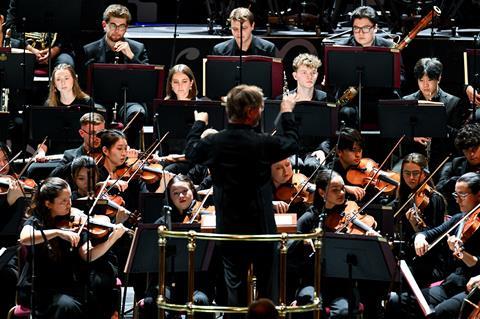
One aspect of the project that immediately stood out was the seating arrangement. Musicians from the two institutions alternated throughout every section, meaning everyone sat beside someone they had never played with before. I think this contributed enormously to creating a unified sound. Players were constantly listening and responding to one another, adapting their playing to blend with their desk partners. It created an environment in which everyone could learn from each other.
I have been fortunate to work with many conductors during my time at the Academy, and each has their own musical language. It often takes time to understand what they want and how they communicate. Esa-Pekka Salonen took an approach that I found particularly interesting. During the first rehearsal he spoke very little, preferring to get to know the orchestra through the music itself.
I was nervous that day. Salonen is a musician I have admired for a long time, and I was eager to make a good impression. The programme was demanding from start to finish. Stravinsky’s Symphony in Three Movements requires extraordinary rhythmic precision; Berg’s Violin Concerto inhabits a unique and complex sound world; and Bartók’s Concerto for Orchestra places every section under the spotlight, alternating between virtuosic and powerful passages.
One of the things that impressed me most was Salonen’s ability to encourage individual players and sections. Each time a particular moment arrived, he made the musicians involved feel important. During one second violin passage he suddenly called out, ’Yes! Second violin power!’ with a smile. The entire section lit up immediately and played with even greater character and conviction.
The Berg Violin Concerto was perhaps the most daunting work on the programme for me. It is one of the cornerstones of the violin repertoire and featured in one of the first live performances I ever attended. Performing it with Vilde Frang felt like a huge responsibility.
The relationship between soloist and orchestra is especially important in this concerto, and Frang approached the process as a genuine collaboration. From the first rehearsal she greeted us with warmth and kindness, and throughout the week a real sense of trust developed between her and the orchestra. When she played, she seemed completely immersed in the music, drawing everyone around her into Berg’s extraordinary sound world.
I think the moment the orchestra truly came together was our first performance at Alice Tully Hall. We had already made significant progress in rehearsal, but something changed once we stepped onto the stage. The trust between conductor, soloist and orchestra was completely established, and everyone simply focused on making music.
That concert also proved ideal preparation for the Royal Albert Hall. By the time we arrived in London, there was already a sense of confidence and familiarity within the group.
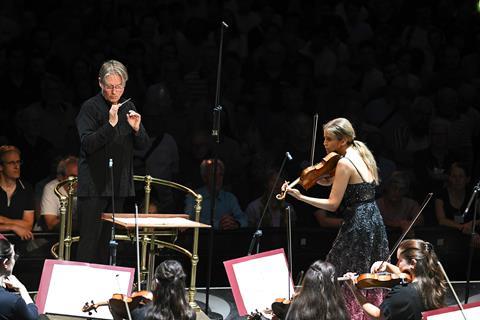
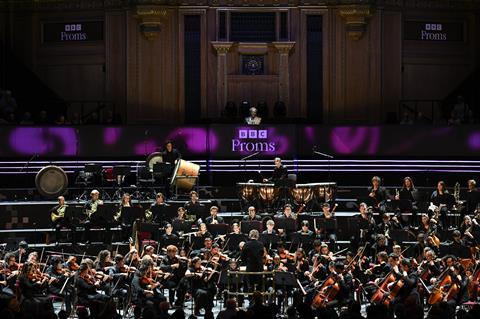
We met again at the Royal Albert Hall on 10 August for the final dress rehearsal. For anyone who had never performed there before, it was undoubtedly an intimidating moment. The hall is vast, and the BBC Proms remain one of the most significant events in the classical music calendar.
Yet because we had already performed the programme together, there was also a sense of ease. We knew the music, trusted one another and understood Salonen’s vision. Even in such an enormous venue, the audience feels surprisingly close, creating an energy that is unlike anywhere else.
When the concert began, all the work of the previous week seemed to fall into place. Salonen’s smile and gestures carried us through a performance that will remain memorable for a very long time. Standing on that stage, surrounded by musicians who had been strangers only days earlier, was a powerful reminder of what music can achieve. Differences in background, training and experience disappeared in service of a shared artistic goal.
The celebrations afterwards had a very different atmosphere from our first meeting in New York. The nervousness was gone. Everyone was relaxed, excited and proud of what we had accomplished together. Conversations that had begun cautiously a week earlier now felt entirely natural.
The week before we had sat down beside strangers; that night we walked off stage beside friends.
Olwen’s studies at the Royal Academy of Music are made possible by the generous support of the Anjuli and Raj Rao Family Scholarship.











No comments yet