





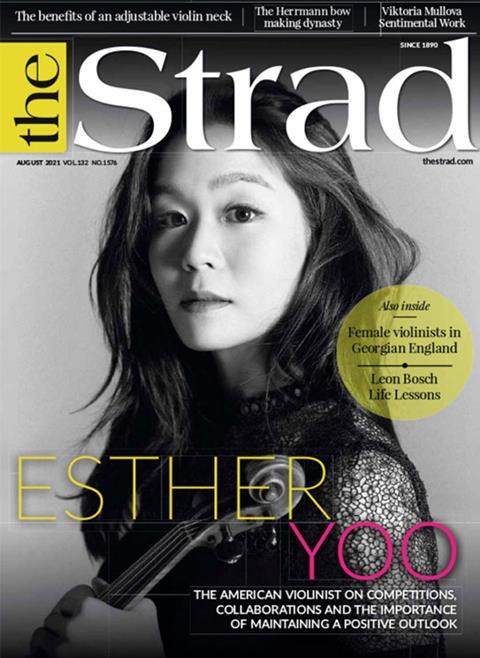
The Sibelius Violin Concerto holds incredible memories for the Taiwanese–American violinist, from studying with Dorothy DeLay to meeting Eugene Ormandy
Discover more Featured Stories like this in The Strad Playing Hub.
Read more premium content for subscribers here
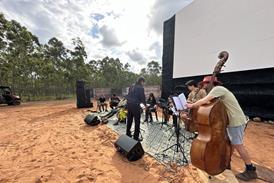
The first time I heard the Sibelius Violin Concerto was in the Australian outback. I lived in Australia from the ages of 12 to 15, and we were on a picnic. I heard the words ‘Sibelius Concerto’ on the radio, and went to listen; it was Ginette Neveu’s 1945 recording and I was transfixed. It was so beautiful, I sat there for 30 minutes and didn’t want it to end. Then at 15, I moved to New York and found the Juilliard library’s recordings archive. I went to look for all the recordings of the Sibelius, and I was blown away by David Oistrakh’s 1959 version with Eugene Ormandy and the Philadelphia Orchestra. I had tears in my eyes while listening in the library; it was so powerful and so moving that I knew I had to play it, even though it was clearly such a difficult piece.
I studied with Dorothy DeLay, who gave her students increasingly harder works to practise. When I was 18, she asked me, ‘What would you like to study next?’ – which was like a seal of approval from her. I chose the Sibelius, and practised it with great gusto; as it happened, I’d just split up from my first girlfriend, and I threw all the emotional energy I had into practising the concerto. A year later, I was asked to play it for the Seattle Symphony – it turned out that Kyung-Wha Chung could not make the first performance so the music director Rainer Miedél placed me, all 19 years of age, in that concert instead. It was the first time I’d played it with an orchestra, which was an incredibly special moment for me.
I got to perform the concerto at a few summer festivals, before I had a call from my manager who said that Henryk Szeryng had pulled out of a performance of the Sibelius with the Philadelphia Orchestra; was I available? Of course I said yes immediately, and was told to go to Ormandy’s apartment and have a piano rehearsal with him. My friend, the violinist Mark Kaplan, told me he’d grill me on his accomplishments before we started, like a test. And sure enough, he asked me, ‘You know I’ve conducted the Sibelius with a lot of violinists, don’t you?’ And I said I loved his recording with Oistrakh, and with Isaac Stern, and he smiled, and I’d passed the test!
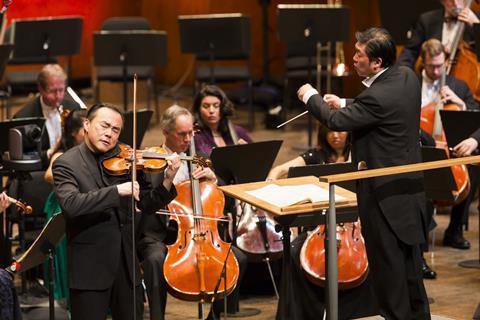
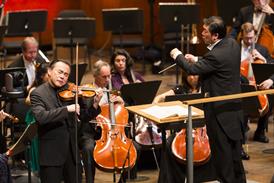
We only had one hour to rehearse with the orchestra, but it went perfectly, and for me just playing with the Philadelphia Orchestra and the legendary Ormandy was the most thrilling experience of my life up to that time; afterwards I was walking on clouds.
I was privileged to be able to record the Concerto in 1988 for Sony Music. Another memorable performance for me was with the Helsinki Philharmonic. It was in the middle of winter, and seeing the pine forests in the snow really helped me to understand Sibelius’s sound world. It ebbs and flows, as if sometimes everything freezes before melting in a great outpouring of emotion. I tell my students that if they want to understand the concerto, they should listen to as much Sibelius as possible, especially his first two symphonies. It’s not about brightness of sound, as in Mendelssohn, Bruch or Brahms; you need to find a darker, almost growly sound that’s nevertheless filled with tenderness and passion.
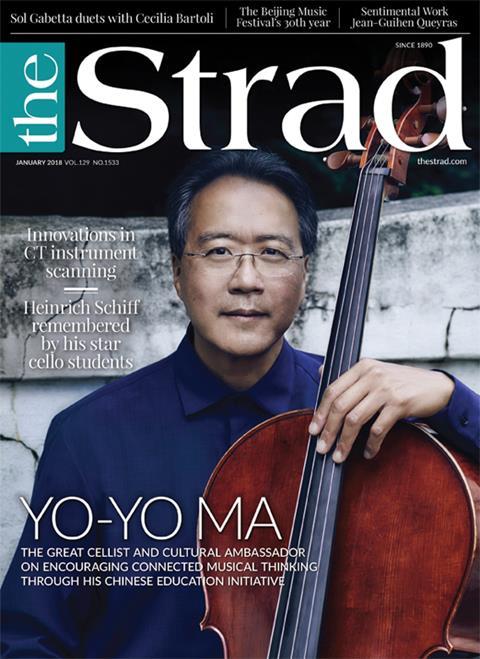
I also remember when I was preparing for Seattle, I asked my friend Yo-Yo Ma, who’s four years older than me, for his advice on this complex piece. He said, ‘Study the score and know exactly which instruments are playing with you at all times.’ I took that advice to heart and did exactly that. I’d also say you should learn to sustain the sound to its fullest, even if you’re running out of bow at the tip – otherwise Sibelius’s music starts to crumble. And it helps to play with a strong, hefty bow, with flat hair at the tip that can give you a little bit more leverage, and more sound.
INTERVIEW BY CHRISTIAN LLOYD








No comments yet