















Bharat Khandekar reads Wolfgang Zunterer’s long-awaited volume on one of Germany’s most important violin making families
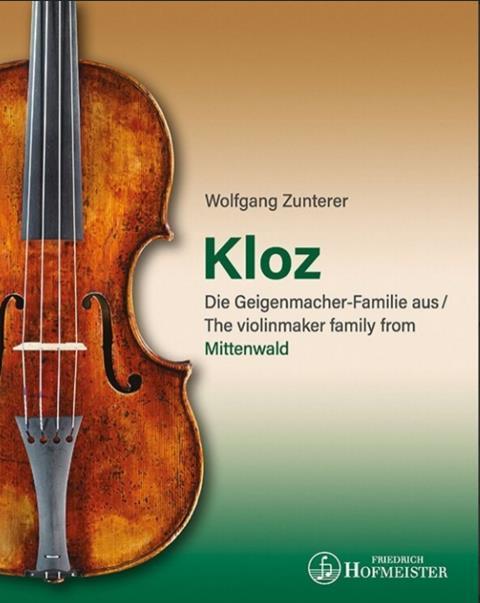
Kloz: The Violinmaker Family from Mittenwald
Wolfgang Zunterer
180PP ISBN 9783873500723
HOFMEISTER VERLAG €176
Anyone who is at all interested in violins will be aware of the town of Mittenwald, situated in the south of Germany on the border with Austria. Many fine luthiers have trained at the famous violin making school there, and those who have not had this privilege may well have visited the town. One of the jewels of Mittenwald is its violin making museum and if you’ve ever been there, it’s likely that you will have encountered an enthusiastic, kindly gentleman named Wolfgang Zunterer, a renowned expert in violins. Herr Zunterer has now published his long-awaited book on the Kloz family.
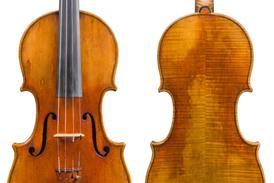
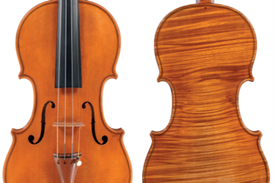
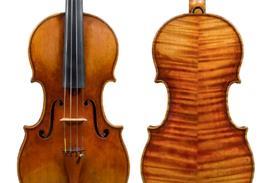
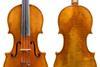
I was at first a little surprised at the slenderness of this volume, but there is no wasted space and it is packed, cover to cover, with meticulous, groundbreaking original research, some surprising facts, colour photos of more than 50 instruments, and much more including historical documents, construction details, photos of labels and biographies of the Kloz family and associated makers. The text is in German and English, although some of the photo captions are in German only. The photos are not actual-size but are all of good quality; in fact, the paper, binding and presentation are all high-quality and the book is guaranteed to be a lasting reference work. A nice touch is the included poster of the Kloz family tree, featuring labels of each maker. This poster belongs on the wall of every violin shop and violin making school.
If you think that you know Mittenwald instruments, you will not be disappointed with this publication and you are guaranteed to learn something new. The illustrations include some great examples, and after reading this book I have a much stronger respect for the Kloz family. The wide variety of labels found in Kloz instruments are also demystified, helping clarify identification and dating. Any violin dealer, maker, restorer or player who owns a Kloz violin will want to own this book.
With all the recent research into Cremonese construction, varnishes and so on, I do feel that there is certainly room for more information about the often overlooked violins of Mittenwald, and Herr Zunterer’s new book certainly makes a big leap in this direction. I am eagerly awaiting his next work.
Bharat Khandekar


















No comments yet