













Violinist Muneko Otani reflects on the quartet’s close ties with Tower and how grief, memory and renewal shaped a piece that blends lyrical solos with intense ensemble writing
Discover more Featured Stories like this in The Strad Playing Hub
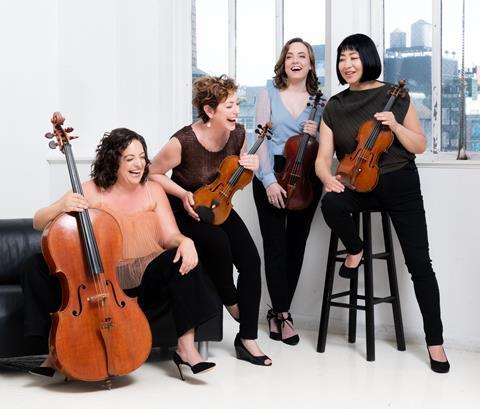
For its 40th anniversary season, the Cassatt Quartet – Muneko Otani and Jennifer Leshnower (violins), Emily Brandenburg (viola) and Gwen Krosnick (cello) – has turned to one of its longest-standing musical companions: Joan Tower. On 14 September 2025 the ensemble will give the premiere of Tower’s String Quartet No. 7, For Jeff, with Love, at Maverick Concerts in Woodstock, New York, with the composer in attendance.
The new score is rooted in a relationship spanning almost three decades. The Cassatts first performed Tower’s Night Fields in 1997 and have since played all of her works for string quartet, alongside chamber collaborations.
Violinist Muneko Otani first approached Tower about a commission more than ten years ago; when she raised the idea again ahead of the anniversary, the context had changed profoundly: Tower’s husband of fifty years, Jeff Litfin, had recently died. In that period, Otani often spent evenings at the composer’s home, sharing food, wine and conversation as grief slowly gave way to creative renewal. Those encounters left their mark on the new quartet, which, as Tower notes, alternates lyrical solos for each player with intense ensemble writing.
The commission, funded by Tower’s friend Phyllis Feder, caught the ear of Maverick’s music director Alexander Platt, who programmed the premiere. Tower has praised the Cassatts for starting early and shaping the process with suggestions – traits consistent with the group’s advocacy for living composers and broadening the repertoire.
Otani spoke to The Strad about the genesis of the work, the quartet’s four-decade journey and how personal loss and long friendship have informed the sound world of For Jeff, with Love.
You’ve performed all of Joan Tower’s quartets over the years. What is it about her musical voice that speaks to you as an ensemble? What qualities in her writing have kept you returning to it over the years?
Muneko Otani: The Cassatt Quartet first performed Joan Tower’s Night Fields in 1997 at the Seal Bay Festival. I found her music exhilarating, mysterious, poignant, and deeply personal. Working with her was an amazing experience – she expresses her ideas so clearly, both musically and verbally, yet always with kindness. She gave us the space to think, feel, and imagine her music in our own way.
Joan has a rare gift for communicating with performers. The collaboration was one of the most inspiring musical experiences I have ever had. I also had the pleasure of meeting her husband, Jeff – together they were a wonderful couple, full of love for each other, yet each with a bold and strong personality.
Over the last 40 years, we have performed Night Fields, In Memory, and Incandescent for string quartet; Dumbarton Oaks for piano quintet with Ursula Oppens; Elegy for trombone quintet with Haim Avitsur; and Big Sky for piano trio with Joan herself – a total of six of her works.
How did that shared history shape this new commission?
Muneko Otani: I had dreamed of commissioning a quartet from Joan Tower since 1997. In the early years of our career, however, we didn’t have the resources to make it happen – we were focused on the ’survival work’ every quartet knows well: freelancing, raising families, and building our musical lives.
Nearly 40 years into my tenure with the Cassatt Quartet, the timing was finally right. This new work is a living testament to our shared history and to the ensemble’s journey. We are profoundly grateful to Phyllis Feder for her extraordinarily generous gift, which made this long-awaited commission possible.
When Muneko first approached Tower about this commission, she had recently lost her husband. How did that knowledge shape the way you engaged with the piece during rehearsal?
Muneko Otani: My first approach to Joan about a commission was almost 25 years ago in Washington, D.C., when I asked her to write a cello quintet. She didn’t have space in her schedule then – which I completely understood – but the idea stayed with me.
During the isolation of Covid, I reached out to many friends through Zoom and phone calls just to maintain human connection. With Joan and her husband, Jeff, we even had a few virtual cocktail hours, talking about all kinds of random things. They were both so easy to talk to, and most of all, they offered comfort on a deeply human level.
After Jeff’s passing, I made it a priority to visit Joan as often as I could. Her home happened to be perfectly situated between New York City and Williams College, so I could see her almost weekly. We would talk about Jeff, about her grief – sometimes in words, sometimes in silence. We’d share red wine, I’d cook dinner, and sometimes we would cry together. Before she wrote this quartet, my heart was already filled with her love for Jeff and with the long, tender process of her mourning.
When she finished the work, I felt that her notes, melodies, and harmonies carried all of that emotion. For me, this commission was unlike any other – it was deeply personal, almost spiritual. Rehearsals were sometimes challenging because my own connection to the piece was different from my colleagues’ experiences, but I trusted everyone’s instincts and imaginations. The piece continues to evolve for us every day.
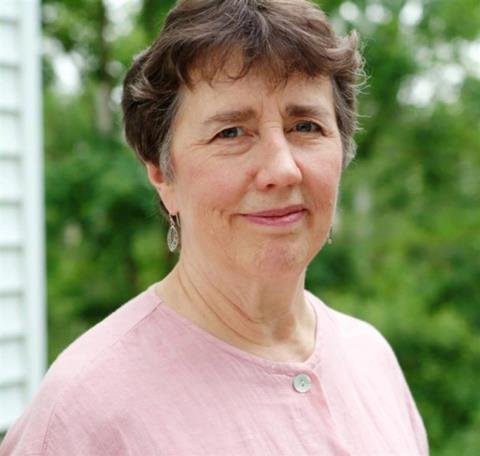
Tower has described String Quartet No. 7 as alternating between lyrical solos and more intense ensemble passages. How do you navigate those shifts in character as players?
Muneko Otani: Because I spent so much personal time with Joan during the creation of this piece, I feel her music as a complex human experience – calm, love, dreams, warmth, but also anger, sadness, and an almost primal cry.
As trained musicians, we’re always focused on the practical elements – dynamics, ensemble, pitch – striving for the best possible performance. But in this work, it’s sometimes hard for me to separate those technical demands from the emotional weight. During rehearsals, I’ve even struggled at times to communicate with my colleagues because the music feels so personal.
Navigating the shifts between the lyrical solos and the intense ensemble passages requires us to be completely unified as a group – not just technically, but spiritually. That level of connection takes time, and we’re still discovering new layers each time we play it.
Muneko, you’ve said you spent many evenings at Joan’s home during the piece’s gestation. Did those personal conversations leave a trace in the way the quartet interprets her music?
Muneko Otani: I’m trying – but I have to admit, it’s not easy. The music carries so much personal meaning for me that finding the right balance in performance is an ongoing process. We’re still evolving with it, and we won’t give up. It’s too precious.
Tower has praised you for starting early and making suggestions along the way. Were there any particular moments in this piece where your feedback influenced her final score?
Muneko Otani: This piece will continue to evolve – it will likely go through many updates even after the premiere at Maverick. I think of the September 14 performance as just the starting point. The ‘final’ score probably won’t be settled for at least a year.
We plan to perform For Jeff, with Love as often as we can during that time, letting it grow and take shape through each performance.
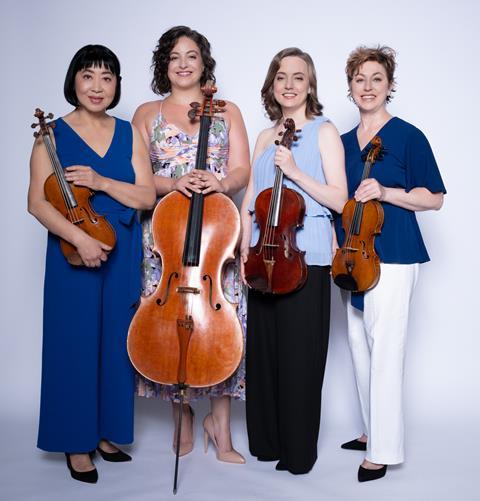
Marking 40 years together is no small feat. How does this commission reflect where the Cassatt Quartet is artistically at this moment in its history?
Muneko Otani: As I look back on almost 40 years with the Cassatt Quartet (I joined 38 and a half years ago), I feel deep gratitude for every member who has given 120 per cent of their energy, passion, and inspiration – including the two members we have lost. This commission is, in many ways, a tribute to the ensemble itself. I would like to dedicate this work to all the members of the Cassatt Quartet, past and present, who have made this journey possible.
Your anniversary season features premieres by several composers. How does Tower’s new quartet fit alongside those other works in telling the story of the Cassatt Quartet today?
Muneko Otani: Joan Tower, Victoria Bond, Laura Kaminsky, and Tania León have all been mentors to us over the last 40 years. They have shaped us not only as artists but also as people, and our relationships with them have been both musical and deeply personal. It feels natural to perform their new works as part of a full-circle celebration for our 40th anniversary. I believe – and hope – that through these premieres, we are sharing a musical future together, honoring the lasting influence they’ve had on us while looking forward to what comes next.
Read: Cassatt Quartet appoints new violist
Review: Joan Tower: String Quartets nos.3–5; Dumbarton Quintet
Discover more Featured Stories like this in The Strad Playing Hub












No comments yet