










From Tokyo’s Suntory Hall to Beijing’s NCPA and the Seoul Arts Centre, the National Youth Orchestra of the USA journeyed across Asia this summer with Gianandrea Noseda on the podium. Violinist Rebekah Koh and cellist Collin Runnoe talk with Thomas May about the experiences that will stay with them long after the final concert.
Discover more Featured Stories like this in The Strad Playing Hub
This summer, between 22 July and 6 August, the National Youth Orchestra of the USA (NYO-USA) embarked on a whirlwind six-city tour of Asia under the direction of Gianandrea Noseda. Nearly 100 of the nation’s most talented teenage musicians took part, representing 29 states and the District of Columbia.
After an intensive two-week residency and a send-off concert at Carnegie Hall, the orchestra made its Japanese debut with performances in Osaka and Tokyo, before continuing to the Hong Kong Cultural Centre, the National Centre for the Performing Arts (NCPA) in Beijing, the Shanghai Oriental Art Centre and the Seoul Arts Centre. Ray Chen appeared as soloist in Mendelssohn’s Violin Concerto for the Shanghai concert, while Clara-Jumi Kang joined for the tour’s finale in Seoul.
Alongside the Mendelssohn, the programme featured Carlos Simon’s newly commissioned Festive Fanfare and Overture (a Carnegie Hall co-commission) and Rachmaninoff’s Symphony No. 2.
For many players, it was their first time in Asia, and days were filled not only with rehearsals and concerts but with trips to local markets, visits to historic landmarks and shared meals. Soon after returning from the tour, violinist Rebekah Koh from Texas and cellist Collin Runnoe from Milwauke, Wisconsin – both 17 years old – shared their reflections on the experience, from unforgettable performances to moments of connection that will continue to shape how they think about music and its role in the world.
You’ve just returned from performing across six cities in Asia. What was it like making music in such different musical and cultural settings night after night.
Collin Runnoe: Spending a day or two in each city and soaking in its rich, vibrant culture made every performance feel personal. I wasn’t just walking onstage to play notes – I was carrying with me the sights, sounds, and energy of the place we had just experienced.
In Beijing, I tried hot pot for the first time at a bustling restaurant with friends. Platters of thinly sliced meats were served on ice alongside fresh mushrooms, tofu, and crisp vegetables. We cooked them in the steaming broth at the centre of the table, then dipped them into rich, fragrant sauces. The warmth and spice lingered on my taste buds long after, and in a way, it felt like those flavours carried onto the stage – a reminder that the music we were sharing was steeped in the same culture we’d been savouring all day.
One of my favourite memories was rehearsing Respighi’s Pines of Rome and Chinese works side-by-side with the NCPA Orchestra under Lai Jiajing and Gianandrea Noseda. My stand partner and I exchanged a few quiet smiles after the occasional slip, but those moments only deepened our sense of camaraderie. The music-making felt effortless and joyful, as if we’d been playing together for years despite having just met.
Despite the occasional early-morning grogginess, there was an unmistakable thrill whenever we landed in a new city. Few of us had visited all the tour stops, so each arrival came with a spark of curiosity and awe. That feeling didn’t end at the airport – every hall had its own acoustics, its own spirit, and each audience gave us a different kind of magic to play to.
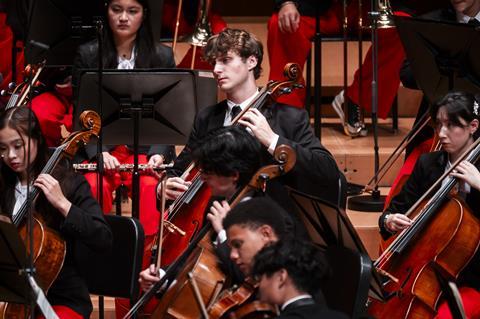
Rebekah Koh: If I’m being completely honest, it was exhausting, but also the most fulfilling experience of my life. It still feels unreal to think that I’ve sat onstage in some of the world’s most renowned concert halls and played for multiple sold-out audiences. Every night felt different, so adjusting to each hall in such a short amount of time was challenging, but it was also a valuable learning experience. I became more aware of my role in the orchestra and how my sound interacted with the space and with the other sections.
From iconic venues like Suntory Hall to the National Centre for the Performing Arts in Beijing, how did the spaces themselves shape your experience on stage – as a string player and as part of the ensemble?
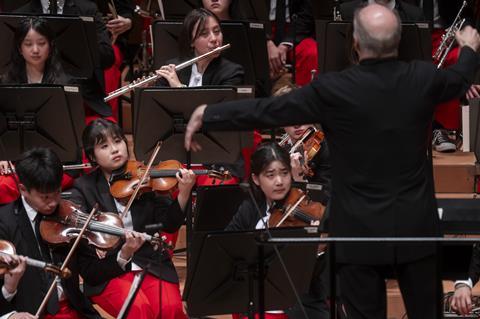
Rebekah Koh: Each hall had its own personality: some felt warm and resonant, others more focused and clear. It was fascinating to feel how my sound changed depending on the acoustics, and it pushed me to adapt quickly. Sometimes the strings felt especially present, but other times, we had to listen more intently to balance with the winds and brass.
These shifts taught me to be flexible and deeply aware of the entire ensemble, not just my own section. I also became more appreciative of other sections I hadn’t been as close with before. Hearing their roles come to life in different acoustics made me realise how essential they are to the orchestra’s character and story.
Collin Runnoe: Walking into each hall felt like opening the cover of a brand-new book – every space had its own character, and you could sense it the moment you stepped on stage.
As a string player, the difference was immediate: in some halls, the sound wrapped around me like a blanket, encouraging a richer vibrato; in others, the clarity made every articulation feel razor-sharp. Ray Chen, our guest soloist for most of the tour, brought an energy and finesse to the Mendelssohn Violin Concerto that made us listen even more closely. In certain halls, we had to play with extra care and softness to let his sound shine – a reminder that music is a constant dialogue between soloist, orchestra, and space.
As an ensemble, we adjusted instinctively – breathing together, leaning into certain phrases to suit the room. Those spaces weren’t just backdrops; they became part of the performance, shaping how we listened to each other and how we told each story through music.
Rebekah Koh: What stood out to me most about the collaboration with Ray Chen was his knowledge of the orchestral role in the Mendelssohn concerto. He often offered us tips and suggestions that made us feel more connected to the solo line. What also inspired me was his willingness to try something different each night. He maintained the same passionate, exhilarating energy every performance, but he was never afraid to experiment and challenge himself. That reminded me that great performances come not only from preparation, but also from the courage to take risks.
As a string section, you spent two weeks travelling, rehearsing, and performing together. How did the shared tour experience affect the way you listened, communicated, and played as a group?
Collin Runnoe: Spending two weeks immersed in such a culturally rich atmosphere – with people both inside and outside my section – created bonds that went far beyond the music. We shared meals, and explored new cities – those connections showed up instantly on stage.
Making memories with friends made every concert feel personal. A glance across the section wasn’t just about a cue – it was a reminder of the laughter at dinner the night before, or the shared awe of seeing a new skyline together. We listened to each other more attentively, breathed together more naturally, and played with a kind of collective trust that only comes from truly knowing the people beside you.
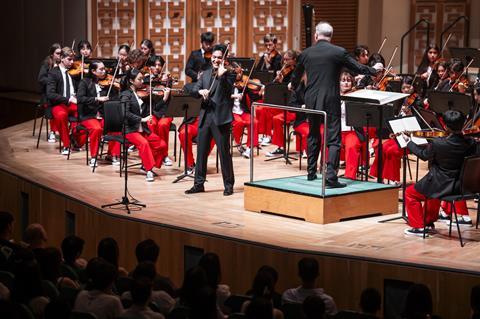
Rebekah Koh: One of the most notable things came from Maestro Noseda. He constantly emphasised listening to other sections, rehearsing parts that might not be heard as clearly so that the balance could be just right. As a string player, this encouraged me to not only focus on intonation and blend within my section but to also hear how our sound fit into the full orchestral texture. By the end of the tour, I felt our section was breathing and phrasing as one.
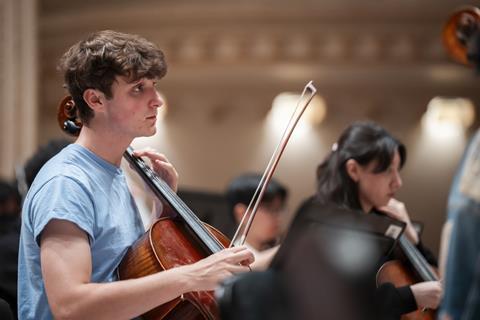
What were some of your most memorable moments offstage – especially when it came to experiencing these cultures as a young American musician?
Rebekah Koh: Exploring each city with my friends was unforgettable. Whether it was wandering through markets, trying food l’d never had before, or even brief conversations with locals. I realised that music wasn’t the only bridge we were building. Just being present in these places as young American musicians felt like a form of cultural exchange.
Collin Runnoe: Every city felt like a new beginning. From wandering through Japan’s local markets to exploring the bustling alleyways of Korea, each place had its own rhythm and flavour. I still remember watching the gorgeous cityscapes zip past the bus window on the way from the airport.
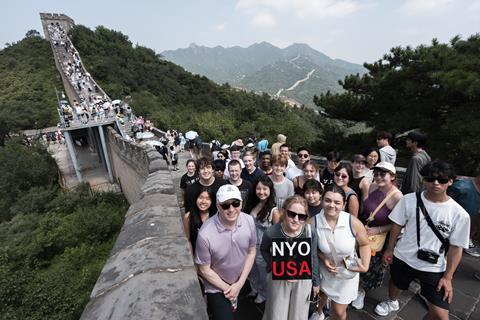
In Beijing, walking the Great Wall was breathtaking – some junctions were so steep they felt like climbing a ladder. In Shanghai, we took a boat tour amidst a glowing city that reflected in the water. And when I finally rode the bullet train, a childhood dream of mine, I was amazed by how smooth and impossibly fast it was.
Of course, there was shopping, exploring malls, and tasting local cuisines I’d never tried before. But what made it all unforgettable were the fellow musicians who were by my side. Whether laughing over a meal, snapping photos from a boat, or simply sharing the view from a train window, the joy came from sharing these moments with people who became like family.
You got to meet and connect with young musicians across cultures – from backstage encounters to peer exchange events. What did those moments of cultural exchange teach you about music’s role beyond the concert hall?
Collin Runnoe: Those exchanges reminded me that music is as much about people as it is about sound. Whether it was trading stories backstage, rehearsing alongside musicians from the NCPA Orchestra, or simply laughing over a shared mistake, I saw how quickly music can dissolve barriers of language and culture. It reinforced the idea that beyond the concert hall, music is a way of building relationships.
Rebekah Koh: I learned that music truly is the future of a more connected world. Even though we didn’t share the same language, we could communicate instantly through music – it transcends boundaries of language, location, and culture. These exchanges reminded me that music isn’t just about the performance itself, but about the human connections it makes possible.
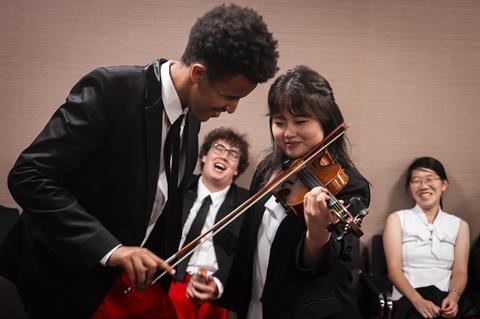
Now that you’re back home, how do you feel this tour has changed you – not just as a young string player, but as a person? Has this experience changed how you imagine your future in music?
Collin Runnoe: This tour changed my view of life in ways I didn’t expect. By playing in different cultures across Asia and collaborating with musicians from the NCPA Orchestra, I saw firsthand that despite boundaries like race, culture, background, location, or language, music exists as a universal language. It allows us to connect mind-to-mind and soul-to-soul, and in doing so, it makes the world feel smaller and kinder.
I now see all of us as music ambassadors for our own countries – each collaboration is an opportunity to share joy, empathy, and understanding. Even if music doesn’t become my profession, it will remain a guiding star in my life.
As I head to college in the fall, I look forward to bringing the lessons from this tour into my work with the university orchestra and chamber ensembles, where many musicians come from international backgrounds. Those cultural memories will help me collaborate more deeply, just as I did on tour.
Rebekah Koh: This tour has made me more compassionate and open-minded. We all come from different backgrounds, and sometimes it can be hard to relate to people whose lives are so different from your own. But if you keep an open mind and heart, you can always find common ground. I now see music as not just a personal passion, but as a way to connect people and stories from all over the world – and that’s something I want to carry into my future career.
Read: Carnegie Hall announces youth orchestra
Read: Bright Young Things
Discover more Featured Stories like this in The Strad Playing Hub
The number one source for playing and teaching books, guides, CDs, calendars and back issues of the magazine.

In The Best of Technique you’ll discover the top playing tips of the world’s leading string players and teachers. It’s packed full of exercises for students, plus examples from the standard repertoire to show you how to integrate the technique into your playing.

In the second volume of The Strad’s Masterclass series, soloists including James Ehnes, Jennifer Koh, Philippe Graffin, Daniel Hope and Arabella Steinbacher give their thoughts on some of the greatest works in the string repertoire. Each has annotated the sheet music with their own bowings, fingerings and comments.
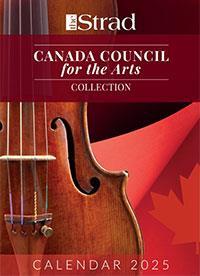
The Canada Council of the Arts’ Musical Instrument Bank is 40 years old in 2025. This year’s calendar celebrates some its treasures, including four instruments by Antonio Stradivari and priceless works by Montagnana, Gagliano, Pressenda and David Tecchler.

















No comments yet