










An assured celebration of a great historical violinist
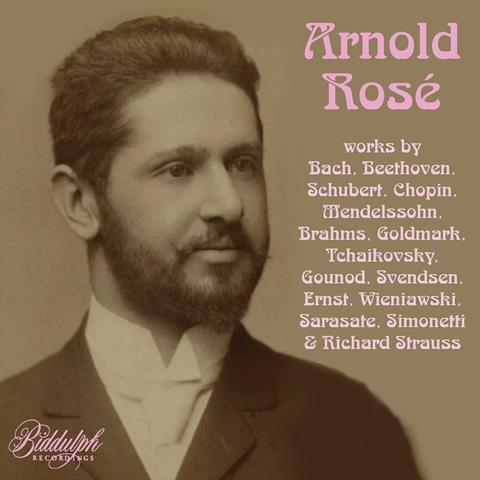
The Strad Issue: August 2026
Description: An assured celebration of a great historical violinist
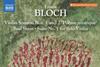
Musicians: Arnold Rosé (violin) Rosé Quartet, Vienna Philharmonic/Karl Alwin
Works: Music by Bach, Beethoven, Brahms, Chopin, Ernst, Goldmark, Mendelssohn, Popper, Sarasate, Schubert, Simonetti, Strauss, Svendsen, Tchaikovsky and Wieniawski
Catalogue number: BIDDULPH 85071-2
In 1992 Biddulph celebrated Arnold Rosé (1863–1946) with a set of his most famous records, the three Beethoven quartets and Bach’s ‘Double’ Concerto with daughter Alma. This new CD concentrates on his dazzling 1902 and 1909 solo discs – two 1909 Nardini movements and the earliest G&T sides are missing. The sole item repeated from the earlier set is the Bach Adagio that was a filler for the concerto.
Lavish portamento and sparing vibrato in Bach’s ‘Air on a G string’ immediately confirm that we are dealing with a 19th-century player. With Beethoven’s Romance in F comes Rosé’s delicate E string sound. Trills are beautiful. Most tracks are scintillating, with precious samples of concertos by Mendelssohn and Goldmark. Where a piece is presented twice – Svendsen’s Romance and Sarasate’s Zigeunerweisen – the 1909 version is preferable; though much cut, the Sarasate is superb.
Popper’s Nocturne is a lovely piece of larceny from cellists; Simonetti’s somewhat commonplace Madrigale is made to sound special; Sarasate’s Eighth Spanish Dance is good in 1902, magical in 1909; the Waltz from his Fantasy on Gounod’s Faust has delightful double-stops; Part One of Ernst’s Fantasy on Rossini’s Otello is fluent, with panache in the March, but Part Two remains my favourite, the variations on Desdemona’s aria just perfect.
Disappointments? Wieniawski’s Polonaise brillante is rushed, Brahms’s G minor Hungarian Dance not as well timed as by Busch or Kreisler, and Schubert and Tchaikovsky scherzos by the Rosé Quartet from 1924 are poorly balanced. But the 1929 Bach Adagio is welcome again and one side from a 1931 Rosenkavalier suite features a nice Rosé solo.
The booklet is lavishly illustrated but the photo of the Rosé Quartet is the 1905–21 line-up with Friedrich Buxbaum as cellist. The records, from Raymond Glaspole’s collection, are well transferred by him and digital mastering is by Andrew Walter.
TULLY POTTER
Review: Fritz Kreisler: The Bell Telephone Hour Recordings
Review: Marie Hall: Elgar






No comments yet