




![Ayanna Witter-Johnson [Jordan Woods] 7](https://dnan0fzjxntrj.cloudfront.net/Pictures/274x183/4/9/4/44494_ayannawitterjohnsonjordanwoods7_224583.jpg)





An opportunity to rediscover an under-recorded violinist
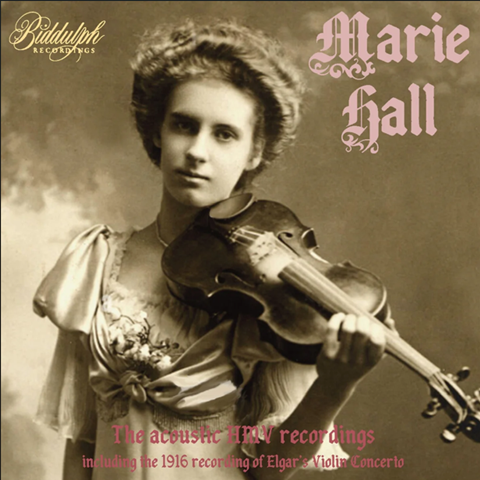
The Strad Issue: August 2025
Description: An opportunity to rediscover an under-recorded violinist
Musicians: Marie Hall (violin) Harold Craxton, Charlton Keith, Marguerite Tilleard (piano) orchestra/Edward Elgar
Works: Elgar: Violin Concerto (abridged); works by d’Ambrosio, de Angelis, Aulin, Bach, Beethoven, Dvořák, Fiocco, Goossens, Handel, Holst, Kreisler, Lalo, Leclair, Mendelssohn, Mozart, Paganini, Raff, Ries, Saint-Saëns, Sarasate, Franz Schubert and François Schubert
Catalogue number: BIDDULPH 85062-2
Here is the entire discography of Marie Hall (1884–1956), who rose from poverty to fame but made no records after February 1924 – an insult to the first performer of The Lark Ascending. The BBC did not forget her, although she gave her last Prom in 1931, but so far, no broadcast has turned up.
The major work is the 1916 Elgar concerto, conducted by the composer who cut it down to 16 minutes, adding a harp part to the cadenza. The plentiful portamento is in style and I always find Hall’s artistry seductive, not least in the finely phrased Andante. She is balanced a little forward, but Elgar’s conducting keeps the orchestra in the picture.
Five 1904 tracks include d’Ambrosio’s Canzonetta, with an exquisite trill, Ries’s Perpetuum mobile, very virtuosic, and a taste of the finale of Mendelssohn’s concerto. She next records in 1912, with a very fast Fiocco Allegro, delightful Kreisler, Raff’s Cavatina – nicely phrased – and the only version I know of Girolamo de Angelis’s virtuosic Gigue.
Paganini’s Moto perpetuo is very accurate; Aulin’s Humoreske is good to have; trills return in a touching Leclair Sarabande and the finale of Lalo’s Symphonie espagnole. Pleasing Goossens and Holst pieces leave me wondering what else she might have given us.
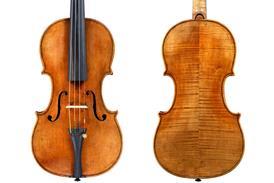
Transfers are good; on 22 tracks Hall plays her ‘Viotti’ Strad, which is pictured in the booklet. A slight impression of hurrying on some earlier records can be put down to inexperience with the stressful acoustic process.
TULLY POTTER
Read: ‘I had to give ten encores in succession’: From the archive: March 1903
Book review: Pioneer Violin Virtuose in the Early Twentieth Century
Read: From the mists of time: forgotten string players of the past









No comments yet