
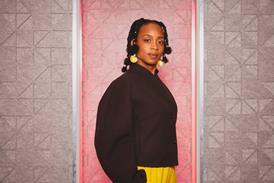



The composer reflects on eight years of life and work in New York City, the improvisational possibilities of the string quartet, and the themes of change, queer identity and trans futurism that shape her new album
Discover more Featured Stories like this in The Strad Playing Hub
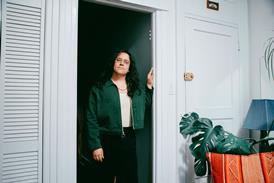
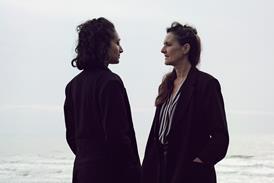
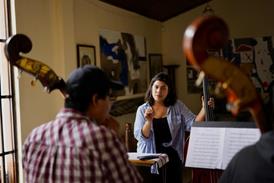
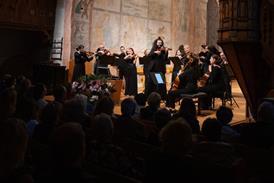
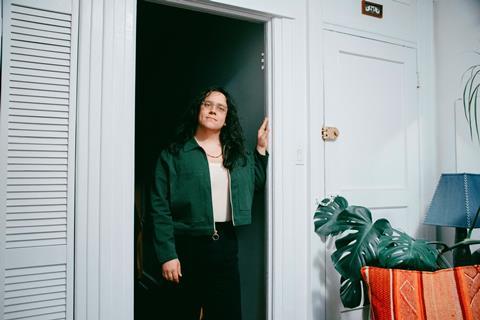
On Friday 6 November 2026, inti figgis-vizueta’s Music for Transitions is released on New Amsterdam Records. The full-length album exclusively features works by figgis-vizueta, performed by the Rothko Quartet and cellist Andrew Yee.
The album builds from figgis-vizueta’s 2020 cello quartet Music for Transitions and mirrors her growth, exploration, and relationships spanning eight years in New York City.
’From early lessons at Columbia University, to commissions from Carnegie Hall and National Sawdust, and performances in all five boroughs, New York City has been both a welcoming home and vivid, creative laboratory,’ says figgis-vizueta.
’Throughout, the string quartet has been much the same: an infinitely inspiring ensemble and musical form, with deep improvisational potential born of an intimate sensitivity to collective sound.’
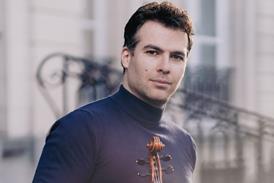
The album’s five pieces invoke ’Indigenous cosmologies and trans futurism through organic, ecstatic soundscapes.’ The Rothko Quartet has championed figgis-vizueta’s works for years, while Yee has collaborated with figgis-vizueta as a soloist and member of the Attacca Quartet. Yee performs works as a duo with the Rothko’s cellist, Jakob Nierenz, as well as with the complete Rothko Quartet to create a cello quintet.
figgis-vizueta spoke to The Strad about the inspiration behind the works on the album.
The album grew out of the 2020 cello quartet work Music for Transitions. How did the idea develop from that original piece into the five works on the album? What changed or expanded, musically and conceptually, along the way?
While Music for Transitions started as a remote pandemic project between cellist Andrew Yee and myself, it has grown to encompass live versions for up to ten cellos, an evening-length programme of continuous string music, and now this album.
While conceptualising the record, I wanted to bring in pieces that were in musical conversation and approached the idea of transitions in their own distinct way. Ultimately, Music for Transitions has transformed from a single piece into an apt description of my broader approach to composition and the curation of my own work and that of my community.
The album reflects eight years of your life and work in New York. Are there particular aspects of the city, its musical communities or your experiences there that we can hear in these pieces?
The album encompasses my life in the city and owes its creation to the city. My compositional process is slow and cumulative, bringing into conversation the sounds of the streets around me with the rehearsals, workshops, and concerts inherent to a life in music.
Specifically, my tendency towards furious repetition, dense timbres, and sudden, drastic change directly parallel my experiences navigating the city at its most kinetic, often its most sonically rich character.
You mention having performed in all five boroughs, and the album itself comprises five pieces. Is there any connection between the two, or is that simply coincidence?
That parallel wasn’t intentional, but the piece Talamh (land) was in fact toured around all five boroughs by the Orchestra at St. Lukes. The experience of presenting the work to wide-ranging communities and meeting them after each performance was deeply inspiring and gave me a belief in my own work’s ability to communicate depth beyond the traditional concert hall.
The string quartet has been a recurring form for you, and you’ve described its ‘deep improvisational potential’. What does improvisation allow you to explore within an ensemble that comes with such a long and established tradition?
String quartets learn the art of listening and subtle non-verbal communication early because they simply must in order to play their repertoire well. The expansive nature of the tradition makes this kind of highly-tuned communication part of the expressivity of playing different composers, different styles.
In my own approach to the ensemble, I bring those skills to the fore and ask players to find subtlety and detail through collective transformation. By engaging the skills they’ve already developed as a group, I experience a great deal of trust while writing and honing improvisational pieces with my collaborators.
How much freedom do the players have within these scores? Are there elements of improvisation, chance or performer choice that mean the music can evolve from one performance to another?
I create group structures for players to freely explore, creating space to reflect and refract off one another’s musical choices. Each piece on the album explores musical freedom differently and some of these choices can be replicated easily, others not.
For example, mayu (the great river) has pacing that often remains relatively static after a group plays it through a few times but the way each texture builds and breaks will always be unique to each performance. Stolen Rivers has obvious improvisation expressed in the soundscape of bells contrasting the chorale’s stately feel, which offers more subtle improvisational choices embedded in the harmonic cycles.
The album brings together musicians with whom you have long-standing relationships. How have your collaborations with the Rothko Quartet and Andrew Yee shaped the music, and did their particular qualities as players influence the way any of these works developed?
Rothko Quartet and Andrew Yee are virtuosic, deeply expressive players. I’m also lucky enough to count them as great friends. The music on this album is fundamentally shaped by their musicianship and artistry, but also by the kind of mutual artistic permission that comes with trust built over years.
Samara (maple seed) is the most obvious example of that. I wrote the four movements of the piece specifically for them, allowing myself to bring out extremes of drama and sparseness that felt too delicate for the relative impersonalness of a regular commission. It’s my favorite piece I’ve written to date and I can’t thank them enough for bringing it to life.
The album is described as drawing on Indigenous cosmologies and trans futurism, while the title work is rooted in ideas of change and in your and Andrew’s shared experience as queer, trans-feminine artists. How are those ideas expressed in the music itself?
The title track focuses on layering through listening, a musical dialogue between Andrew and Jakob born of few words and an iterative process of building on each other’s full takes. Talamh (land) focuses on sonically drawing the shapes of landscapes in Ireland, while mayu (the great river) focuses on dark silhouettes in the night sky. Both were seen by my ancestors, both lines through time.
Samara (maple seed) focuses on musically tracing the lives of the falling, twirling seeds of maple trees of Washington, D.C. while Stolen Rivers uses spatialised bells and a mournful chorale to examine the transportation gap that deprived poor communities of access to the Potomac River and the cultural institutions around it.
Themes of transition and transformation run throughout all of the works on this album, written across the music, its structures, and the interpretative decision-making of my collaborators.
Change and transformation seem to run throughout the project, from the title to the way the music is created collaboratively. How do musical processes such as improvisation, repetition, texture or shifting relationships between the players embody that idea of transformation?
My goal as a composer is to create the musical circumstances that make my performers shine. Transformation can be a scary thing to a classically trained performer, especially when combined with choice: what should I play? When should I play? What kind of timbre should I play? How loud should it be? What kind of technique is best here?
Improvisation is not really taught in classical pedagogy or at conservatory, but analytical listening is taught as a tool to hone one’s instrumental skills. My music harnesses listening as a compositional and interpretative tool to say: no answer is wrong, but while playing with others one must give and take space in equal measure.
Transformation is much the same, motion is defined by stillness, transformation by stability. Change is god though, per Octavia E. Butler, so it’s good to practise how to change.
Music for Transitions is released on 6 November 2026 on New Amsterdam Records.
Read: It takes an army of friends: Building a double bass festival in Honduras
Read: How Scotland’s old stories shaped my album ‘Binnorie’
Discover more Featured Stories like this in The Strad Playing Hub











No comments yet