











Alex Laing peruses Jennifer Maslin’s book of 20 duet arrangements, by composers from Delibes and Bizet to Offenbach and Rachmaninoff
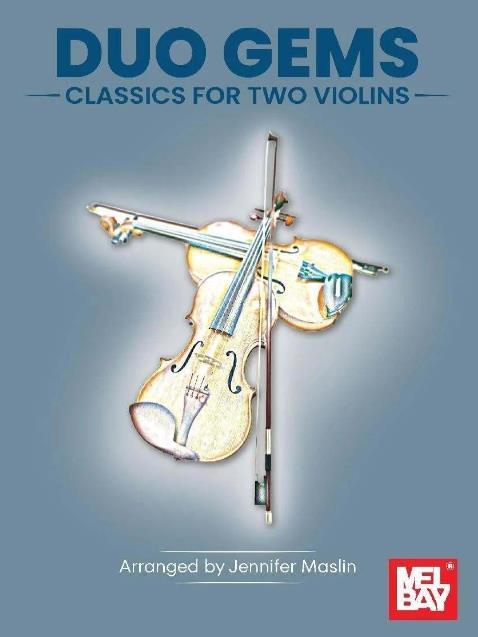
Duo Gems: Classics for Two Violins
Arr. Jennifer Maslin
40PP ISBN 9781513485898
Mel Bay £16.99
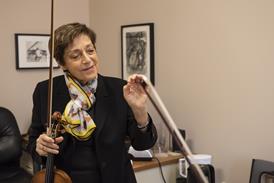
Jennifer Maslin is a violinist, singer and teacher with a background in both classical and jazz. Her collection of 20 duet arrangements brings together some of the pillars of the classical music repertoire, from Delibes’s Flower Duet and Bizet’s Habanera to Offenbach’s Can-Can and Rachmaninoff’s Vocalise. The publisher describes this volume as suitable for upper intermediate to advanced players, including teachers and professionals. The arrangements, though far from simple are, in fact, not overly advanced either. The accessibility for many is one of the book’s many strengths.
The choice of repertoire is only part of the attraction. The arrangements themselves are skilfully done. Musical interest is generally shared between the two players, with accompanying textures passed naturally from one part to the other, ensuring that neither violinist is confined to melody or accompaniment for long. Where the writing is less evenly balanced, there is usually good musical reason. In Bellini’s Casta Diva, for example, the second violin provides an accompanying texture throughout. Rather than feeling subordinate, however, it offers an excellent opportunity to develop the supportive chamber music skills that violinists can sometimes overlook. This flexibility also makes the volume particularly valuable in the teaching studio. The approachable technical level allows teachers and pupils to play together as equals, swapping parts where appropriate, listening to one another’s sound and learning the essential skills of ensemble playing.
Maslin’s background as a singer seems to have influenced both her choice of repertoire and the way she approaches it. Alongside instrumental favourites are vocal classics such as Mendelssohn’s Hear My Prayer and Mozart’s Voi che sapete. All the melodies can sing naturally on the violin.
Read: No string player is a musical island: the benefits of duets for students
Arranging scores of great music for just two violins inevitably involves compromise, and there are occasional moments where one misses some of the richness of the original scoring. In Fauré’s Pavane, for example, the beautiful melody that appears in 3rds in the original cannot be recreated, because one violin is required to provide the accompanying texture. It is perhaps the only point at which I found myself wishing that Maslin had provided even a few bars of these two melodies together, forgetting the accompaniment for a moment.
This volume will appeal to a wide range of violinists. Teachers will find a wealth of attractive duet repertoire, pupils will enjoy exploring some of the great melodies in music, and more experienced players will find plenty simply to play through for pleasure. The arrangements would sit equally comfortably in an informal concert, to be listened to or as background at a wedding or function, or as enjoyable sightreading material with friends. It is difficult to imagine two violinists not enjoying exploring this collection together.
ALEX LAING











No comments yet