
















Alberto Giordano reviews the second in the three-volume series by Andrea Zanrè and Philip Kass that shines a light on the myriad violin makers based in the city of Mantua over the centuries

Liuteria Mantovana Vol.2
Andrea Zanrè, Philip Kass
427PP ISBN 9788890719493
SCROLLAVEZZA E ZANRÈ €693 (SUBSCRIPTION)
€990 (COVER PRICE)
In the mid-18th century, after the Treaty of Aachen had put an end to a continuous series of European wars, the Italian peninsula returned to a period of relative peace and stability. If, with the death of Carlo Bergonzi in 1747, Cremona’s great violin making tradition was coming to an end, musical life in Mantua had a decisive revival, thanks to its annexation by the Habsburg empire and the reforms introduced by Maria Theresa of Austria and her son Joseph II.
It was in this context that Tommaso Balestrieri, a man in his mid-forties, became Mantua’s pre-eminent luthier. Until now, the historical figure of Balestrieri has remained rather uncertain, both for biographical questions and for his career path: through patient and meticulous work, Philip Kass and Andrea Zanrè have filled these gaps and reconstructed the career of one of the most interesting luthiers of 18th-century Italy, to frame his style and impact on future generations of luthiers from Mantua. The second volume of their monumental work Liuteria Mantovana deals with the events of Balestrieri’s successors – from Alessandro Zanti to Pietro Barbieri, and from Giuseppe Dall’Aglio to Sante Coppi, Giuseppe Ceruti and Gaetano Dionelli. The volume also covers the dramatic phases that the city experienced, from the Napoleonic occupation to the Restoration, to the revolutionary movements which led to the unification of Italy.
Read: Book review: Liuteria Mantovana Vol.1
Read: An overlooked wonder: Pietro Barbieri
Read: From the Archive: a violin by Tomasso Balestrieri, 1760
One of the merits of the volume is that it illustrates the continuity of the Mantuan violin making tradition through this long and complex historical journey: through an always lively, punctual and well-organised narrative, the reader is led not only through the works and styles of the luthiers, but is also made a participant in their intimate (sometimes tragic) human events. In addition to revealing the stories of authors such as Zanti and Pietro Barbieri – hitherto almost unknown in violin making literature – the research work of Kass and Zanrè has made it possible to clarify the presence in Mantua of the Cremonese Giuseppe Ceruti, son of Giovanni Battista, and to clarify his relationships with the young Gaetano Antoniazzi.
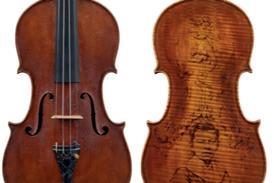
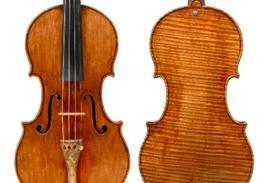
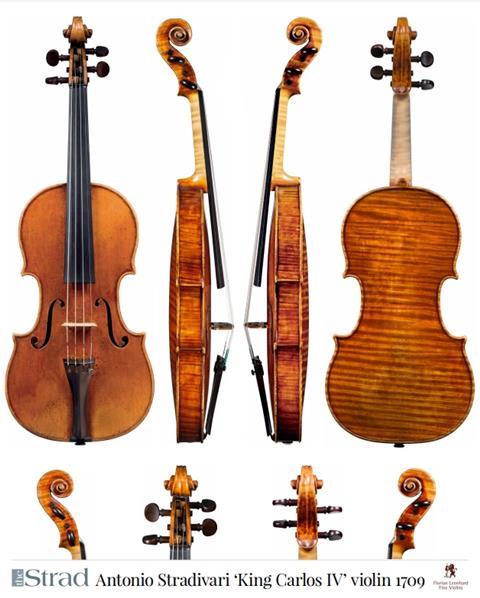
The volume concludes with a very interesting study by Rudolf Hopfner on the Cremonese ‘dorsal drill’, imported to Mantua by Pietro Guarneri and occasionally used by some of the luthiers who followed him. Just like the previous volume, the book is excellently organised in the sequence between historical introductions, biographical notes and organological analyses; all composed with fine artwork and Jan Röhrmann’s masterful photographic images of the instruments.
ALBERTO GIORDANO














No comments yet