
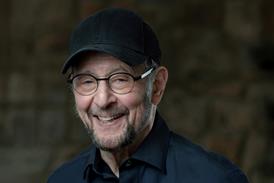




Esa-Pekka Salonen’s California homecoming created a dialogue between European modernism and American experiment, as Thomas May discovered
Discover more Featured Stories like this in The Strad Playing Hub.
Read more premium content for subscribers here
The beautiful small city of Ojai, some 80 miles north-west of Los Angeles, wears its spell lightly. Tracing its name to an indigenous Chumash word meaning ‘moon’, it is set in an agricultural valley where the scent of citrus seems of a piece with the ritual of festival-going. It has long drawn a mix of artists, wellness-seekers and devoted music lovers. For four days each June, the Ojai Music Festival (OMF) turns this valley community into a renowned hub for new music.
The festival was founded in 1947, and its structure is central to its identity. There’s a different music director every year, giving each edition the character of a concentrated artistic self-portrait rather than a standard seasonal offering. In 2026 (11–14 June), that ritual of reinvention carried an added sense of transition: OMF artistic and executive director Ara Guzelimian concluded his tenure, with conductor Teddy Abrams named as his successor.
Esa-Pekka Salonen returned as OMF’s music director for the first time since 2001. The programming reflected his dual identity as composer and conductor, placing his music within a wider network of colleagues and collaborators. Figures important to his development were represented (Olivier Messiaen, Luciano Berio and Franco Donatoni), as were his former fellow Sibelius Academy students Kaija Saariaho and Magnus Lindberg.
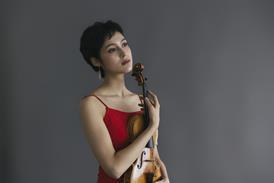
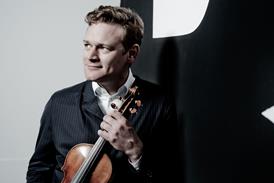
Messiaen’s Quartet for the End of Time became the opening night’s spiritual centre of gravity, with violinist Geneva Lewis, cellist Jay Campbell, clarinettist Anthony McGill and pianist Conor Hanick giving its solos space to breathe – Campbell’s cello seeming to suspend time as Lewis’s final violin line opened towards the infinite. The same concert offered the US premiere of Salonen’s violin–cello duo Drømmelogikk (‘Dream Logic’, 2026), inspired by what he described as ‘a Salvador Dalí-esque version’ of Rossini’s overture to The Thieving Magpie, imagining a descending line stretching on with M.C. Escher-like impossibility.
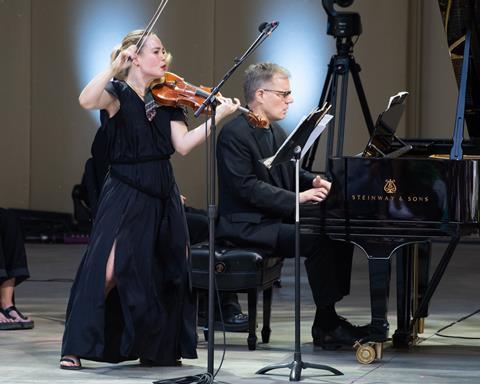
The American strand was no less layered, spanning generations from John Cage, Morton Feldman and George Crumb to David Lang, Andrew Norman, Jessie Montgomery and Gabriella Smith. John Adams had a sustained presence, with two 1990s chamber classics – including Road Movies, played with restless rhythmic imagination by violinist Leila Josefowicz and pianist John Novacek heard alongside two premieres.
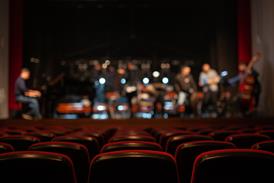
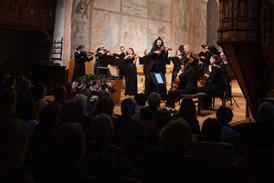
Music featuring strings held special prominence this year, from solo pieces and quartets to a string orchestra programme presented as one of the full-length evening concerts. These main-stage events take place at Libbey Bowl, the open-air amphitheatre at the festival’s heart. There, birdsong joins in the soundscape, followed later by frogs and crickets. Shorter late-morning concerts are given there too, while other events draw festival-goers on little pilgrimages to ancillary spaces around the valley.
At Sunday morning’s Libbey Bowl concert, Adams’s string quartet Iron Jig was premiered by the Attacca Quartet. Its asymmetrical patterns repeatedly seemed to lock into place only to be knocked off balance again. The performance had a hard-edged exhilaration, the dance impulse recast as something weightier, sharper and more unstable.
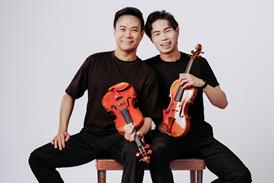
Andrew Yee, Attacca’s cellist, described what makes OMF so unusual: ‘Only in a handful of places does the town become the festival.’ And there’s an absence of defensive thinking: ‘Here, musicians can bring what they are passionate about and the festival effectively says: “Great, let’s amplify that. You want to play Black Angels at 8am? Play Black Angels at 8am.” What you get is programming based not on fear but on curiosity.’
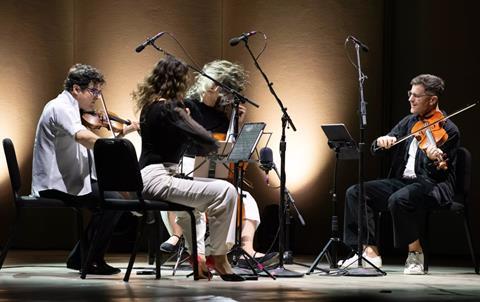
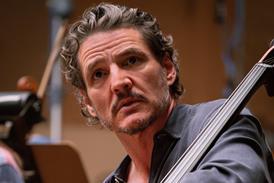
Sure enough, at Friday’s 8am concert, an intrepid festival audience – the Ojai ‘hardcore’, as Guzelimian affectionately put it – filled the black-box space at Besant Hill School where the Attacca unleashed the ritual theatre of Crumb’s Black Angels with electrifying physical commitment. It was a reminder that string playing is not merely a question of sound but of physical action: Yee’s cello became an object to be struck, tilted, inverted, inhabited.
With former Kronos Quartet violist Hank Dutt in the audience, the occasion suggested the transmission of generational memory: Crumb’s Vietnam-era landmark, refracted through the Attacca Quartet, was preceded by Lang’s daisy (2024), written for the group as a response to the Crumb. Lang’s piece begins with a note of utopian innocence that is overwhelmed by nightmare but then ends by imagining ‘what might happen if that gentle and open spirit could be believed, and valued, and supported, and preserved’, in the composer’s words.
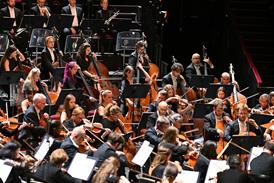
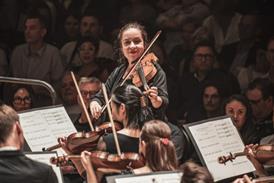
Josefowicz brought that same sense of physical commitment to Ligeti’s Violin Concerto in the closing programme, with the Colburn Orchestra conducted by Salonen. Taking on the concerto for the first time, Josefowicz gave herself over completely to its ferocious, whispering and singing extremes as she wound her way through Ligeti’s labyrinth, even supplying her own cadenza.
Lewis provided a quieter frame for the four days. She opened proceedings with ‘Charukeshi’ from Reena Esmail’s Darshan, a meditative solo violin movement that formed an inward, concentrated threshold. Positioned off to the side of the stage in the final concert, she gave an eloquent account of the Prelude from Bach’s E major Partita as a lead-in to Salonen’s Fog (2019), his 90th birthday tribute to the late Frank Gehry, a devoted supporter of Ojai. The Bach – the first music Gehry and Salonen heard together in the still-under-construction Walt Disney Concert Hall designed by the architect – seemed to gather the weekend into a single bright line before dissolving into Salonen’s veiled orchestral textures.
A Sunday morning ‘meditation’ for violin and cello, in solo and duo formations, suggested another dimension of Salonen’s approach: giving festival artists room to shape programmes with their own poetic logic. Lewis and Campbell traced a journey through deep time and deep listening, including the solo violin version of Andrew Norman’s Sabina, an ecstatic work inspired by sunrise in an ancient Roman basilica, which seemed to make light itself audible.
Lewis described Ojai as ‘a very freeing and safe experience’, sustained by a community ‘ready to embrace adventurous music and programming’. She was not, she said, searching for hidden connections inside her own assigned repertoire – ‘Perhaps I was looking for as much difference as possible, if anything!’ – so much as discovering how her contributions found their place within a larger context: ‘My place in the programmes was often a small piece in a large puzzle.’ That image caught something essential about Ojai: the festival does not explain every connection in advance but trusts performers and audiences alike to discover them over time.
In its 80th edition, Ojai did not seem like a festival looking backwards. Salonen offered an invitation to listen with open ears and to let a town become, for a few days, a community of shared risk. As Yee put it, Ojai gathers ‘curious people on stage and curious people in the audience’. That may sound simple. In practice, it remains rare.
Read: Postcard from San Francisco: ASTA 2026 national conference
Read: Postcard from California: Music@Menlo Chamber Music Festival
Discover more Featured Stories like this in The Strad Playing Hub.
Read more premium content for subscribers here








No comments yet