
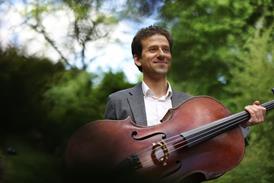



Ahead of a performance of Suites no.2 and 3 at Music at Paxton on 25 July, cellist Hugh Mackay discusses finding an authentic interpretative voice, drawing inspiration from historical sources while avoiding the paralysis of overthinking
Read more Featured Stories like this in The Strad Playing Hub
How do we absorb centuries of scholarship and definitive recordings without letting the weight of our predecessors stifle a performance? The challenge of performing Bach’s Cello Suites lies in synthesising this vast historical context into an interpretation that is spontaneous, emotionally honest, and entirely our own.
There is a distinct flavour of anxiety reserved exclusively for a cellist walking on stage alone. Stripped of the collaborative comfort of a duo partner at the piano, the silence of the concert hall can feel heavy, almost predatory. Every sonic decision is magnified, every silence and pause is extended.
Yet, the greatest trap performing a Bach cello suite isn’t a miscalculated shift or tempo choice. It is the sudden, mid-performance paralysis of the brain. When you reach the repeat of an Allemande, facing the choice of how to ornament, the ghost of Anner Bylsma or a past teacher shouldn’t whisper in your ear. If you are critiquing your decisions while trying to create an authentic and moving interpretation, the performance is already dead in the water.
As a student, I threw myself into the musical and intellectual challenges offered by these Suites. Since no manuscript exists in Bach’s own hand, I eagerly scoured through facsimiles such as those of Anna Magdalena Bach and Johann Peter Kellner, trying to get closer to the composer’s original intent.
I cross-referenced my discoveries with the recordings of my musical idols: feasting on the emotional and authoritative recording by David Watkin, the creativity of Pieter Wispelwey, and the perspectives offered by Rachel Podger’s wonderful violin transcriptions. I must admit that I had convinced myself that if I just absorbed enough information, my ideal interpretation would emerge.
When I began to bring these works to the stage, however, the weight of all that information backfired. In trying to honour historical practices and absorb and implement ideas from myteachers, I realised I had completely drowned out my own musical intuition. I wasn’t listening to my own musical impulses and spent more energy mentally auditing myself against a panel of editors and recording legends. By trying to absorb everything, I had accidentally evicted my own voice from the interpretation.
By trying to absorb everything, I had accidentally evicted my own voice from the interpretation
I have no regrets about this process, however. Without a doubt, extensive exploration, analysis, and input from artists more experienced than ourselves is an enriching and inspiring way to engage with repertoire of any kind, especially these iconic works: there is such a rich heritage surrounding these works after all.
In particular, I encourage cellists to play as much of Bach’s orchestral music as possible; my own experience playing the cantatas, passions, and orchestral suites has been invaluable when thinking creatively about voicing and texture for the implied polyphony of Mackay / Unaccompanied, But Not Alone 2 the Suites.
It exposes us to the idiomatic articulations and rhetorical inflection points thatwe miss from an autograph score. Bach reuses so much of his musical material across other works: the C minor Cello Suite, BWV 1011 is also the Suite for Lute in G minor, BWV995, and the brilliant semiquaver material from the Preludio of the E Major Violin Partita,BWV 1006.1 also appears in the 1729 cantata Herr Gott, Beherrscher aller Dinge, BWV120a, and the 1731 cantata Wir danken dir, Gott, wir danken dir, BWV 29. A convincing, stylistic interpretation only happens when we absorb Bach’s wider oeuvre to the point where informed decisions come intuitively.
For me, the ultimate goal of this research is discovering how to communicate the profound emotional content of the music through the expressive tools of Bach’s time. A book absolutely essential to my understanding of this relationship between music and rhetoric is Judy Tarling’s The Weapons of Rhetoric. Tarling expertly demonstrates performance techniques stemming from classical oration that bring musical ideas to life for an audience.This book remains a rich, potent resource for navigating Bach’s music, and it is a text I revisit whenever I return to the Cello Suites.
Armed with these expressive tools, the question becomes: how do we transition from the analytical mindset of the practice room to the absolute freedom required on stage? And how do we know if our preparation will actually move an audience?
How do we transition from the analytical mindset of the practice room to the absolute freedom required on stage?
In the final weeks before a concert, I find comfort in acknowledging the staggering resilience of Bach’s craftmanship. This music is so elegantly constructed that it thrives across centuries of playing styles and mediums, whether voiced on a baroque cello, a modern instrument, or transcribed for a marimba ensemble. We are, ultimately, conduits for a blueprint that is already near perfection. If our foundational preparation is rigorous, the inherent beauty of the music will come across.
But to truly connect with others, we must embrace our vulnerability. Audiences do not respond to this elusive idea of ‘perfection’; they respond to honestly. Reaching a headspace on stage that allows for us to have spontaneous emotional responses in performance is what separates a sterile recital from a memorable artistic experience.To bridge this gap, the help of trusted friends, colleagues, and mentors is indispensable.
Playing run-throughs for a small, trusted circle provides essential feedback on everythingfrom overall emotional pacing to microscopic technical details. We cannot simulate the human element of a concert alone in our practice room. Sharing our work in a low-stakes environment is the single best way to test our choices, take risks and build genuine stage confidence.
As cellists, we can take solace in the knowledge that the Bach Suites are a lifelong companion. We will return to them at every stage of our artistic journey. There is no singular ’ideal’ interpretation waiting to be revealed. Our only duty is to step onto the stage, trust the scaffolding we have built, and let the music speak through an honest heart.
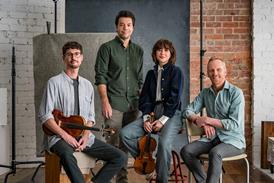
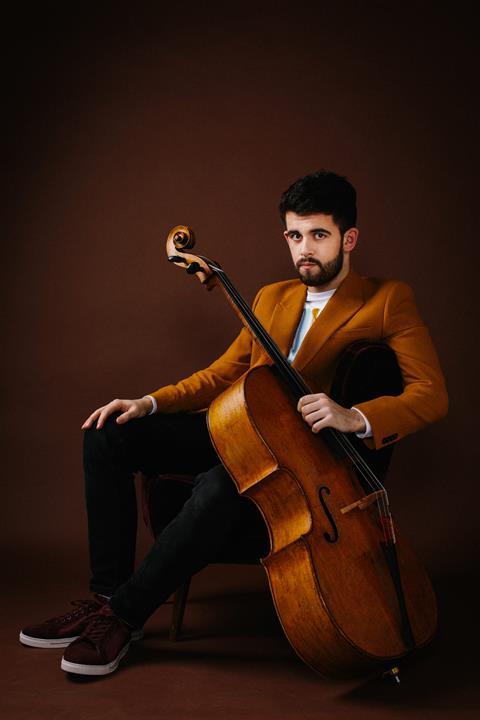
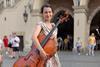
Scottish cellist Hugh Mackay performs internationally as a recitalist, chamber musician and orchestral principal, guest leading the cello sections of orchestras including the CBSO, Scottish Chamber Orchestra, and National Symphony Orchestra of Ireland. He is a founding member of Ensemble Jackalope, who were Young Artists at Britten Pears Arts in 2026. Hugh will perform Bach’s Suites for Solo Cello Nos. 2 & 3 at Music at Paxton on 26 July.
Read: Opinion: Why memorisation is so vital
Read: Senza basso: hearing the silent bass in Bach’s Cello Suites
Read more Featured Stories like this in The Strad Playing Hub









No comments yet