



Davina Shum travelled to California’s Silicon Valley to sample the intense creative atmosphere of the chamber music festival and educational programme Music@Menlo
Discover more Featured Stories like this in The Strad Playing Hub.
Read more premium content for subscribers here
I arrived at Menlo School, the site of Music@Menlo Chamber Music Festival and Institute, on the first day of proceedings. It’s situated in Atherton in the heart of Silicon Valley, a little less than an hour’s drive south of San Francisco. The ‘Golden Gate City’ may be renowned for its summer fog and chilly, windy conditions, yet just down State Route 82 you’re welcomed by blue skies, palm trees and temperate, balmy, sunny weather that can only be described as perfect. ‘It never rains here!’ proclaimed one regular festival attendee.
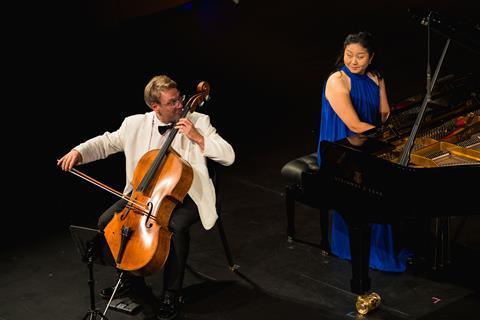
‘Welcome to Music@Menlo!’ exclaimed pianist Wu Han. ‘Enjoy our musical oasis.’ Wu Han and her husband, cellist David Finckel, have served as founder co-artistic directors since 2003. A few weeks previously, the couple had announced their intention to step down from the festival, with another cellist–pianist husband-and-wife duo, Dmitri Atapine and Hyeyeon Park, taking up the reins from the 2027 season.
After an initial one-day pilot event in 2002, Music@Menlo started in earnest in 2003, combining performances by world-renowned chamber music artists with an intense, immersive educational programme for emerging musicians. It’s one thing to represent an oasis in terms of weather, but the festival directors are quick to point out that the music here is a celebration of learning, not to be perceived merely as a jaunty diversion. ‘It’s not about entertainment,’ Finckel told me. ‘It’s about everybody coming together to learn something from each other, about each other, about the music.’
So what type of audience members does Music@Menlo attract? Perhaps it’s reflective of the environment in which the festival is held – the birthplace of technological discovery and exploration, home of tech giants such as Apple, Google and Hewlett-Packard, as well as the expansive Stanford University campus. Wu Han mentioned loyal, long-time audience members from the local community who are willing to engage with the music and benefit from the gradual learning and absorption of knowledge offered at the festival each year. One only needs to look to the Encounter series of lectures to see this. I attended the first of these, led by former Escher Quartet violinist Aaron Boyd, who provided a two-hour, in-depth analysis of the history of chamber music.
‘It’s about everybody coming together to learn something from each other’ – David Finckel, artistic director
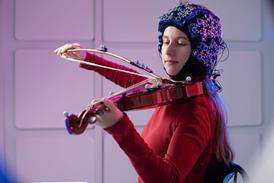
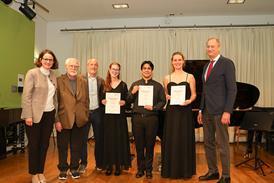
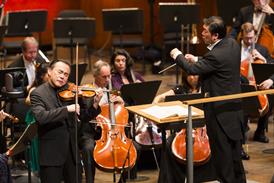
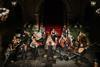
It’s not only the audience members who are learning, though. A major component of the event is the Chamber Music Institute, which is split into two divisions: the International Program (IP) for musicians aged between 20 and 30 on the cusp of a professional career, many of whom are students and graduates from top conservatoires; and the Smith Family Young Performers Program, comprising talented young musicians aged 12 to 19. For the festival’s three weeks (this year, 18 July to 9 August), the musicians live in accommodation near the school or with host families, and enjoy intense coaching sessions and masterclasses with the festival’s senior artists.
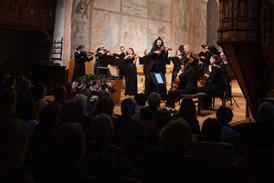
The schedule of the IP artists illustrated the festival’s focus on learning and progression. I witnessed three Prelude Performances – short, interval-less concerts free to the public, where the artists get the chance to perform the same repertoire repeatedly, on different days and in different venues, and, nerve-rackingly for some, have the opportunity to speak to the audience. It was interesting to see the difference in level of playing between first and second performances of works such as Beethoven’s String Trio in C minor op.9 no.3 and Piano Trio in C minor op.1 no.3 and Schumann’s Piano Quintet in E flat major op.44, the repeated versions more refined and confident each time. It’s an ideal the festival directors want to cultivate in the students: ‘Three weeks from now, I guarantee a completely different level because of the festival’s intensity – you’re on stage all the time and you just keep improving,’ says Wu Han. ‘Your ears change after you spend all day practising, having coaching, then you go to a seniors’ concert and the next morning you discuss what happened last night.’
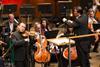
One morning, I sat in on Wu Han’s coaching session on Dvořák’s Piano Quartet no.2, where she delved into details such as the intricacies of tuning and the folk music elements in Dvořák’s work, using metaphors such as the bells in Prague’s Old Town Square and relaying pearls of wisdom passed down from the likes of Felix Galimir. She revealed that she had studied the viola as a second instrument, something I didn’t know but which became evident in her empathetic and practical advice to the string players in the ensemble. ‘Intensity’ certainly was the word, as I said to the IP artists as the session ended, for I was exhausted even though I had only been an observer, and I couldn’t imagine how they felt. ‘It’s fun,’ said the violist, with a grin.
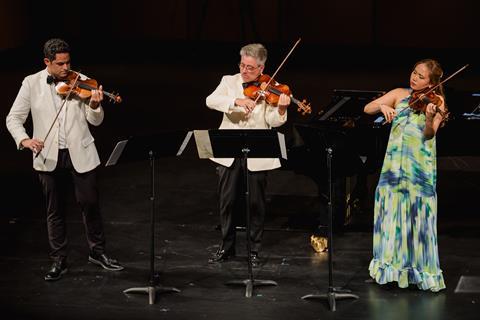
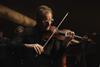
This year’s festival was titled Constellations: Ensemble Magic; its star-studded programmes focused on presenting chamber works for increasingly larger ensemble sizes from concert to concert. I attended the first two concerts – the pleasingly alliterative Duo Dialogues and Trio Transformations. A highlight was a performance of Beethoven’s Horn Sonata op.17 by Kevin Rivard and Wu Han (as a cellist, I’m more familiar with the composer’s own cello transcription). Another notable element of the duo concert was incoming festival directors Atapine and Park giving a spirited performance of Mendelssohn’s Cello Sonata no.2 in D major (which left me thinking, ‘Wow, there are so many notes!’). Stella Chen and Shai Wosner performed Saint-Saëns’s Violin Sonata no.1 in D minor – in the last movement of which Chen’s agile sautillé passagework merged seamlessly in unison with Wosner’s playing, almost causing me to laugh out loud at how good it was.
Trio Transformations yielded the rarely heard Terzetto in C major for two violins and viola by Dvořák, performed by Arnaud Sussmann and Chen, with Aaron Boyd on the viola. The players were seemingly split between Generation iPad and Generation Sheet Music, and it was the first time I’ve witnessed a minor malfunction of a Bluetooth page-turn pedal in between movements, which turned into a moment of levity with an impromptu Dvořák Humoresque no.7 played by Boyd while the technical glitch was ironed out. Pianist Chelsea Wang, violinist Richard Lin and cellist Jonathan Swensen tackled Smetana’s epic Piano Trio in G minor, a work that requires furious scrubbing from the string players and caused many a hair to part company with Swensen’s bow – ‘It’s so hard!’ Swensen told me later about the piece.
For my mere three days at the festival, I definitely felt like I had been in an oasis in all senses of the word. Heading away from the school, faced with angular Cybertrucks, protests outside car showrooms and anomalous summer fog, I wished I could have stayed for longer in this welcoming chamber music haven.
Read: Memories at Menlo with David Finckel and Wu Han
Read: Music@Menlo announces new artistic directors
Discover more Featured Stories like this in The Strad Playing Hub.
Read more premium content for subscribers here








No comments yet