


















Cellist and composer Isobelle Austin shares how colours inform sound in her debut original single
Read more Featured Stories like this in The Strad Playing Hub
When I hear music, I see colour, light, texture and movement – they arrive with sound, rather than being translated afterwards. It took me a long time to realise this wasn’t how everybody heard music.
Sun On My Skin began at the cello. That’s true of several pieces for my debut album: I sit down and play until a melodic phrase, harmonic progression or musical idea emerges that feels worth developing. With Sun On My Skin, the first phrase came to me in a quiet moment during a studio set-up in Malta. For me, it carried a sensation of golden warmth: drifting into a daydream, the sun on your skin.
Once an idea has formed, the music and colour develop together. I think simultaneously about where the music wants to go and where the colour and texture want to go. I may notice that the piece has settled into greens and blues, its texture silky and almost paint-like. From there I decide whether to remain in that world or whether the piece needs to take the listener somewhere new. If a change is needed, the colour and texture I want to move towards can suggest the direction – a shift towards something darker and grainier may pull the harmony with it. Changing the colour isn’t decoration applied afterwards; it is one of the ways I work out how the music itself needs to change.
The emotional life of sound is fundamental to my playing. I owe much of that connection to my former teacher Adrian Brendel, who taught me to prioritise tone rather than treat it as something added once the notes were secure. That principle is at the heart of everything I play, from Bach to my own compositions, and even ‘Happy Birthday’ for my six-year-old niece. In my music, tone also shapes the synesthetic world: when a sound has the warmth, weight or openness I am searching for, the colours and textures feel more fully realised. Sound, feeling and colour are not separate decisions; they are parts of the same musical choice.
Sun On My Skin is scored for eight cello parts, each of which I composed, performed and recorded. The piece grew from a desire to explore the cello’s expressive range by allowing it to inhabit every part of the sound world. The risk was that multiple cellos occupy much of the same territory, and eight equally prominent voices could become a wall of sound. Every line therefore needed a clear role, with texture, register and space carefully considered. Bass parts provide weight and grounding. A countermelody sits where it can be heard without competing with the melody above it. Pizzicato gives definition and pulse; tremolo brings shimmer and motion; a resonant open string widens the space. A single sustained note can change the colour of an entire passage.
Tone is another tool I use to shape the orchestration. A bass line might need breadth; an accompanying figure might remain translucent; a high melody may call for openness or vulnerability. Bow contact, articulation and vibrato are considerations of cohesion as much as contrast: matching them across a melody and countermelody can help the lines move together as one, while at other moments a supporting layer may need a different sound. Phrasing often remains shared, allowing the whole texture to breathe and move together. Silence and restraint do as much work as layering. Every choice serves where the piece needs to go, both in sound and in the colours, textures and movement I experience alongside it.
Each of Sun On My Skin’s four sections brings a shift in colour as well as in music. It opens in warm reverie – golds, yellows and soft blues, everything translucent, with a lightness that feels like the sun itself. Then something darker arrives unexpectedly: deeper blues and dark greens with a touch of orange, the texture becoming fluid, almost like water. The third section is the one I think of as flying – completely light and free, with the colours lifting into silver, orange, pale blue and shimmers of ivory white. The final section returns to a soft, peaceful whisper, the same golds and blues coming back, but lighter and more translucent still.
It opens in warm reverie – golds, yellows and soft blues, everything translucent, with a lightness that feels like the sun itself
These colours give me an emotional map, but I do not expect a listener to see exactly what I see. Synaesthesia guides my choices; it does not prescribe how the finished piece must be experienced. I hope the music leaves room for somebody else’s memories, images and associations to enter.
I usually find a melody first and build the other parts underneath and around it, which is how this piece came together. My most recent composition did the opposite – layered harmonies first, melody last. Even the hierarchy within a piece is not fixed: what begins as the main melody can become an underlying harmony if a more prominent line arrives above it.
I often use the phrase ‘painting with sound’, but I do not mean that the music describes a fixed image. The synaesthetic experience evolves continuously with the music: every shift in harmony, tone, articulation, register, rhythm or phrasing can alter the colours, textures, movement and sense of space I perceive. In Sun On My Skin, eight cello voices merge, separate and move together through the changing landscape – a world of warmth, shadow, flight and, finally, rest.
Watch the video for Sun On My Skin here:
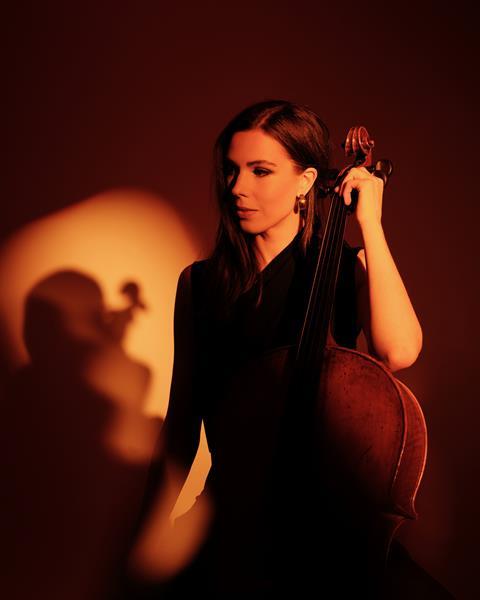
Isobelle Austin is a London-based cellist-composer working in contemporary classical music. She trained at the Royal Welsh College of Music and Drama, where she was awarded the Solo Bach Prize for Strings. Alongside her original music, she has an active career as a live and session cellist, with work taking her to Abbey Road Studios, Kings Place, the Royal Albert Hall, Glastonbury and the Isle of Wight Festival. Guided by synesthesia – experiencing music as colour, light, texture and movement – Austin composes by painting with sound. Sun On My Skin is her first original single, marking the beginning of a series of releases leading towards her debut album.



















No comments yet