
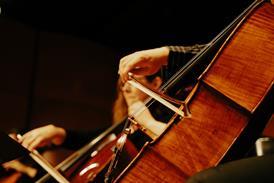
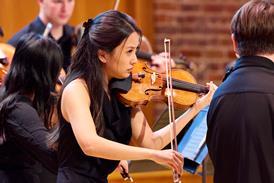
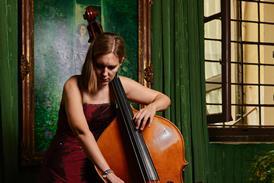

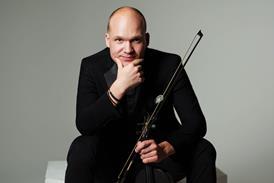
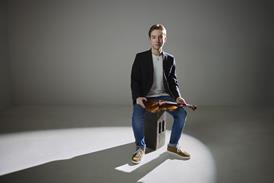




Estonian–American cellist Brendan Tarm reports back from the Fredericksburg Music Festival and School, where he participated in masterclasses with world-renowned cellists, attended their concerts and performed himself

Read more Featured Stories like this in The Strad Playing Hub
Becker Vineyards keeps a room where, on most days, the wines it produces ferment in the dark inside dozens of oaken casks piled one on top of the other. For opening night of a unique cello festival and school in small-town Texas, staff pushed them to the side: the wine-filled barrels now ranged along the walls, a cello podium and a grand piano set in the middle of the hall, the audience filing in between.
As an Estonian who moved to Chicago at a young age and later studied in Germany, Texas isn’t my natural habitat. And Fredericksburg in June is hot. But this town’s 10,000 residents take it in stride – decked in cowboy boots and hats, with an unhurried friendliness. For the next fortnight out in the Texas Hill Country, where rodeos not classical music are the norm, I would be attending the Fredericksburg Music Festival and School (7-21 June 2026), where I was a designated Young Artist.
Fredericksburg was settled in 1846 by Germans who promptly made peace with mighty Comanche tribes. Some 180 years later, the town’s German roots are evident, including at lunch and dinner tables: between classes, students went for Texas barbecue or schnitzel at authentic German restaurants. The schnitzel was, in a way, comfort food for me as a current student of Jean-Guihen Queyras in Freiburg, on the edge of Germany’s Black Forest.

The festival founder and director, Joseph Kuipers, opened with a performance in the barrel room with pianist Victor Asunción. Dr. Richard Becker, who owns the vineyard, explained what the room is normally for. The oak had infused the dry, cool air. The effect on the acoustics wasn’t flattering. The cello came through plainly.
It was a packed two weeks with events from dusk to dawn and into the night. The days followed a routine, each starting with a technique class first thing, led by one of the faculty members in turn. They rarely disagreed. Much of what they said overlapped, down to the exercises. But each thought about the warmup itself differently.

For Richard Aaron, it was almost a form of meditation. He moved methodically through scales, exercises and polyrhythms. The hour wasn’t preparation; it was somewhere to settle, all of it bent toward slow, controlled movement. Jens Peter Maintz treated it as calibration: a daily medicinal shot of basic, fundamental exercises to stay in shape. Clive Greensmith didn’t impose himself. Rather, he opened a toolbox of favourites – Starker, Feuillard, Klengel among them – and largely let them speak for themselves, trusting exercises of that pedigree to do the work themselves. Even those who absorbed even just a fraction of all the instruction stood to grow as engineers of our instrument.
Steuart Pincombe, a cellist known for his vast imagination from early to contemporary performance, built a symposium around the Bach Cello Suites. He offered six classes, one for each movement, with students doing the playing. On the first day, six of them played the six preludes, one from each suite; the next day the allemandes; and so on. Pincombe ran the workshop as a lecture series, drawing on decades living with the music – the contrasting characters of each movement, its place in the suite, the nuances of each tonality. One point he kept returning to was the search for a sweet spot of bow contact that lets the dance in the music come through. He led the workshop holistically, and I came away feeling I had travelled through his conceptual world of these monumental works.
The masterclasses were just as absorbing for how the teachers differed. Aaron has a knack for producing near-instant improvement; his ideas are intuitive with emphasis on visualisation. In every lesson I observed, the student left playing more freely than when they began.
Wolfgang Emanuel Schmidt came to each piece with a clear vision of the repertoire at hand. His demonstrations stayed with me – particularly one moment where he showed a student how subtle changes in colour can be used to shape the second theme of Dvořák’s Cello Concerto. Maintz was direct and forthright. He regularly emphasised digging to find an honest interpretation that holds true to the composer’s intentions. Clive Greensmith led with a supportive tone but got down to business quickly, with clear, actionable suggestions. And I was struck by the conviction Luis Claret brought to every piece he taught, as though the works were lodged deep in his bones. I had come to Fredericksburg knowing the reputations of the stellar faculty, and their well-deserved reputations held up.
The surprise of the festival, for me, was Valentin Radutiu, who served as principal cellist of the Deutsches Symphonie-Orchester Berlin and was appointed professor of cello at Rice University’s Shepherd School of Music. Radutiu is younger, and someone I’d had little contact with before. His teaching was to the point but compassionate, never losing sight of what the student in front of him needed.
When a talented student was playing the first movement of the Schumann concerto, Radutiu praised it, then pushed for something more visceral. Classical music, he said, needn’t be the stuff of TV commercials and hotel lobbies. He put on an ironic English accent, saying, ‘There’s nothing wrong with some Vivaldi in the hotel elevator.’ He urged the student to take the great music we are privileged to play and to tease out all the depth it contains, to reach the listener as one person to another rather than treating music as an intellectual exercise.

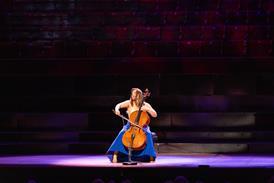
And they played as well as they taught. Schmidt demonstrated total control over the soundscape of his colours. Radutiu’s was full of sheer will and conviction, shaping each phrase as though it could not go any other way. Greensmith spun the string as though the bow had no end; with a sensitive vibrato and musical taste to match. Maintz built his programme with a strong sense of storytelling throughout, playing works by Alisson Kruusmaa, Ligeti and Bach without a break. Claret created a communicative atmosphere, singing through a programme of Piatagorsky and his godfather, Pablo Casals.
Maintz and Schmidt’s duo Cello Duello also performed. They were locked in a cohesive sound, with great chemistry and a tonal boom that enveloped you. They never took themselves too seriously, either – even slipping in subtle nods to a favourite cello concerto here and the odd motif from a Morricone Western score there.
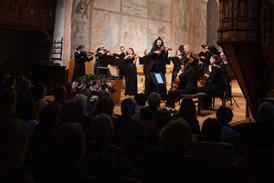
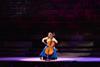
As a festival Young Artist I would have a recital of my own, shared with the other Young Artist, Noam Ginsparg. After days of sitting in on other people’s lessons, we put in long hours of our own, getting ready for what were, for both of us, our Texas debuts. The venue was St Joseph’s Halle, beautifully kept and the heart of the festival in Fredericksburg – intimate enough that I could play as quietly as I could and still draw people in.
Noam gave a first-rate account of works by Ysaye, Salonen, Beethoven and Harold Noben. He played with striking presence and true immersion. I played Schubert’s Arpeggione and two pieces by my brother, Jonas Tarm. One work was called Liisile, written for a cousin of ours who died suddenly several years ago. The other piece by my brother was Kodu, which commemorates the sinking of the Moero, an Estonian refugee ship sunk by Soviet planes during World War II, killing more than 2,000 people.
Kodu was deeply personal to me and my family. As a five-year-old, my own grandfather saw the Moero sink when he was standing on another refugee ship sailing alongside it. When I reached the plaintive theme of the piece (originally by Estonian composer Heino Eller) the room went silent. It was a profound moment for me to share a part of my family history in a German town in Texas that, for two weeks at least, felt like one of the centres of the cello world.
Follow Brendan Tarm at instagram.com/barmtarm








No comments yet