















Understated mastery makes for a compelling listen
THE STRAD RECOMMENDS
The Strad Issue: December 2025
Description: Understated mastery makes for a compelling listen
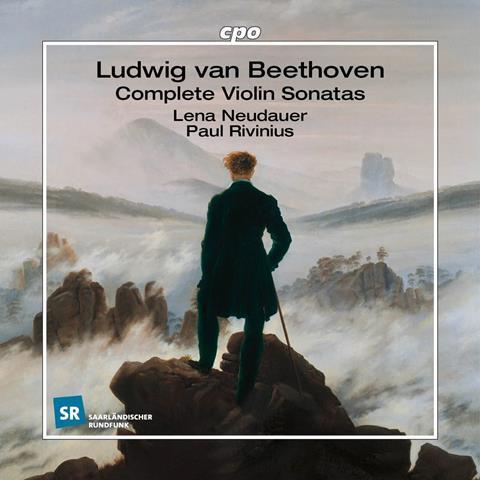
Musicians: Lena Neudauer (violin) Paul Rivinius (piano)
Works: Beethoven: Violin Sonatas nos.1–10
Catalogue number: CPO 555 550-2 (3 CDs)
Listening to this set has made me fall in love all over again with Beethoven’s ten violin sonatas. Although the favourites – the ‘Spring’ Sonata op.24, ‘Kreutzer’ Sonata op.47 and C minor Sonata op.30 no.2 – are never far away, I found myself greeting the relatively lesser-known ones as long-lost friends, well met after years of absence.
That my spontaneous reaction was one of admiration for the music’s endless variety, awe-inspiring depth and overwhelming beauty is due to the unassuming musicianship of Lena Neudauer and Paul Rivinius. They never apply outwardly expressive effects to their interpretations, which are squarely based on what the score tells them to do.
Their painstaking realisation of every one of Beethoven’s markings reminded me of a dictum attributed to the Budapest Quartet’s violinist, Alexander Schneider: ‘If we weren’t sure whether it was a dot or a piece of dirt, we played the dot!’
Examples of Neudauer and Rivinius’s meticulous attention to detail include fastidiously weighted chords, perfectly gauged crescendos and natural-sounding piano subito effects. Agogics are discreetly applied throughout. Beethoven often wrote out repeated sections, for example in the Tempo di minuetto from the ‘little’ G major Sonata op.30 no.3; the two players consistently find new nuances in them.
In the first movement of the A minor Sonata op.23, where the composer asks for both halves to be repeated, Neudauer and Rivinius duly oblige, thus adding greatly to the movement’s expressive power. In a historically informed manner, the violinist gauges her vibrato most carefully and keeps by default to lower positions (but not dogmatically: the excursion into G flat major in the ‘Spring’ Sonata’s Adagio profits from the veiled quality of the D string’s higher range).
More interventionist approaches, in which every last accompanying figure is squeezed for expressivity, can have a fascination all of their own. I found the artistry of Neudauer and Rivinius, which refuses to call attention to itself, a blessing: this warmly recorded set is a trusted guide to the cosmos that is Beethoven’s cycle of violin sonatas.
CARLOS MARÍA SOLARE
Review: Lena Neudauer: Schubert
Review: Lena Neudauer: Rosetti
Festival review: Kissinger Sommer 2024











No comments yet