
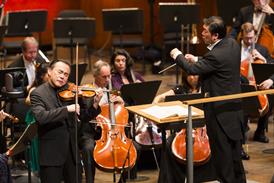
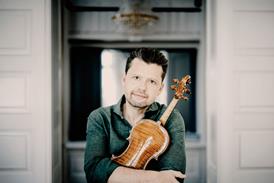
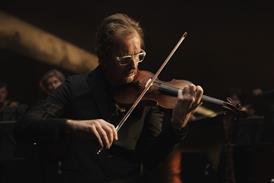









As the Juilliard Quartet makes its New York debut in its new formation, newly appointed second violinist Leonard Fu reflects on tradition, renewal and shaping the ensemble’s evolving voice
Read more Featured Stories like this in The Strad Playing Hub
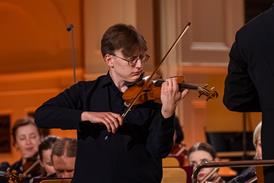
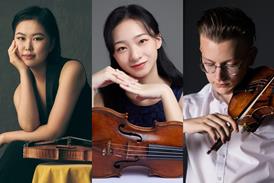
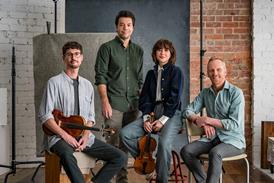
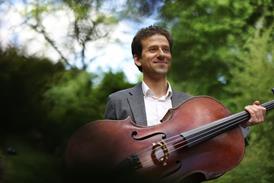
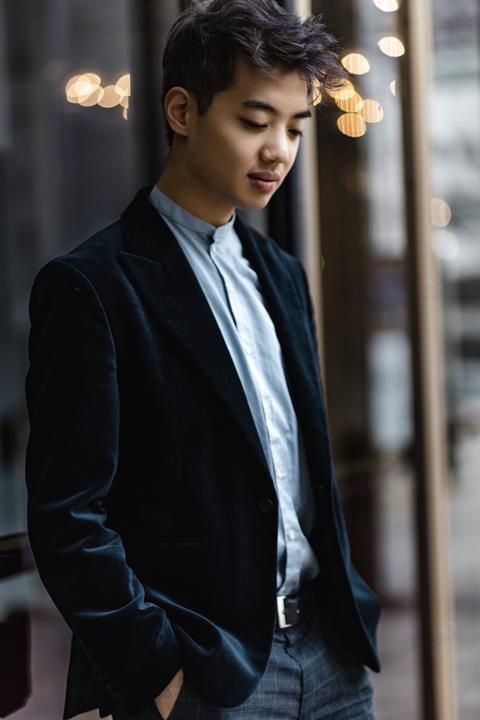
The Juilliard Quartet enters a new chapter this season with the arrival of violinist Leonard Fu as its second violinist. Though the ensemble has undergone many transformations since its founding in 1946 – the current line-up includes violinist Areta Zhulla, violist Molly Carr and cellist Astrid Schween, in addition to Fu – each new member inevitably reshapes its sound and internal chemistry.
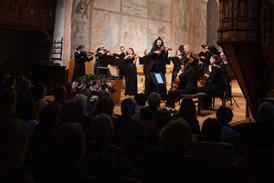
Fu joins at a moment when the quartet is actively balancing its deep traditions with a renewed commitment to contemporary voices – a balance reflected in the group’s 4 December New York debut in its new formation at Alice Tully Hall.
The programme opens with Brahms’s String Quartet No. 2 in A minor, a work the ensemble has long regarded as core repertoire yet one that gains fresh contours as the new line-up settles into place. Fu also contributes the world premiere of his own Popular Dances (2025), continuing the Juilliard Quartet’s lineage of performer-composers and underscoring its belief that new music should stand shoulder to shoulder with established classics.
After intermission, the quartet turns to György Kurtág’s 6 Moments Musicaux – a concentrated, introspective modernist statement that has long figured in the group’s musical identity – before closing with Schoenberg’s Verklärte Nacht in its original sextet scoring. For the Schoenberg, the ensemble is joined by violist Catherine Cho and cellist Marcy Rosen, both long-standing mentors and collaborators within its wider artistic circle.
US correspondent Thomas May spoke with Leonard Fu about stepping into this storied ensemble, shaping a collective voice with his new colleagues and bringing this debut programme to life.
You’ve recently joined the Juilliard Quartet – an ensemble with an extraordinary legacy. What has the process of finding your place within this group been like for you?
Leonard Fu: It’s been amazing – really energising and inspiring from the very beginning. When I auditioned earlier this year, even the trial rehearsal felt surprisingly natural; connecting musically and personally came easily. Of course, joining a quartet means that 25 per cent of its identity changes, so there’s a real process of finding one another.
During the first month I did a lot of observing while playing – listening for timing, rubato, articulation, the small things that make a quartet feel intuitive. Our recent tour in China was transformative. Without all the usual teaching and administrative duties, we could simply rehearse, perform, and spend time together. Coming back, I feel that many instincts are already becoming subconscious. That’s when it really starts to feel like a true ensemble.
The Juilliard Quartet has a long culture of mentorship and continuity. How has that tradition shaped your own experience?
Leonard Fu: The quartet’s structure actively protects that continuity – no member can retire within three years of another, so there’s always overlap. All four of us were shaped by former members long before we joined.
In my case, the connection goes back to my childhood in Germany. My teacher in Hamburg, Tanja Becker-Bender, studied with Robert Mann. Later, in the US, Ron Copes mentored me at festivals, and I worked closely with Roger Tapping, who was incredibly important to me both musically and personally. I also received coaching from Joel Smirnoff and Joel Krosnick.
What’s beautiful is that in rehearsals now, those voices still feel present. Someone will say, ‘Roger used to remind us about this’, or ‘Joel approached this passage like that’. It’s not pressure – it’s a rich pool of experience we draw from every day.
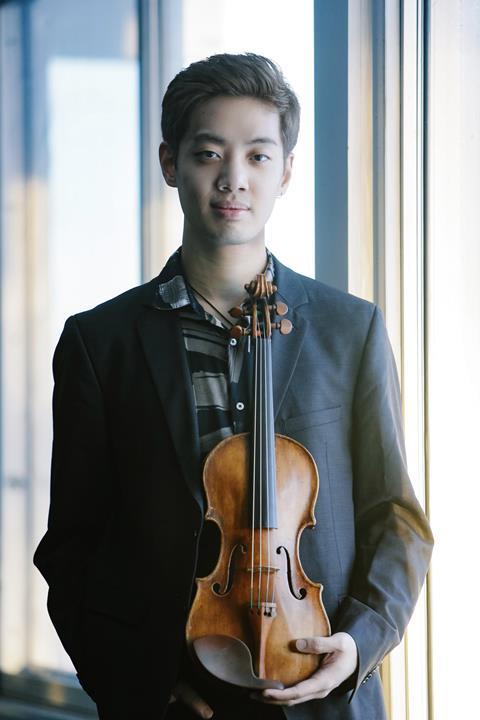
Your New York debut with the quartet includes the world premiere of your piece Popular Dances. What inspired you to contribute your own work to this programme?
Leonard Fu: The quartet has a long lineage of performer-composers – Bobby Mann, Sam Rhodes, and Roger Tapping all wrote music. So the others were excited that tradition could continue with me.
When we first looked at the programme – Brahms, Kurtág, Schoenberg – it was all serious, intense repertoire. Molly and Areta asked whether I might write something that could provide contrast and also introduce my musical voice as the new member. It felt like the perfect opportunity to embody the quartet’s motto: to play old masterpieces as if they were new, and new works with the same reverence as the classics.
Popular Dances is my way of joining that continuum and making a small statement about the ensemble’s evolving identity.
How does composing influence the way you approach chamber music as a performer?
Leonard Fu: I’ve always believed that the greatest pieces in our canon came from close collaboration between composers and performers – Brahms with Joachim, Prokofiev and Shostakovich with Oistrakh, Korngold with Heifetz. Writing music myself has only strengthened that conviction.
As a composer-performer, I think more about specificity: sound, gesture, colour and how a line is shaped for particular players. That mindset constantly informs how I rehearse and how I listen within the quartet.
This programme also features Schoenberg’s Verklärte Nacht in its original sextet version, joined by Catherine Cho and Marcy Rosen. How does expanding the ensemble shape the musical experience for you?
Leonard Fu: It doesn’t feel like branching out – more like consolidating our musical community. Cathy was my teacher for many years, and she also taught Areta. Marcy has been a mentor to both of us, and I’ve played with her at Marlboro. So the connections run deep.
We just had our first long rehearsal on the Sextet, and even though the piece is incredibly dense and contrapuntal, many things fell into place organically. That kind of shared instinct is rare and incredibly rewarding. And of course, the programmatic element of Verklärte Nacht – its emotional narrative – does inform how we shape its dramatic peaks. Sometimes someone will say, ‘Here the man knows she’s pregnant – this is post-cataclysm music!’ Those ideas absolutely feed into the interpretation.

What ties this entire debut programme together for you?
Leonard Fu: Ultimately, it’s the voice of the quartet itself. The Brahms A minor wasn’t our original plan, but as we rehearsed over the last few months, it became clear that this piece fits our new formation beautifully. We discovered something special in how we breathe and phrase together in that music.
Kurtág has long been central to the quartet’s identity – he was one of Roger Tapping’s favourite composers – so including Six Moments Musicaux feels like honouring that lineage. The Schoenberg, meanwhile, allows us to bring in musicians who have been important in our personal histories.
Together with the premiere of Popular Dances, it becomes a portrait of who we are right now: an ensemble rooted in tradition but very much alive and evolving.
You’ve mentioned the quartet’s commitment to new music – including your ongoing recording project Letters to Ludwig. How does that fit into your own artistic interests?
Leonard Fu: It aligns perfectly. I’ve always advocated for living composers, even in college – I constantly worked with student composers because I believe specificity of collaboration pushes music forward.
Our Letters to Ludwig project pairs each late Beethoven quartet with a new commissioned work responding to it. This season we’re touring op.132 with Michelle Barzel Ross’s companion piece Birds on the Moon. There are some extraordinary composers involved in the upcoming cycles – I can’t say too much yet, but it’s a dream to be part of this.
I also hope we can bring attention to under-performed 20th-century quartets. There’s so much repertoire that deserves to be heard.
Education has always been central to the Juilliard Quartet’s mission. What does that responsibility mean to you?
Leonard Fu: It’s fundamental. The quartet was founded alongside the Juilliard School in its modern form, and that pedagogical mission has always been part of our identity. Wherever we travel, we make sure there’s outreach – masterclasses, work with local students, meaningful educational engagement.
We also have an exciting collaboration with Suzuki on the horizon. And we care deeply about accessibility: ensuring young musicians have access to high-level training wherever they are.
Looking ahead, what hopes do you have for the quartet in this new chapter?
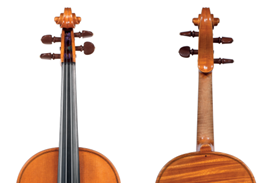
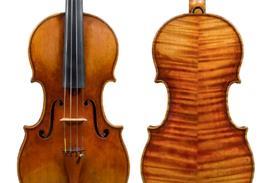
Leonard Fu: Besides continuing to commission and champion new music, I hope we can expand the repertoire we bring to audiences and deepen our educational role. On a personal level, I’m also preparing to transition to a new instrument in the next few years, as the Storioni I play – generously on loan from the German Music Foundation – is available only until age 30. Working with the school’s instrument library to find something that enhances the quartet’s collective sound is an exciting prospect.
Mostly, though, I’m looking forward to the long arc of growing together – finding our voice, deepening it, and carrying on a legacy that has shaped each of us long before we ever dreamed we’d be sitting in this circle.
You can listen to a free live stream of this concert at 7.30 pm EST on the Juilliard website at juilliard.edu/event/179281/daniel-saidenberg-faculty-recital-series-juilliard-string-quartet.
Read: Juilliard Quartet appoints new second violinist
Read: Premiere of the Month: Michelle Barzel Ross’s new quartet for the Juilliard Quartet
Discover more Featured Stories like this in The Strad Playing Hub












No comments yet