
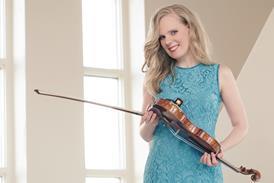





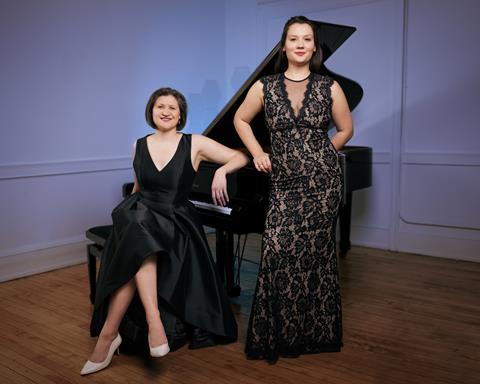
Chicago-based violinist Charlene Kluegel and pianist Katherine Petersen, who together form Duo FAE, uncover the feminist undercurrents of three Gilded Age composers in their new album.
Discover more Featured Stories like this in The Strad Playing Hub
Founded in 2012 by violinist Charlene Kluegel and pianist Katherine Petersen, Duo FAE takes its name from the motto ‘Frei Aber Einsam’ – ‘Free but Lonely’ – famously shared by Johannes Brahms and his violinist friend Joseph Joachim. The name reflects not only a musical lineage but also the duo’s own transnational origins: Kluegel and Petersen first met at the Aspen Music Festival and continued to collaborate across borders while living in Canada and the United States, respectively.
Dissidents of the Gilded Age pays tribute to three women composers whose creative lives challenged the strictures of the 19th and early 20th centuries. While the popular HBO series The Gilded Age has spotlighted the social manoeuvring and opulence of the era, Duo FAE shifts the focus to three composers – Cécile Chaminade, Ethel Smyth and Amy Beach – who each carved out a distinctive path at a time when women were largely excluded from public musical life.
Framed by the historical context of the women’s suffrage movement, the album brings together Chaminade’s Trois Morceaux, Smyth’s A minor Violin Sonata and Beach’s expansive Sonata in A minor, revealing how each composer navigated – and resisted – the social conventions of her time.
What emerges from this album is not just a showcase of underappreciated chamber music, but a conversation about the role of women in shaping musical history – and how that history has too often been overlooked. In this interview with US correspondent Thomas May, Duo FAE discuss the artistic and political choices behind the project, the individuality of each composer’s voice and how performing these works in Gilded Age spaces transformed their approach to interpretation.
How did you arrive at the idea of linking these three particular sonatas to the women’s suffrage movement? Was the political context always central to your concept?
FAE: In the season prior to the inspiration for this project, we performed Beach’s Romance. Beach was on track to have a brilliant virtuoso career as a pianist, but the societal demand to marry stifled her career prospects. Her husband forbade her from teaching and performing more than twice a year, so she moved into composition. Her journey as a musician inspired us to anchor our project around her Violin and Piano Sonata.
Our research into Amy Beach and her involvement with burgeoning feminism led us to Ethel Smyth, whose involvement with the suffrage movement is an integral part of her identity as a composer. Her sonata is such a dark and underplayed work. After listening to the March of the Women, Smyth’s anthem for the suffragette movement, we knew that was the tie in.
Cécile Chaminade made her career in the salons of Europe and North America. The salon was a domestic room reserved primarily for women and one of the few places in Victorian life where they could congregate unchaperoned. Since the seeds of the suffragette movement were planted in these salons, Cécile Chaminade’s music is an integral piece in representing Gilded Age feminism in music. The work of these women composers laid the groundwork for us to have a place in the musical performing sphere, one where we can have our families and careers too.
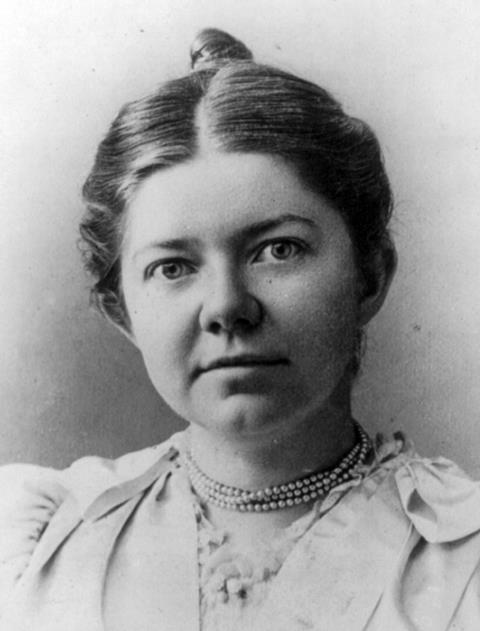
Each composer on the album – Chaminade, Smyth and Beach – took a different path through social and artistic constraint. How did you navigate their individual voices as a duo?
FAE: We had a lot of fun exploring the history that made Chaminade, Smyth and Beach the women they were. This past year, we played variations on this programme in various Gilded Age mansions, in settings similar to those that the music would have originally been received in. This gave us a lot of perspective on the pieces: the intimacy that is an innate part of the tone of the Trois Morceaux, the brooding fire that is Smyth’s Sonata, and the monumental breadth of the Beach Sonata.
In recording each work, we wanted to capture the inspiration, but also the tone of the way it is experienced live. This influenced the way that we miked the recording and balanced the mix in post production. We were so fortunate to have a team of amazing ears to contribute to this vision!
Amy Beach’s Violin Sonata is a large-scale, emotionally expansive work. How did you approach its scope and sonority?
FAE: We always compare playing the Beach Sonata to playing the Strauss Sonata. The rich harmonic landscape, the demand for an ever expanding sound, and virtuosic writing draw our ears into that connection. It was no easy task to break down all of these elements to craft a performance that tells a complete story. Lyrical writing pervades the sonata with incredibly expansive melodies both in their length and pitch, which is no surprise as Amy Beach was a prolific composer of vocal music.
The piano and violin parts are highly virtuosic and paired as equally as two such different instruments can get. She treats the violin sometimes as a vocalist with an extended range, frequently going from the G string to the E string range in quick succession. Then, she switches and has the violin imitate pianistic runs. Against a rather thick piano part throughout, this creates a fantastically challenging and exciting part for the violin. Parsing out what role the violin has at any given moment determines the string colour for the whole passage, influences fingerings and changes the quality of the resonance – all in an effort to meld the parts into one cohesive whole.
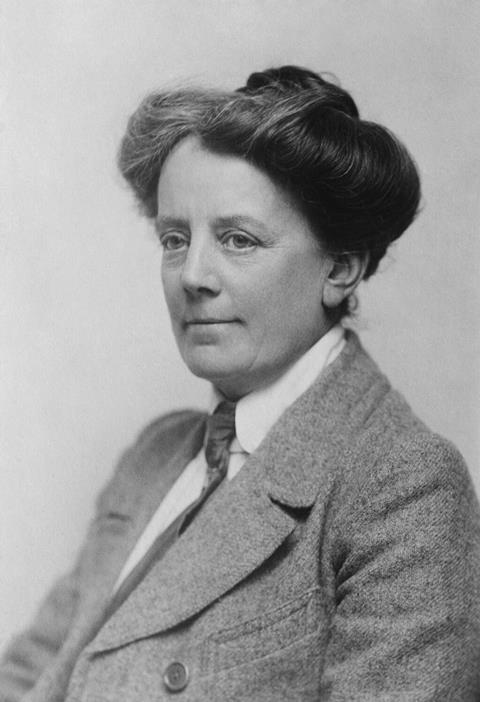
Dame Ethel Smyth was herself a suffragette and activist. Did you find that biography shaped how you interpreted her sonata – or did the music stand apart from her politics?
FAE: We can’t help but draw connections between the Dante quote of the third movement and her own opinions about the way women were treated in society: ‘And she to me: there is no greater sorrow than to recall our time of joy in wretchedness – and this your teacher knows’ (Canto V:121).
This part of the Inferno takes place in the second circle of Hell – ‘The Lustful’ – where the punished are being whipped about by unceasing, violent winds. The winds represent the way that the punished were whipped about by their own desires, caving in to lust. Dante is careful to focus on the physical aspect of desire instead of more intentional feelings like love. The text focuses on the crimes of women in this circle. Dante observes Francesca da Rimini being punished by the winds, while her male lover is weeping in a corner.
One can’t help but wonder if Smyth might have felt targeted by this text, noticing the disparity in the way that men and women are represented. Smyth experimented with her sexuality over the course of her lifetime, having physical relationships with both men and women.
Our reading of this text certainly influenced the way we read the music. There is a subtle darkness from the very first notes that foreshadows the sorrow represented by the quote in the third. We choose to lean into this darkness as it pervades other portions of the sonata. This being said, her music certainly does stand aside from her politics. Nowhere in the sonata did she draw these conclusions herself, nor does she give it a title that reflects her views. As the work was composed in 1887, it precedes much of her politically active time.
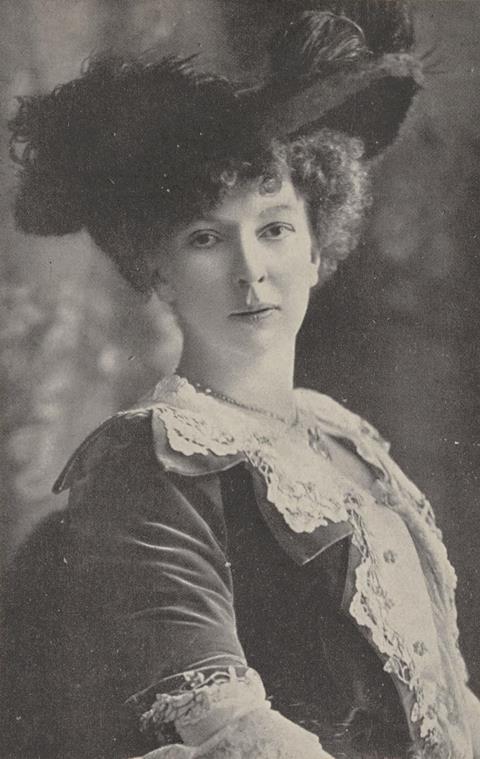
Chaminade’s Trois Morceaux might be considered ‘salon music’, yet it opens the album. What do you think modern listeners and violinists might undervalue in her style?
FAE: These works are overlooked because they’re not as big and flashy as other show pieces, and programming these days tends to favour larger works. The salon was a space where women could freely express their thoughts, being barred from doing this in other areas of society.
The term ‘salon music’ is in itself complicated for this reason. The first two movements of Trois Morceaux are deceptive in their lyrical simplicity. But truly phrasing lyricism is challenging when there are no fireworks to hide behind.
Ironically, the third piece of this set – La Bohémienne – is a show piece much in the vein of Kreisler or Sarasate. In essence, Chaminade is doing exactly what her male counterparts were doing – except she did not have as wide of a public audience. She became popular in the musical salon, essentially an underground network within the greater musical community.
The salon was a space where women could freely express their thoughts, being barred from doing this in other areas of society.
What conversations do you hope this album sparks among young musicians – especially those thinking about programming through a lens of equity or social history?
FAE: We hope that this album inspires more young musicians to explore works by women composers and involve them in their education. We are passionate about performing works by women, not just because they are women but because it is good music that just happens to be written by women.
It’s important when approaching the lens of equity/social history to consider all the contexts that connect the music to past and present times. Many of us pursue a career in classical music because we are inspired by the canonical works. However, what if more of the works that existed alongside these greats were explored at the same time to contextualise the canon?
There is no denying that Bach, Beethoven, and Brahms are great – in fact, we always credit our studying of these masters as fundamental to our ability to play pieces that exist off the beaten path. There is a wealth of repertoire that is largely unheard and underperformed, but is no less musically or technically deep than works by ‘the greats’. It takes some initiative and research to seek them out and perform them. We feel fortunate that in our careers now we are able to shed a wider light on works by women.
Dissidents of the Gilded Age is distributed by PARMA Recordings.
Read: Cristian de Sá on works by Amy Beach, Ethel Smyth and Clara Schumann
Read: Neave Trio: A Room of Her Own
Read: ‘Saiga Antelope’: an album of female composers by Viktoria Elisabeth Kaunzner
Discover more Featured Stories like this in The Strad Playing Hub
The number one source for playing and teaching books, guides, CDs, calendars and back issues of the magazine.
In The Best of Technique you’ll discover the top playing tips of the world’s leading string players and teachers. It’s packed full of exercises for students, plus examples from the standard repertoire to show you how to integrate the technique into your playing.
In the second volume of The Strad’s Masterclass series, soloists including James Ehnes, Jennifer Koh, Philippe Graffin, Daniel Hope and Arabella Steinbacher give their thoughts on some of the greatest works in the string repertoire. Each has annotated the sheet music with their own bowings, fingerings and comments.
The Canada Council of the Arts’ Musical Instrument Bank is 40 years old in 2025. This year’s calendar celebrates some its treasures, including four instruments by Antonio Stradivari and priceless works by Montagnana, Gagliano, Pressenda and David Tecchler.











No comments yet