






![Ayanna Witter-Johnson [Jordan Woods] 7](https://dnan0fzjxntrj.cloudfront.net/Pictures/274x183/4/9/4/44494_ayannawitterjohnsonjordanwoods7_224583.jpg)




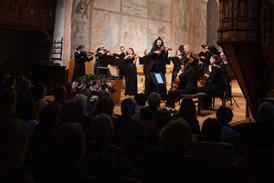



Carlos Maria Solare hears the performance of Roslavets, Prokofiev, Stravinsky and Shostakovich at Berlin’s Pierre Boulez Saal on 12 June 2025
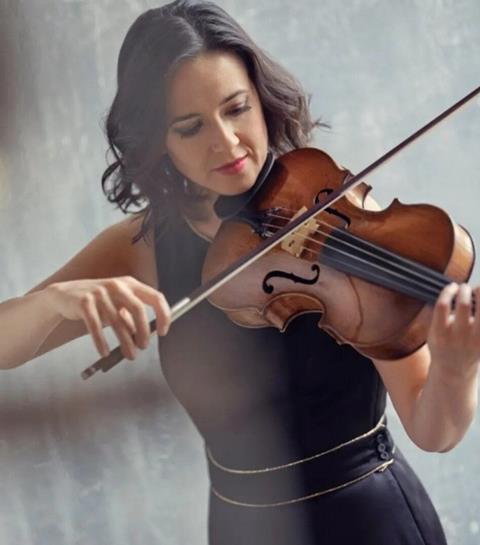
Being attached to the Barenboim-Said Academy, Berlin’s Pierre Boulez Saal is home turf to Yulia Deyneka, teacher at the institution as well as co-principal viola at the adjoining State Opera. Her recital was a tour d’horizon of 20th-century Russian viola music.
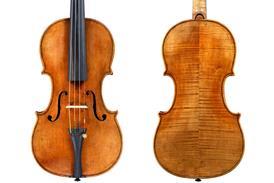
Nikolai Roslavets’s one-movement First Sonata was written in 1926 for Vadim Borisovsky. Its luxuriant harmonies were relished with perceptible pleasure by pianist Denis Kozhukhin, while Deyneka, having deployed a wan tone for the desolate, high-lying opening phrase, subsequently went for some juicy sounds on the lower strings of her 18th-century Bohemian instrument, in greatest contrast with the spiky spiccato she used for the second subject.
Deyneka’s experience in the pit certainly helped to make an imposing whole out of the seven movements chosen from Prokofiev’s Romeo and Juliet (in Borisovsky’s arrangement). She featured a very different, feather-light spiccato in ‘The Young Juliet’ and powerful chordal playing in ‘Dance of the Knights’, but it was the final segment, which takes in the ‘Balcony Scene’, ‘Parting’ and ‘Juliet’s Death’, that prompted her most touching playing, with some icy ponticellos and eerie harmonics that held the audience transfixed.
Stravinsky’s Elegy was swiftly paced, its polyphony clearly etched and beautifully phrased. The evening ended with Shostakovich’s swan song, the Viola Sonata, projected in one huge, half-hour arc. Deyneka and Kozhukhin proved an uncannily attuned duo, bringing forth myriad colours, she going from almost disembodied high tremolos to sonorous pizzicato chords, while providing when required a vibrating background for her partner.
CARLOS MARÍA SOLARE
Read: It’s so important for Prokofiev’s concerto not to become just a showpiece for the soloist
Read: ‘Like hitting a brick wall again and again’ – Yulia Chaplina on Prokofiev’s F minor Violin Sonata











No comments yet