


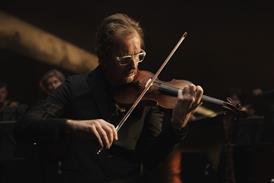







Carlos Maria Solare attends the performance of Enescu, Bartók and Lili Boulanger at the Elbphilharmonie in Hamburg, Germany, on 12 September 2025
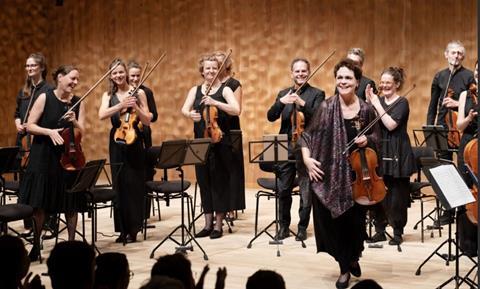
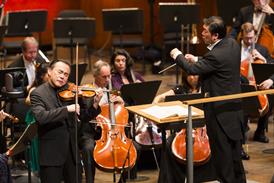
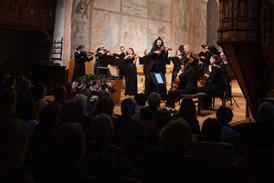
The enterprising, Hamburg-based Ensemble Resonanz belongs in a select group of Tabea Zimmermann’s favourite musical partners (she was its artist-in-residence 2013–15). The latest concert included Enescu’s String Octet, a piece to which the musicians have regularly returned over the years and have recently recorded. The composer authorised performances with a larger string ensemble, provided that ‘certain singing parts be entrusted to soloists … at the judicious choice of the conductor’.
The choices made in this conductorless performance were completely convincing, with solo passages – mainly for Zimmermann as first viola and leader Barbara Bultmann – growing organically out of the orchestral texture and back into it. The piece developed huge momentum in the Très fougueux second movement and, after an intimately shaped solo from Bultmann in the Lentement, reached almost orgiastic proportions in the concluding section, where Enescu juggles all his themes in a contrapuntal masterstroke.
Bartók’s Divertimento also came across as chamber music writ large, its concerto grosso textures beautifully balanced. In between came the premiere of Lili Boulanger’s D’un soir triste as arranged by Johannes Schöllhorn for viola and strings. The piece’s dark spectrum is brought to bear through multiple divisi of the lower strings, in turn leavened by prominent use of ponticello sounds and gettato bowings, with bass pizzicatos sounding a menacing knell. Cellist Saerom Park was a remarkable co-soloist (the original is for piano trio), while Zimmermann shaped the viola part with eloquent inflections as well as a sophisticated use of vibrato.
CARLOS MARÍA SOLARE
Read: What viola does Tabea Zimmermann play?
Watch: How to practise Hummel: Tabea Zimmermann’s video guide







No comments yet