










The Colombian cellist shares his thoughts on Tobias Picker’s Cello Concerto, his passion for new music and the discipline of sustaining an authentic voice on a global stage.
Read more Featured Stories like this in The Strad Playing Hub
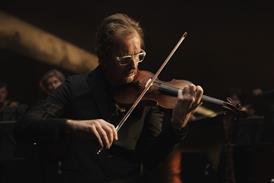
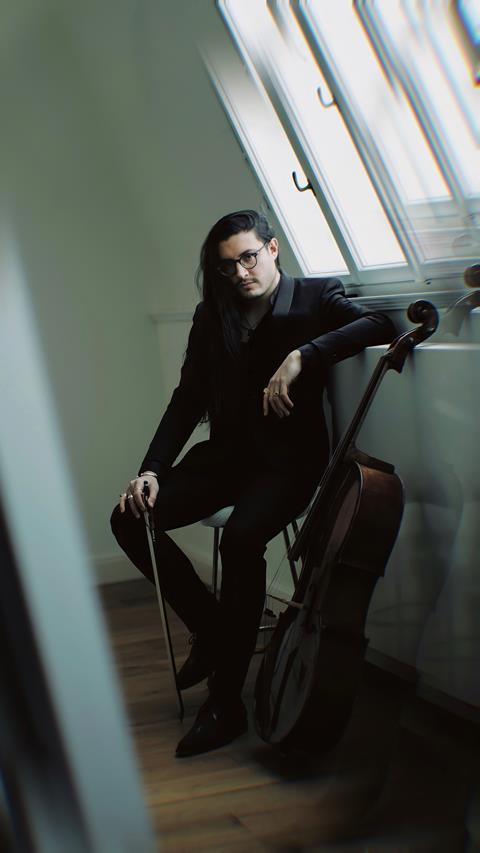
Colombian cellist Santiago Cañón-Valencia has long balanced a deep feel for the instrument’s lyricism with an appetite for the unfamiliar. A former BBC New Generation Artist and Tchaikovsky Competition silver medallist, he’s built his career by moving easily between classical touchstones and new commissions, often from Latin American composers of his own generation. His parallel work as a composer and visual artist seems to feed that same instinct for colour and contrast.
This season finds him in motion again, performing across Europe and the Americas and premiering two concertos within days of each other: Tobias Picker’s long-shelved Cello Concerto with the Montgomery Symphony Orchestra and Amparo Ángel’s newly written work at Mexico’s Festival de Música de Morelia. He also releases Ouróboros, a self-composed single for Deutsche Grammophon’s Musical Moments series.
He spoke with US correspondent Thomas May about reviving Picker’s concerto, the cello’s innate vocal character, and how to hold onto an authentic voice while the calendar keeps moving.
You’ll be giving the long-delayed North American premiere of Tobias Picker’s Cello Concerto. How did this project come about, and what draws you to the piece?
Santiago Cañón-Valencia: I am not exactly sure how the project came about, but there was a connection between my management in the US and Tobias. I got the offer to play the Concerto from my management and after listening to the recording a number of times, I was very intrigued. The musical language and lush sound/textural palette across all four movements is fantastic! I also loved the way each movement transitions into the next one - they’re all so different from one another yet flow together really beautifully.
My personal favourite moment is actually the last movement and how it finishes the whole concerto. Most concertos will go with a rather heroic or larger than life ending, but this one ends with a heartfelt Lament that just fades away…in a way I find this much more powerful than a big ending.
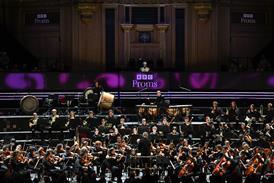
The concerto was first performed by Paul Watkins at the Proms in 2001. What was the impetus to take it up again now? More than two decades later, what feels fresh or surprising about bringing it to U.S. audiences now?
Santiago Cañón-Valencia: It’s always important for me to step out of the box of the standard repertoire…there are so many great pieces that are severely underperformed and I think Tobias’ concerto is one of them.
This unfortunately happens to lots of contemporary concertos: they get premiered and then somehow sit in long hiatuses. So, when I get a chance to play something new or non-standard, and it is a piece I enjoy, I will most likely try to give it a go!
I was happy to accept the invitation to perform Tobias’ concerto because it’s a piece that I really enjoyed from my very first listen and I am excited to be taking on the responsibility of premiering this wonderful work in the US with the Montgomery Symphony Orchestra and conductor Jamie Reeves.
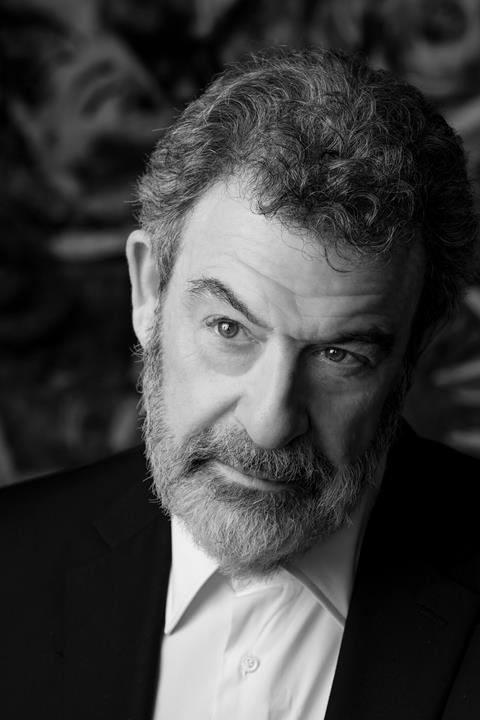
Picker’s Cello Concerto has such an unusual genealogy – parts of it began as songs, others as chamber music, before being transformed into a large-scale concerto. As the soloist, how do you navigate those layers of history and the music’s ‘vocal’ quality, almost as if the cello is carrying poetry into the orchestral space?
Santiago Cañón-Valencia: The cello indeed has a very ‘vocal’ element in this piece, especially in the 1st, 3rd and last movements, and I think that’s always the ‘sweet spot’ for cello repertoire. Tobias has a beautifully sensitive approach to the cello and makes use of its singing qualities really well.
The chamber music element is also crucial, and what I think is so important (not just with this concerto but in general) is to be versatile and to understand that as a soloist, you may have the main part most of the time, but ultimately playing a concerto is simply chamber music with a larger group of musicians and it’s still vital to listen and interact with the orchestra.
Your schedule for this season also includes the world premiere of Amparo Ángel’s Cello Concerto in Mexico at the Festival de Música de Morelia, just a few days after the Picker. What is it like to champion two such different contemporary concertos almost back-to-back?
Santiago Cañón-Valencia: It’s definitely challenging! Both pieces are so different and you have to really block one out from the other whilst learning and preparing them simultaneously. This is indeed somewhat of an extraordinary situation for me as both pieces just happened to fall that way into my schedule this time…but I am taking on the challenge and I am driven by the fact that I get to premiere these two concertos within the same week!
You recently released your own single, Ouróboros, on Deutsche Grammophon’s Musical Moments series. How does composing or creating your own music feed into your work as an interpreter of others’ scores?
Santiago Cañón-Valencia: I love being a performer/interpreter, but I can’t say that I relate that to composing my own works. When I get to compose and play my own works, I feel a certain level of freedom unlike anything else, almost as if I am improvising on stage (although I am very picky with my own markings/tempos in my own pieces as well).
When I play someone else’s work, I aim to remain true to the composer’s intentions, but my personality and individuality will undoubtedly be present in my performances. I think that’s something that should not be forced in an interpretation, but as something that happens naturally when an individual is approaching and trying to understand a work by someone else.
Looking at your season – from Europe to the Bay Area to Montgomery, Alabama, to Mexico – how do you balance the demands of being a soloist on the international stage while staying rooted in your own artistic voice?
Santiago Cañón-Valencia: I think that the demands of a soloist are always the same, so there’s not much to say about that… you always have to be prepared and give your best on stage regardless of jetlag/travel, a bad rehearsal, etc… However, I think the last thing you mention is key.
Staying true to your own artistic voice is among the most important things for a musician. You have to be completely yourself on stage regardless of whether you think someone is going to like what they see/listen to or not. As long as a performance is genuine (and technically good of course!) it will speak to whoever it needs to speak to. I like to think that’s the way you cultivate your own audience around the world while traveling and playing concerts. Those people will be the ones that follow your career, invest in your music, and continue to attend your concerts.
Santiago Cañón-Valencia performs Tobia Picker’s Cello Concerto on 17 November 2025 with Montgomery Symphony Orchestra and conductor Jamie Reeves.
Watch: Cellist Santiago Cañón-Valencia performs his own composition, ‘Ouróboros’
Read: Cellist Santiago Cañón-Valencia signs with Arts Management Group
Review: Cellist Santiago Cañón-Valencia kicked off Copa Airlines flight
Watch: Santiago Cañon-Valencia performs Bach cello suite no.6 in D major
Discover more Featured Stories like this in The Strad Playing Hub












No comments yet