






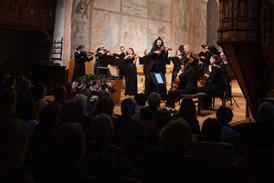





Hattie Butterworth visits London’s Wigmore Hall on 21 December 2025 for a morning performance of Haydn and Beethoven
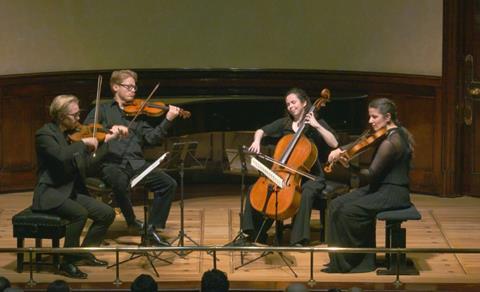
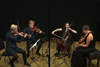
For this Sunday Morning concert, the Marmen Quartet chose two works bound by a key – F major – though it was in the darker colours that the group impressed most.
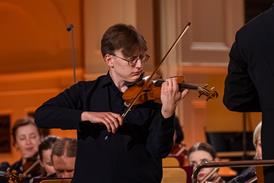
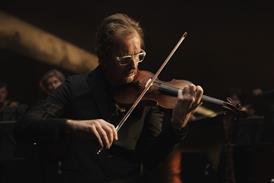
In the talkative first movement of Haydn’s Quartet op.50 no.5 (the so-called ‘Dream’), the lower strings’ leadership was immediately apparent. Johannes Marmen on first violin cast his interpretive vision wide, never labouring his solo passages, but occasionally missing opportunities for space.
The Poco adagio revealed the quartet’s cellist Sinéad O’Halloran as an ideal Haydn player, with fine tuning and sense of groundedness. In the finale, the quartet’s ability to let go and fly together as a well-oiled unit was marvellously unleashed.
In Beethoven’s last string quartet op.135 the central role of the viola in the first movement worked especially well here, thanks to the exceptional playing of Bryony Gibson-Cornish who, throughout the concert, displayed a leadership from her inner part.
The Vivace of this quartet is all about games, with some terrifyingly tricky extremes for the first violin, which are near impossible to get in tune. The Marmen did a brilliant job of bringing out the funk in Beethoven’s writing but the players’ spiccato didn’t match and proved distracting.
The Lento assai, however, came close to meditative perfection, setting up a creative foundation for the finale. Here, Johannes Marmen’s intonation and control were most resonant, with O’Halloran offering some beautiful cello solos.
Call and response sections between upper and lower strings were brilliantly choreographed, including the festive, homophonic section of pizzicato which sets up the quartet’s close.
HATTIE BUTTERWORTH












No comments yet