





Leah Hollingsworth reports on the performance at New York’s Alice Tully Hall on 4 December 2025, while Bruce Hodges catches the recital at Philadelphia’s Perelman Theater on 14 December
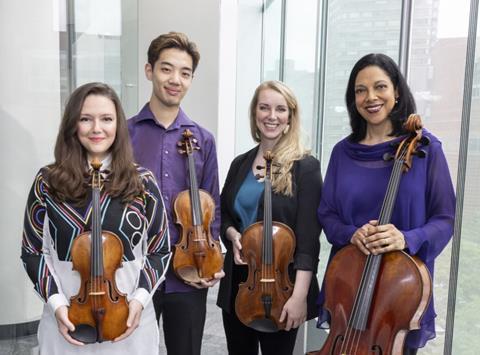
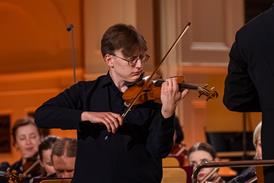
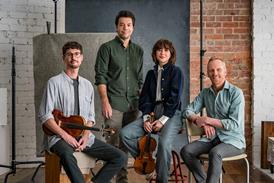
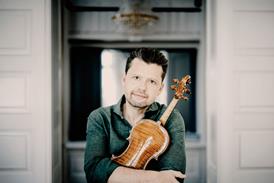
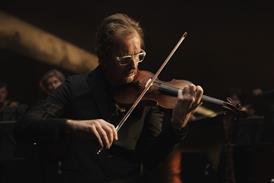
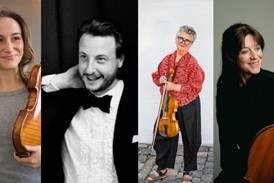
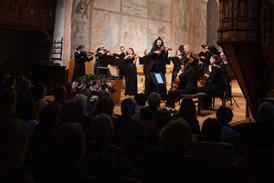
Over the past decade, the Juilliard Quartet has undergone dramatic personnel changes, with cellist Astrid Schween arriving in 2016, first violinist Areta Zhulla in 2018, violist Molly Carr in 2022, and in 2025, its newest member, second violinist Leonard Fu. Two performances in December, in New York and Philadelphia, gave an opportunity to observe the beginning of this latest chapter in the ensemble’s celebrated history.
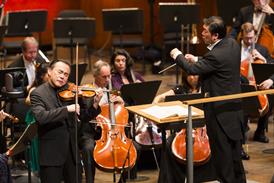
In its first public appearance with Fu, the quartet demonstrated how successfully it can reimagine itself. The programme began with Brahms’s A minor String Quartet, the magical opening setting the stage for a dynamic movement of passion and nuance. The long phrases of the Andante moderato were filled with intense beauty and emotional depth. If there were moments of the Quasi menuetto that were a bit heavy, any reservations fled in the heart-on-the-sleeve finale.
Fu is both a violinist and composer, and the ensemble next gave the world premiere of his Popular Dances, performing it with great character. Kurtág’s Six moments musicaux followed the interval and were executed with commitment and rhythmic precision – an excellent companion to both the Brahms and the Fu – each movement portraying a single idea or emotion.
To conclude the evening violist Catherine Cho and cellist Marcy Rosen joined the Juilliard for an unforgettable Verklärte Nacht, boasting incredible playing from the entire ensemble. Tempo and dynamic changes were utterly clear and immaculately executed, thanks to a strong lead from Zhulla.
Ten days later, thanks to the Philadelphia Chamber Music Society, the ensemble appeared with a completely different programme, opening with Shostakovich’s concise String Quartet no.7 (1960). As a brief emissary of grief – written in memory of his first wife – it has glimpses of the composer’s savagery but overall maintains a skeletal state of grace. The Juilliard players savoured every last detail, with particular attention to the work’s more hushed moments, even more striking with the attentive audience.
In 2024 violinist Michelle Barzel Ross was asked to write a piece based on Beethoven’s op.132 Quartet, in honour of the late Roger Tapping, the former violist of the ensemble. Her title, Birds on the Moon, acknowledges the centuries-old myth of birds migrating to the moon in winter, and its structure, mirroring the Beethoven, also includes a tiny Bach fragment. (As an attacca introduction to her tribute, Ross arranged a Bach excerpt for the ensemble.) The result evoked its titular birds, with sputtering rhythms and the violins often in upper registers, making for a suitably ethereal tribute to the players’ late colleague.
After the interval, pianist Marc-André Hamelin joined the foursome for Franck’s Piano Quintet which, despite fervent playing, ultimately didn’t take flight as magically as its Romantic trajectory promises. Perhaps another rehearsal or two might have helped meld its parts into a more unforgettable experience. That said, to judge these two examples, it’s clear that the latest iteration of this ensemble promises to continue its tradition of exploration.
LEAH HOLLINGSWORTH (New York)
BRUCE HODGES (Philadelphia)








No comments yet