



Bruce Hodges hears the performance of John Williams, Copland and Matthias Pintscher himself, at Philadelphia’s Marian Anderson Hall on 1 May 2026
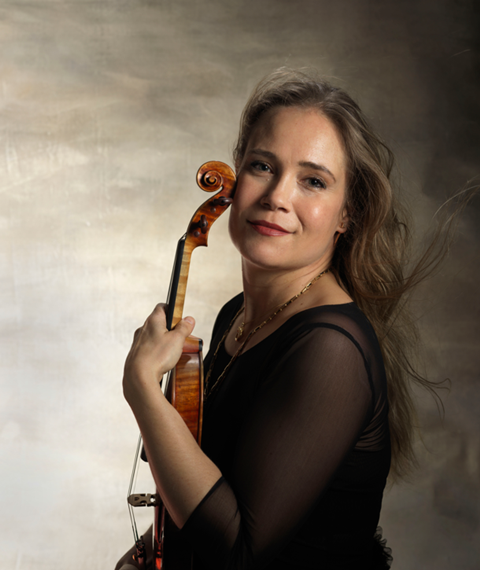
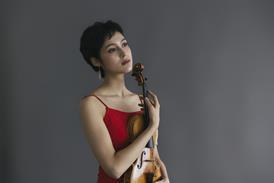
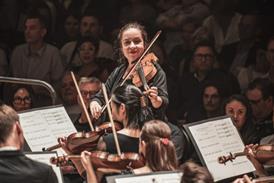
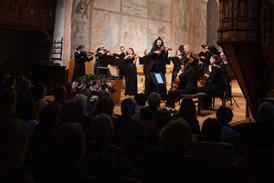
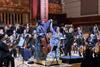
At the whispering close of Matthias Pintscher’s Assonanza with Leila Josefowicz, it seemed as if the audience didn’t quite know how to respond. Revelling in quietude, the piece is not a conventional crowd-pleaser: Pintscher wrote it in 2021, during the pandemic, as an extension of a solo work he had composed for Josefowicz. He has a keen ear for timbre, such as sequences with the violinist soaring above the percussion battery, with players using brushes on the surfaces of drum heads. Multiple string glissandos gave Josefowicz an alluring backdrop to the composer’s sometimes thorny melodic lines. Despite occasional explosive oubursts, the piece avoids traditional flashiness, and relies on the soloist’s felicity with small gestures.
Josefowicz, who had given the world premiere of the work in Cincinnati, seemed utterly inside Pintscher’s contemplative idiom, as did people nearby, who were captivated but couldn’t put their feelings into words. (I asked.) Nevertheless, the packed house applauded and then brought out the soloist for a second bow.
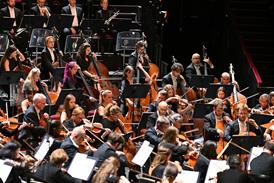
Pintscher’s shrewd programming began with an eight-minute suite from Close Encounters of the Third Kind by John Williams, a sparkling excerpt that made an apt prelude to Pintscher’s concerto. Similar focus on detail brought vigour to Copland’s Third Symphony. Although some in the audience were likely waiting for the finale’s big tune to arrive (the ‘Fanfare for the Common Man’), the rest of the journey was equally compelling.
BRUCE HODGES
Read: 5 practice tips from Leila Josefowicz
The Strad Recommends: Leila Josefowicz: Adès









No comments yet