
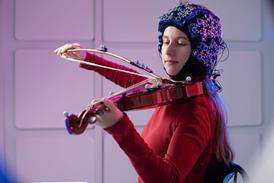

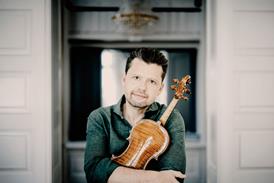
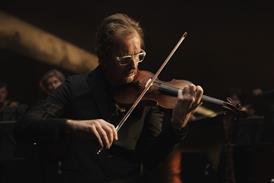




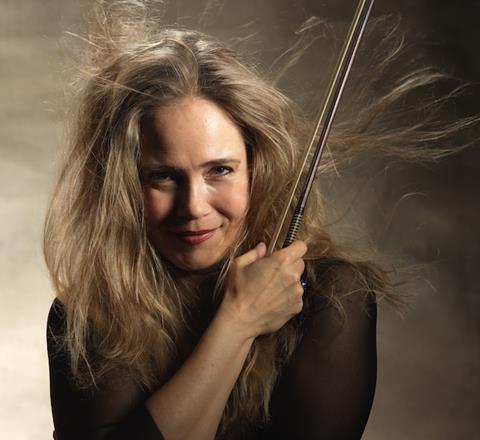
Leila Josefowicz reflects on her long relationship with Thomas Adès’s violin concerto, now out in her live recording with the Minnesota Orchestra and Thomas Søndergård.
Discover more Featured Stories like this in The Strad Playing Hub
Leila Josefowicz has made contemporary music central to her career, performing new scores with the same conviction others reserve for the classics. Over the past two decades, she has built lasting partnerships with composers who expand the violin’s expressive language, and has inspired concertos from composers ranging from John Adams and Esa-Pekka Salonen to Luca Francesconi.
While Thomas Adès’s 2005 Violin Concerto was not initially written for Josefowicz, it has become inseparable from her name. She has played it around the world, including with Adès conducting. Josefowicz speaks of it as music that unites intellect and instinct, intricacy with the viscerally human.
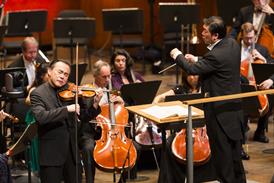
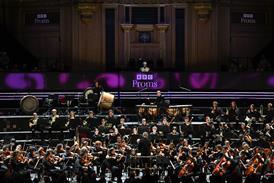
She recorded the concerto live in 2024 with the Minnesota Orchestra and its newly appointed music director Thomas Søndergård. It marks their first recording together and is being released on Pentatone, paired with the world-premiere of Adès’s The Exterminating Angel Symphony.
Josefowicz spoke with US correspondent Thomas May about her long relationship with Adès’s concerto, its status as a contemporary masterpiece and her first collaboration with Thomas Søndergård.
What first drew you to this concerto?
Leila Josefowicz: It was part of this new path I was on, exploring contemporary music. I was being sent quite a few scores and recordings of premieres at that time. This was one of them. I’ll never forget being overwhelmed as soon as I received this score. From the first listen, I was blown away by how Adès combined so many opposing elements – tonal and atonal, consonance and dissonance – constantly at play and at war with each other.
You hear that conflict all over the Violin Concerto in the way he uses chromatic notes. Even the title, Concentric Paths, suggests that sense of circling movement – descending step by step, then turning back upwards, with ideas shared between different instruments or in different ranges.
What astonished me most was that despite all the complexity, something deeply human and expressive breaks through. It goes beyond theory to something much bigger. You feel this especially in the second movement (‘Paths’). This was the thing that made me fall completely in love with this piece. For six months, it was all I could think about.
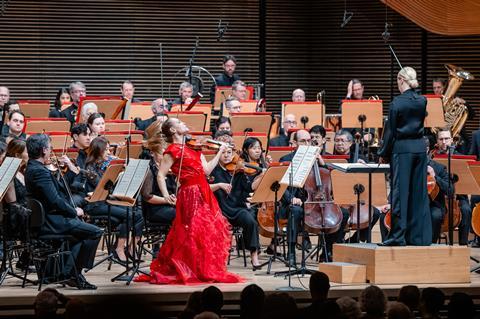
The concerto demands almost impossible feats from the soloist. How do you translate that level of difficulty into musical meaning?
Leila Josefowicz: There are passages that may not even be technically possible for many players – it’s that extreme. For those who take it on, it’s a decision. The challenge then becomes understanding what the gesture itself means.
In the second movement’s chaconne, themes are passed between orchestral groups, constantly bounced around in different ways. At one point, within that eight-bar form, I have these wild, free lines travelling in waves from the bottom of the violin’s spectrum to a quarter of an inch from the top of the fingerboard and back down. It’s a very agonised place, where it’s like rising within itself and struggling. Another moment brings relief – almost a glimpse of Vaughan Williams or Walton.
That a composer can write in both these ways so genuinely is astonishing. There are always mathematical games under the surface – rhythmic or harmonic – but my goal was to simplify, to ask: what’s the mood, what does the piece need right now? Once I understood that, I could make my gestures clearer.
The Adès concerto is now two decades old, and you’ve performed it widely over the years. How has your relationship with this music changed?
Leila Josefowicz: When I first heard it and decided to learn it, I was still very early into my passion for contemporary music. So I was hearing this piece with almost naïvely fresh ears and instincts. But maybe that helped. It was only the second or third major modern piece I took on, and it was a very wise choice for me.
This concerto is a perfect example of why Adès has reached such heights. His facility with harmony, rhythm and gesture – it’s all concentrated in this single work. Over the years, I’ve been incredibly lucky to have so many conductors who have wanted to perform it with me, with different orchestras and in different halls and acoustics.
It’s wonderful to record this piece after so many years of experience with it. I hope the recording reflects how naturally I’ve digested so much of what’s there. It wasn’t originally written for me, but I took it on purely because I loved it. That’s the best reason for any piece to take root – the best reason to play anything.
How did your collaboration with Thomas Søndergård and the Minnesota Orchestra shape this recording?
Leila Josefowicz: I’ve played with the Minnesota Orchestra for decades, but this was my first time working with Thomas. From the start, something was clicking. It was electric – one of those rare instant connections. We both knew how important this project was: his first major recording with the orchestra, and a piece we both care about deeply.
Before rehearsals, we spent time going through and discussing the score together. Because the recording was live, from three concerts and just one patch session, we had to be utterly concentrated. It was a collaboration of enthusiasm, love, concentration and, ultimately, joy.
What does recording live add to a work like this?
Leila Josefowicz: It changes everything. It was important not to feel as if I were playing under the mics. I wanted it to feel this as a live-energy performance, and then have everything lock into place from that direction. We took the best of everything – often super-long takes of big breaths and big ideas. I’m really happy with how it all came together.
The album also includes the world-premiere recording of The Exterminating Angel Symphony. How do the two works speak to each other?
Leila Josefowicz: In The Exterminating Angel there are so many powerful orchestral moments, in the way Adès combines dissonance with rhythmic and tonal writing. He also plays with and even mocks certain forms, like the waltz.
Your ear latches onto that immediately. Even if you don’t follow every detail, you feel the depth of musical knowledge behind it – how he turns history inside out and can exaggerate certain parts of it with this incredible technique. I’m hoping the general effect of these two pieces together will be electrifying. I really love The Exterminating Angel Symphony.
And the Violin Concerto in some ways feels like the ultimate masterpiece for violin and orchestra. It shows everything the instrument can do, and it challenges listeners without ever overwhelming them. I think it’s one of Adès’s very best works, and I’ll keep returning to it even as I take on more new commissions over the next few years.
Leila Josefowicz performs as the soloist in Thomas Adès’s Violin Concerto with the Minnesota Orchestra led by Thomas Søndergård on Pentatone’s new release.
Read: Leila Josefowicz on performing 21st-century violin concertos
Watch: Pekka Kuusisto on Thomas Adès’s violin concerto ’Concentric Paths’
Read: 5 practice tips from Leila Josefowicz
Discover more Featured Stories like this in The Strad Playing Hub










No comments yet