








Playing – Page 35
-
 Premium ❘ Feature
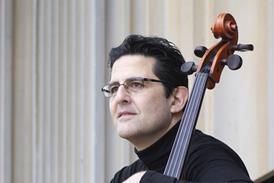
Masterclass: Mendelssohn Variations Op. 17
British cellist Guy Johnston talks about dialogue, contrast and sense of line in the German composer’s Classical–Romantic work
-
 Premium ❘ Feature
Masterclass: Beethoven String Quartet No 16 in F Major, Op 135, first movement
Casals Quartet violist Jonathan Brown scrutinises this movement and explains why this piece is less abstract and unruly than many musicians first assume
-
 Premium ❘ Feature
Masterclass: Julian Rachlin on Brahms’s Viola Sonata in F minor
The Lithuanian-born violinist and violist discusses technical preparation, character and colour in the first and second movements of op.120 no.1
-
 Premium ❘ Feature
Masterclass: Maxim Vengerov on the Caprice D’après L’étude En Forme De Valse
Being a good musician is like being a great cook, according to Maxim Vengerov. In this Masterclass first published in the November 2005 issue of The Strad, he gives his recipe for playing a fiendish Saint-Saëns waltz arrangement by Ysaÿe
-
 Premium ❘ Feature
Masterclass: Hartmut Rohde on Reger’s Viola Sonata op.107
Taking the first movement, the German violist shows why it is so important to study the original clarinet score of this little-heard work, before approaching the viola version
-
 Premium ❘ Debate
Take the hostility out of string playing
Today's performers should remember that you don't need to be aggressive to make a searing point, argues Richard S. Ginell
-
 Premium ❘ Focus
How to develop an expressive vibrato
Just one beautiful note is all we need as a starter for a gorgeous vibrato, writes Phyllis Young
-
 Premium ❘ Focus
How to develop great performing presence
Great stage actors have an aura of positive energy and openness that string players can access, too. Acting coach Patsy Rodenburg tells Ariane Todes how
-
 Premium ❘ Focus
The Great Pretenders – how to act like a string player
In this article from The Strad November 2008 Nick Shave looks at how actors make their string performances look real
-
 Premium ❘ Focus
Faking it – the great unmentionable of orchestral playing
Given today's high standards of musicianship, you might think top orchestral string players can play anything, but there are times when the best they can do is give the impression of playing every note as written, as cellist Alice McVeigh discovers
-
 Premium ❘ Focus
Josef Gingold and Jascha Heifetz are my violin heroes, says Joshua Bell
The American violinist remembers the warmth of his teacher, Josef Gingold, and his admiration for Jascha Heifetz in this interview with Ariane Todes from The Strad Violin Heroes edition
-
 Premium ❘ Feature
His master's pupil: how Erick Friedman struggled in the shadow of Jascha Heifetz
Erick Friedman, Heifetz's first student and a virtuoso in his own right, was frustrated by continual comparisons to his teacher. Dennis Rooney looks back at his life
-
 Premium ❘ Focus
Violinist Ida Haendel on Bach's Chaconne
The great performer and teacher offered her insights into the work in The Strad's May 2010 issue
-
 Premium ❘ Feature
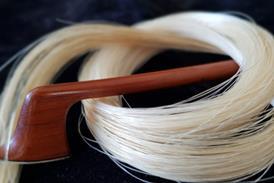
Ask the Experts: how often should you have your bow rehaired?
A reader asks if there are long-term consequences for a bow if a player fails to have it rehaired in a timely fashion. Two bow makers and one supplier give their views
-
 Premium ❘ Focus
From the Archive: conducting tips for players
In The Strad’s March 1930 issue, G.W. Johnstone gave tips for players thinking of taking up the conductor’s baton – drawn from years of witnessing less-than-exceptional conducting as an orchestral musician
-
 Premium ❘ Focus
Finding the right chin rest and shoulder rest
Your violin set-up needs to fit you, not the other way round, says late starter Lawrence Proulx, whose painful playing position sent him in search of a custom chin rest and shoulder rest
-
 Premium ❘ Feature
Giuseppe Tartini’s advice on playing the violin
The following letter was sent to Signora Maddalena Lombardini in answer to a query regarding violin technique
-
 Premium ❘ Feature
Double bassist Gary Karr on ‘how to take bad music and make it creative’
The British musician explains how playing the corny pieces of the repertoire gave him an invaluable lesson in finding his own voice
-
 Premium ❘ Feature
How to use bowing angle to vary articulation by cellist Colin Carr
How to vary the attack and timbre of a note by modifying the angle of the bow to the string
-
 Premium ❘ Debate
Personality is no longer encouraged in musical performance
Not too long ago mass audiences and critics alike revered overtly personal performances, yet today superimposing one's personality over that of the composer is regarded as poor musicianship, writes Henry Roth