






As well as being a 19th-century masterpiece, the Souvenir de Spa by Adrien-François Servais helped the Argentine cellist discover the sound world of the pioneering musician Lise Cristiani
Discover more Featured Stories like this in The Strad Playing Hub.
Read more premium content for subscribers here
Ever since I was twelve years old I’ve been playing works by the Belgian cellist–composer Adrien-François Servais. My teacher Ivan Monighetti gave me lots of pieces by him to develop my technique. Servais wrote many arrangements, souvenirs and fantasies, and all of them are incredibly difficult! He was writing in the mid-19th century, which saw huge developments in cello technique, and his music contains so many fast passages, octaves and double-stops that we found them excellent for studies. Now I often give my own students Servais to work on, not just for the technical challenges but also because his work embodies bel canto cello, and it’s a good way to explain to students what’s meant by playing a cello in a singing style.
I started by playing shorter pieces such as the Fantaisie sur Deux Airs Russes, which is much like playing an encore. It was only very recently that I discovered the Souvenir de Spa, which is a much longer piece, scored for cello and small orchestra. It’s a very moving work, with some beautiful themes and whenever I play it, I feel so close to the music – a little less so when I get to the octaves, but it’s all part of the piece! I discovered it during my research into the life of the 19th-century cellist Lise Cristiani, which I’ve been involved with for the past ten years. She knew Servais, performed with him and played much of his repertoire while she was on tour. So when I started working on my album of repertoire relating to her, the Souvenir de Spa was one of the pieces I had to include.
I had known about Lise Cristiani ever since I was around eleven; I was studying Mendelssohn’s Song Without Words, which he wrote for her. As I read more and more about her, and her career as a female solo cellist in the mid-19th century, I realised what a fascinating character she was. She must have had an incredible creative energy to realise all her visions and ideas, as well as to be able to come out on stage and perform as a soloist in the society of that time, and impress so many contemporary composers. I think she must have been some kind of rebel, as well as someone who was seeking to find her own identity through the cello and the music she was playing – maybe because she wasn’t a composer herself.
Lise Cristiani died extremely young, aged 27, after a career that lasted just seven years. I find her life story inspirational, and it motivated me to find out more about the concerts and repertoire she was putting together by herself. I think that audiences are starting to get bored of hearing the same repertoire, and I want to offer them something new – a collection of pieces, which audiences seem to love because of the huge variety. It’s also fascinating to rediscover the concert forms of 200 years ago. Servais is an intriguing figure, for instance, because he would travel with scores prepared for piano accompaniment, for quartets with double bass, and for cello and orchestra.
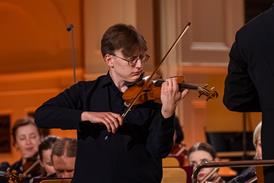
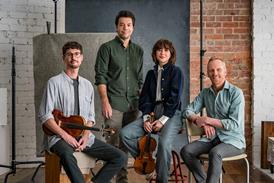
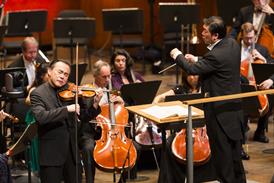
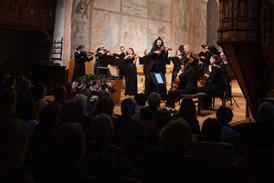
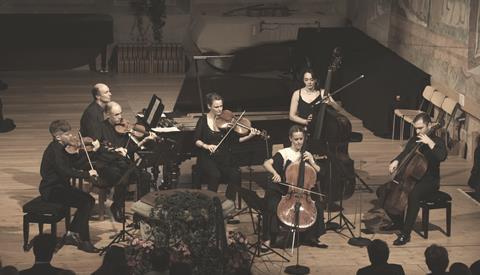
Preparing Souvenir de Spa, I had to work out how many of the Cappella Gabetta musicians we needed. It’s not just difficult but also so delicate, emotional and exposed, and not only difficult for the intonation, but also for the acoustic balance. We tried playing it through with five people, and I realised how soloistic it was for each part. We only finalised the number of musicians two days before we started recording! But I’m so glad to have learnt so much about Lise Cristiani through this project. I’ve been researching her for so many years, and I feel like she’s offered me the chance to explore this endlessly fascinating repertoire.
INTERVIEW BY CHRISTIAN LLOYD
Read: Sol Gabetta: Life Lessons
Read: Cellist Sol Gabetta wins the Swiss Grand Prix de musique
Discover more Featured Stories like this in The Strad Playing Hub.











No comments yet