










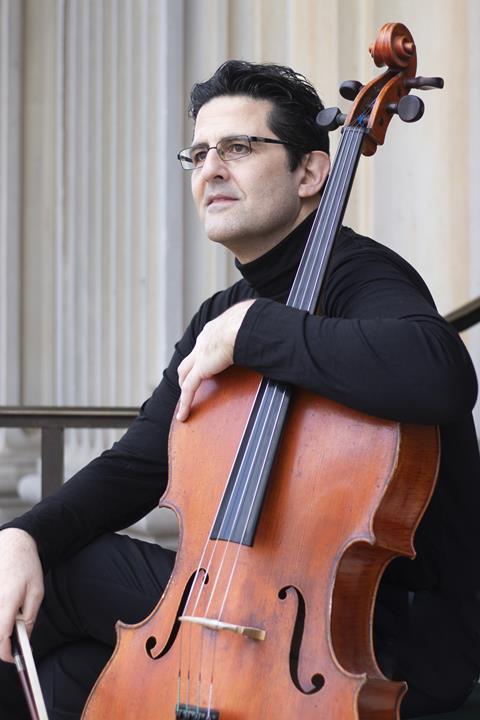
Amit Peled presents his Eight Cello Commandments which aim to create a unified physical and musical approach to the instrument
Read more Featured Stories like this in The Strad Playing Hub
My approach to cello playing begins with my Eight Cello Commandments – four General Body Commandments and four Local Commands. Together, they create a unified physical and musical philosophy designed to make the cello feel like a natural extension of the player’s body.
The Four General Body Commandments (BBEM)
Breathing – Understanding the mechanics of inhalation and exhalation is the foundation of this method. Natural, continuous breathing establishes the body’s internal sense of gravity and energises its core, providing the basis for healthy, resonant sound production.
Bouncing – By softening and ’melting’ the seating muscles into the chair, the cellist allows natural weight to transfer into the instrument. This gentle bounce, combined with relaxed breathing, grounds the body, opens up the sound, and prevents unnecessary tension.
Elbows – I emphasise relaxed, well-aligned elbows – what I call ’The Dinner Posture.’ Maintaining soft, elbows along with relaxed triceps muscles fosters fluid arm movement and protects the quality of sound from stiffness or strain.
Movement — The culmination of the first three commandments, Movement is the body’s flexible response to breath, bounce, and elbow alignment. It mirrors the actions of the bow and the left hand, functioning like a four-direction gear shift – left, right, up, and down – allowing the torso to contribute naturally to expressive bow sound production and fluidity of left hand.
The Four Local Commands
Lift – When moving upward on the fingerboard, the finger must lift before it lands, much like taking a step while walking. This anticipatory motion clarifies articulation and keeps the left hand free, efficient, and responsive.
Pizz – A motion that brings the finger ’back home’ to its natural, rounded, relaxed shape when descending the cello (ascending in pitch). This gentle pizzicato action is used as a technical tool to promote freedom in the fingers rather than force.
Shift (Jump) – I describe shifts as two linked actions. First comes the preparatory ‘knee’ movement of the left-hand elbow – the so-called ‘cello knee’. Then comes the actual jump: leaving the ‘cello ground’, meaning releasing contact with the fingerboard surface while maintaining contact with the string. Mastering this creates seamless and confident position changes.
Cross – Coordinating string crossings smoothly through anticipated balanced arm and elbow motion. This command ensures that both hands move fluidly across the instrument, maintaining continuity of sound and gesture.
Together, the BBEM body principles and the four Local Commands form a holistic, athletic, and expressive approach to cello playing. They encourage physical ease, refined coordination, and artistic freedom – allowing the cello to function as a true extension of the player’s body and voice.
Full video presentation of Amit Peled’s cello commands:





















No comments yet