






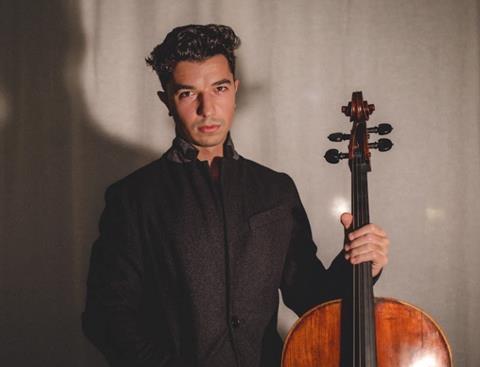
On the eve of his Carnegie Hall recital debut as a 2025 recipient of the American Recital Debut Award, Gabriel Martins reflects on Bach as ‘sacred text’, Brahms as a formative voice and the musical influences that shaped his playing.
Read more Featured Stories like this in The Strad Playing Hub
For cellist Gabriel Martins, December brings a defining moment in an already fast-moving career. On 13 December, he appears at Weill Recital Hall for his Carnegie Hall recital debut, partnered by pianist Victor Santiago Asunción as one of two recipients of the American Recital Debut Award.
Founded in 2023 by Asunción in honour of his longtime recital partner, the late cellist Lynn Harrell, the award supports emerging artists through mentorship and high-profile performance opportunities; Martins shares the 2025 award with fellow cellist Rainer Crosett.
Although Martins has previously performed at Carnegie in a chamber music context, this marks his first appearance there in a full recital setting. Now based in Charleston, South Carolina, he arrives with a programme that reflects both the foundations of his musical life and the directions it continues to take.
The programme includes Bach’s Second Cello Suite, Martins’s own transcription of Mozart’s Violin Sonata in E minor, Ginastera’s Pampeana No. 2, Fauré’s Papillon and Brahms’s First Cello Sonata, a work he still regards as formative.
In advance of his Carnegie appearance, he spoke with US correspondent Thomas May about his early musical influences, his enduring relationship with Bach and the programme that brings him to this milestone.
You started cello at age five. Were you raised in a musical household?
Gabriel Martins: Not really. My mother played a little piano growing up, but I wouldn’t say I came from a musical family. I simply happened to grow up in Bloomington, Indiana, home to Indiana University’s music school. Being surrounded by that environment as a kid and teenager – hearing so many great performers – was incredibly inspiring and made me want to pursue music seriously.
How did you gravitate specifically toward the cello?
Gabriel Martins: My mother chose it for me when I was five. She thought it would be a good idea to start me in lessons, and she loved the cello.
Your Carnegie Hall programme includes Brahms’s First Cello Sonata – one of the works that made you fall in love with the instrument. What struck you so powerfully about it in your formative years?
Gabriel Martins: It’s one of the most legendary pieces we have, and probably one of the reasons a lot of people fall in love with the cello. From the opening measures it has this incredible deep sonority, and the way that grows and expands throughout the sonata with such drama and beauty is extraordinary. I remember hearing it as a teenager and thinking it was sensational. I didn’t start learning it until later, but it was always on my mind.
You’re beginning the recital with Bach, who has been central to your musical life. What was your introduction to the Cello Suites?
Gabriel Martins: I was blessed with a teacher early on – Susan Moses at Indiana University – who believed that young students should be exposed to great works as early as possible. I played all the Bach Suites before I left high school, as well as most of the major concerti. I stress that I didn’t play them at a particularly high level then, but the philosophy was to get to know these pieces early. The Suites became central to my life in music.
Last year I released the complete Bach Suites on my own label, which I produced myself. And just weeks ago I released my arrangements of the violin Sonatas and Partitas.
You’ve referred to the Second Suite as a ‘sacred text’. What is it about this D minor Suite that draws you so deeply?
Gabriel Martins: All six Suites are sacred texts in their own way. The First Suite has this incredible purity, but the Second is where Bach really begins to explore the depth of complicated human emotion. The music is very dark and expresses something with the cello that I’ve always found compelling.
Tell me about the instrument you’ll be performing on at Carnegie – also the one you used for your recordings.
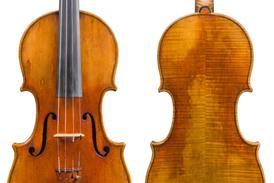
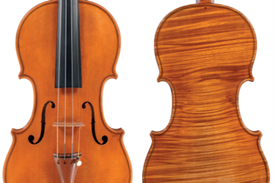
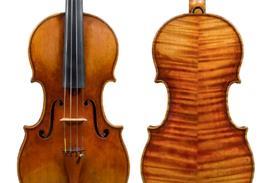
Gabriel Martins: It’s a composite cello originally built by Francesco Ruggieri in 1690 – of course before the Bach Suites were written. Somewhere along its long lifespan, the front was damaged beyond repair, so a new front piece was built in the early 1800s and combined with the original back and sides. I play it with a François Nicolas Voirin bow from the early 1880s.
How does it feel to play Bach on an instrument made before the Suites themselves existed?
Gabriel Martins: It’s crazy to wrap your head around. Bach most likely never heard this particular cello, of course, but the idea that it has something in its essence – something from that world – is amazing to consider while playing this music.
What elements of historically informed performance do you incorporate into your approach?
Gabriel Martins: It’s a mix of different things. Although parts of my cello date from the Baroque era, it has been modernised. I play on steel strings, which didn’t exist then. But I do tune the cello to Baroque pitch for the Suites – roughly a half-step down from modern tuning – and I hold the bow farther up from the frog to emulate Baroque bow-hold. I blend aspects of the modern and historical styles in ways that feel useful.
Has performance history influenced your views on the Suites?
Gabriel Martins: Absolutely. I’ve listened to hundreds of interpretations throughout my life. Especially as a young teenager discovering the cello tradition, I was obsessed with hearing the great masters. They all inform my interpretations today.
Which interpreters have been the most significant for you?
Gabriel Martins: I go through phases – every year or six months I’ll obsess over a different great artist and listen to everything they recorded. In terms of cellists, the biggest figures for me have probably been János Starker and Daniil Shafran. I heard Starker once as a child, but he passed shortly after, so I never met him. As a pianist, Michelangeli is one of my absolute heroes; I look up to him as much as anyone in the world of music.
Your programme also includes your transcription of Mozart’s Violin Sonata in E minor. How did you get into transcribing?
Gabriel Martins: I’ve always gravitated toward the Baroque and Classical eras, but there isn’t much solo music from that period written for us cellists. The cello as a solo instrument didn’t fully develop until the Romantic era. Mozart is one of my absolute favourite composers, and he didn’t write anything for cello. This is one of the pieces of his that I love most, and I thought it might work well on cello because of its deeper, darker sonority. It’s quite melancholic. Victor and I have experimented with it many times, and I think we’ve found something that presents it in a new light.
What might a violinist notice when hearing your version?
Gabriel Martins: Probably a lot of violinists would say they don’t want to hear it! But it does present the work with a new colour. From the beginning, you get a sound that sits ‘in the middle’ rather than floating above. I would never say it’s better than the original, but it offers a new perspective.
You’re also a strong advocate for Ginastera, represented here by Pampeana No. 2. What is your history with that piece?
Gabriel Martins: I’ve played it many times. In high school I was part of a string academy programme that toured South America – Argentina and Brazil. Each of us had to bring a recital piece, and this was mine. Ginastera was one of the greatest Latin American composers, and the piece shows such an array of different sounds and styles that the cello can produce.
You and Victor Santiago Asunción have developed a close duo partnership. What makes him an effective collaborator for you?
Gabriel Martins: We’ve performed together regularly for the past three years. Our first recital together felt very natural – we didn’t need to verbalise much. Victor has an intuitive flexibility for the cellist. He’s played the entire cello repertoire forwards and backwards, so any nuance I want to try, even spontaneously in performance, he’s right there. It blends so well.
Returning to Brahms, which closes the recital – what remains open for discovery in a piece you’ve known for so long?
Gabriel Martins: With any great piece, every time you come back to it, there are things to improve and new things to discover. In the Brahms, especially with inner voices and counter-melodies, there’s often a lot happening at once. As listeners, we typically hear the melody or sometimes the bass line, but there’s much more going on. It’s our job as performers to understand those parts and their roles.
What’s next for you after this debut?
Gabriel Martins: Part of this award includes a concert tour in Asia that Victor arranged, taking place ahead of the Carnegie recital, with stops in Taipei, Tokyo, Bangkok, and Manila, performing the same programme.
Anything else you’d like Strad readers to know?
Gabriel Martins: I’m very happy to have the Bach recordings available now, along with the violin Sonatas and Partitas. It’s been a long project. I also compose – mostly for solo cello. The scores are on my website, and the music is on my YouTube channel. My style is quite varied: some pieces are Minimalist, some 12-tone, and some more Romantic-inspired, with influences from Debussy and Chopin.
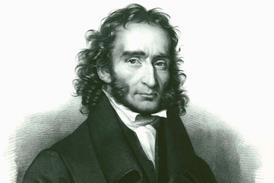
As for future projects, I have some ideas. One very daunting long-term idea is to play the 24 Paganini Caprices on the cello. And of course, Bach is lifelong work – I’ll probably record the Suites again someday.
Read: Two cellists receive American Recital Debut Awards
Read: Concert review: Gabriel Martins (cello)
Discover more Featured Stories like this in The Strad Playing Hub









No comments yet